
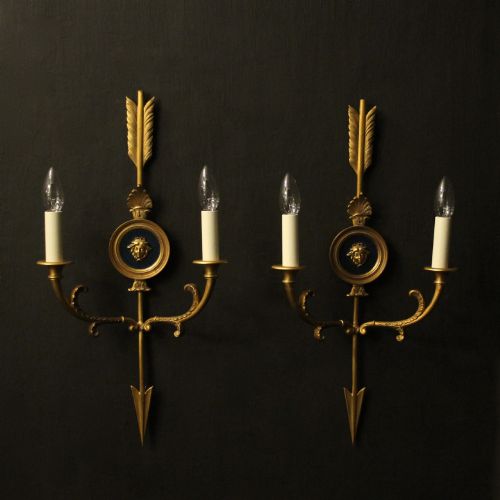
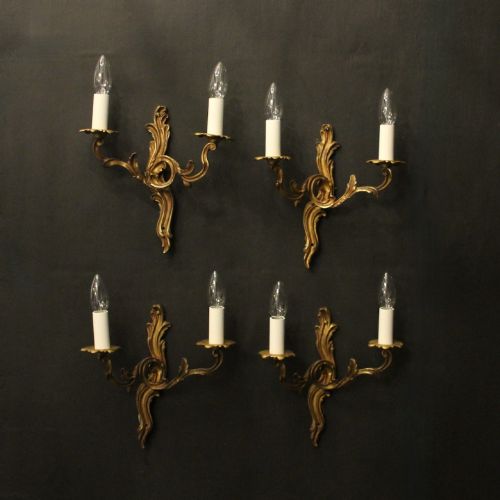
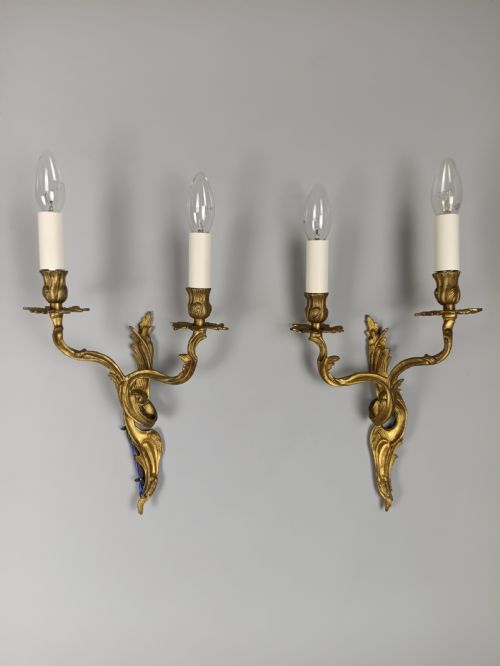
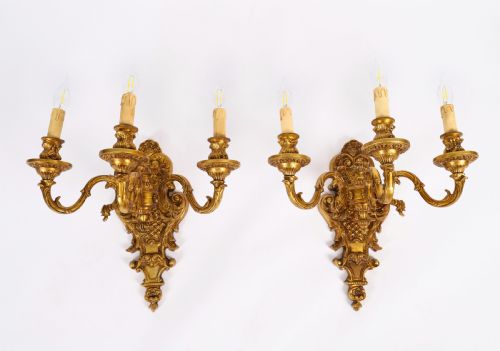


Gilded Bronze Wall Brackets
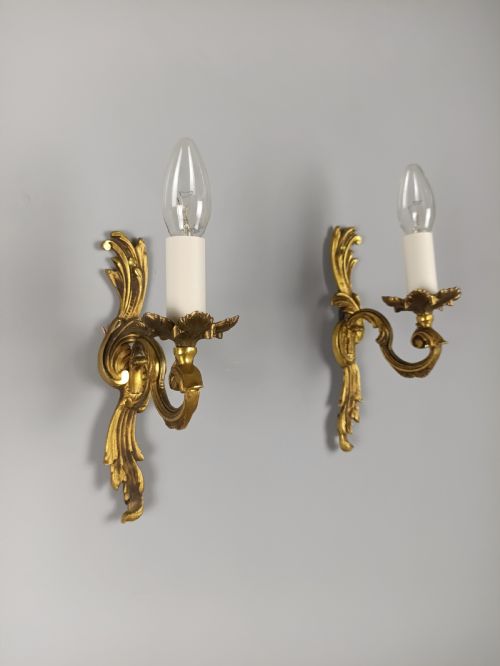
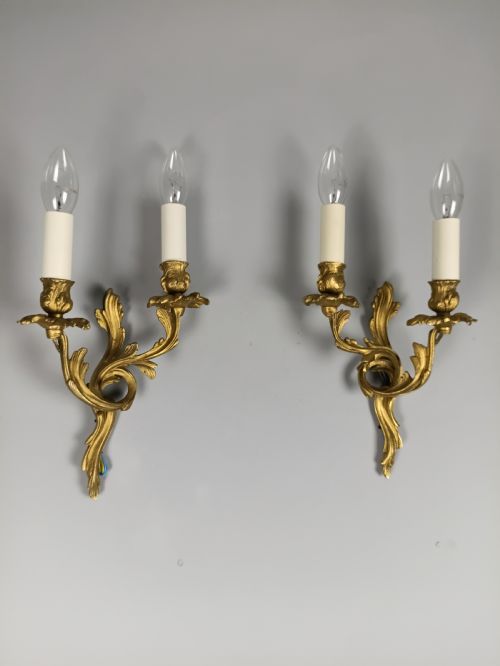
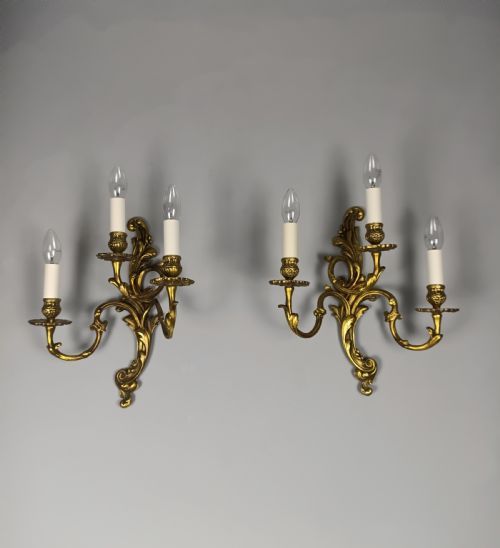
These gilded bronze wall brackets are decorative light fittings shaped by French styles and nineteenth-century taste.
Gilded Bronze Wall Brackets
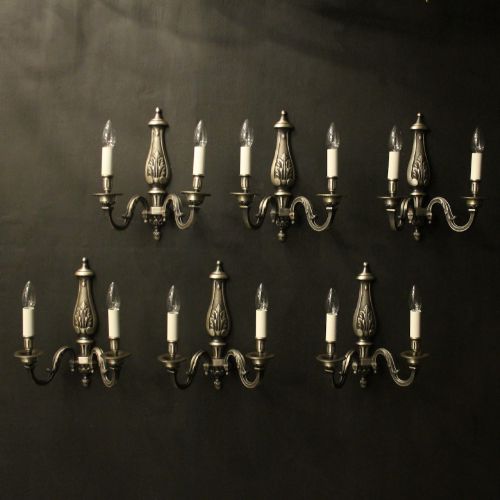
Gilded bronze wall brackets are decorative wall-mounted light fixtures designed to hold multiple candles or electric bulbs, frequently referred to as sconces or wall lights. When searching for gilded bronze wall brackets, buyers encounter ornamental French designs produced across the nineteenth and early twentieth centuries. These pieces function as both lighting and architectural decoration, fixed directly to walls in pairs or larger matching sets.
The versions most commonly met on this page originate from France during the early twentieth century, specifically around the nineteen-thirties, alongside nineteenth-century examples. They typically feature single, twin, or triple arms branching from a decorative backplate. Many items reflect historical design revivals, adopting ornate forms inspired by earlier royal French aesthetics.
How they were made
These fixtures are constructed using cast metal, predominantly brass, bronze, and ormolu. Artisans poured molten metal into moulds to create intricate backplates, scrolling arms, and leaf motifs, followed by chasing to sharpen the surface details. The metal components were then finished with a layer of gold through gilding, producing a reflective metallic sheen.
Manufacturing techniques across the listed pieces also incorporate applied silver gilding and carved decoration on supporting elements. Ormolu work relies on applying finely ground gold-mercury amalgam to bronze, though later twentieth-century pieces utilise alternative electroplating methods. Ceramic components occasionally integrate into the metal framework, combining contrasting textures within a single bracket.
Current listings feature pieces spanning the nineteenth century through to the nineteen-thirties, dominated by French stylistic revivals.
What varies in quality
Quality in these brackets is determined by the crispness of the casting and the depth of the metal ornamentation. Finer examples display sharp, hand-chased relief work on the acanthus leaves and scroll arms, whereas simpler productions show softer contours resulting from worn moulds. The weight of the metal and the precision of the joints where the arms meet the backplate further distinguish standard commercial items from superior decorative works.
The richness and preservation of the surface gilding also dictate the calibre of a piece. High-grade items retain an even, warm golden tone across complex recesses, while lower-tier alternatives show flat surfaces or modern paint substitutes. The integration of supplementary materials, such as cut crystal drops or hand-painted ceramic inserts, elevates the overall execution of the design.
The Gilded Bronze Wall Brackets Glossary
- Ormolu
- A golden-coloured bronze or brass alloy applied as a surface finish to decorative metalwork. This technique was widely utilised in French furniture and lighting manufacture.
- Sconce
- A wall-mounted lighting fixture designed to project illumination into a room. These pieces hold candles or electric lamps using projecting arms.
- Rococo Revival
- A nineteenth-century design movement imitating the asymmetric, curvilinear ornamentation of the mid-eighteenth century. It is characterised by shell motifs, scrolls, and naturalistic plant forms.
- Neoclassical
- A style drawing inspiration from classical antiquity, featuring symmetrical lines, urns, and geometric patterns. This aesthetic dominated French design during the late eighteenth century and later revivals.
- Backplate
- The flat or shaped section of a wall light that mounts directly against the wall surface. It supports the branching arms and conceals the electrical fixings.
Gilded Bronze Wall Brackets: Frequently Asked Questions
How do I install antique wall brackets?
These fixtures attach directly to wall surfaces using secure mounting screws fixed through the backplate. Many antique examples require professional rewiring to meet modern electrical safety standards before installation.
Ensure the wall structure can support the weight of cast metal brackets, particularly larger multi-arm sets. Consulting a qualified electrician guarantees safe connection to household wiring.
How do I clean gilded bronze safely?
Dust these metal surfaces gently using a soft, dry cloth to prevent accumulation in the intricate recesses. Avoid chemical polishes and abrasive cleaners, which strip away the delicate gold gilding.
Professional conservation methods should be sought for tarnished or heavily soiled pieces. Gentle maintenance preserves the original surface patina and metallic lustre over time.
What is the difference between ormolu and brass?
Ormolu consists of a bronze base finished with a layer of gold, providing a distinct golden radiance. Brass is a copper and zinc alloy with a naturally yellower metallic composition throughout.
Many antique brackets combine cast brass structures with mercury gilding or modern electroplated finishes. Close inspection of the surface tone reveals whether gold has been applied over the base metal.
How can I tell the period of a wall light?
Dating relies on stylistic indicators, manufacturing methods, and mounting hardware visible on the backplate. Nineteenth-century examples often display heavier cast construction and hand-finished chasing compared to later twentieth-century reproductions.
Examining screw types, wiring channels, and casting seams helps differentiate original period pieces from subsequent revival items. Comparing the decorative vocabulary to known historical periods clarifies the date of manufacture.