

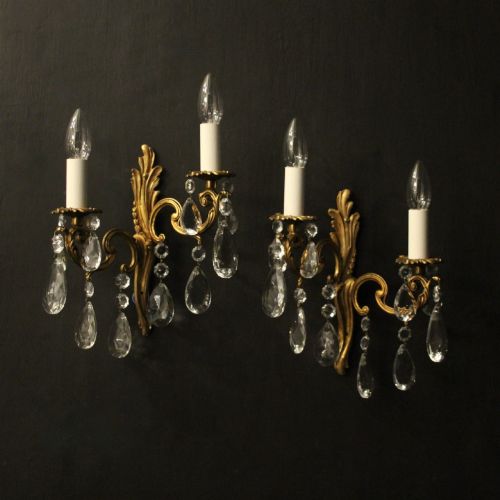
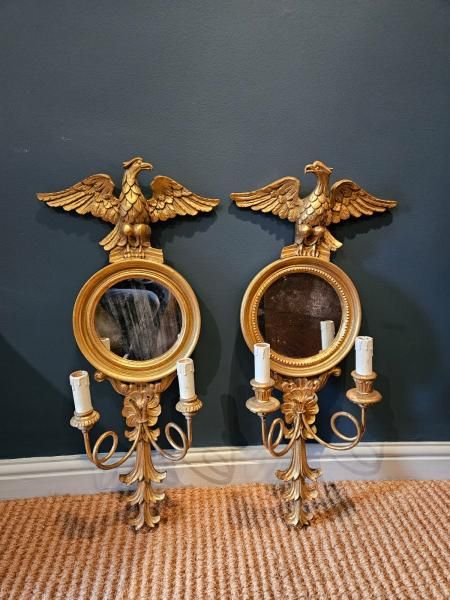
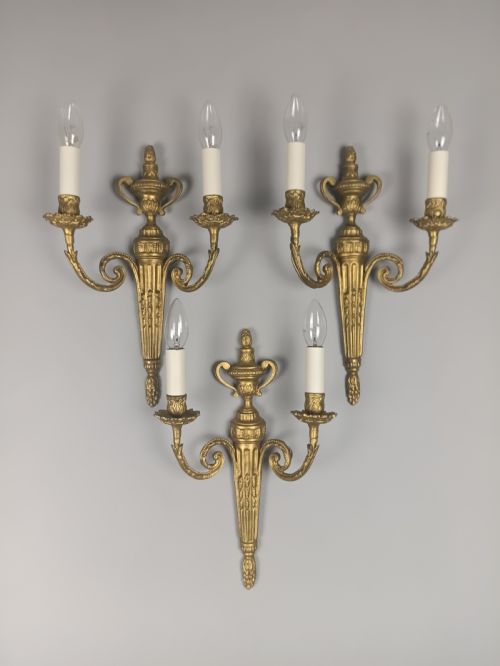
Gilded Brass Light Sconces
Gilded brass light sconces bring warmth and formal decorative structure to a room through cast metal branches and wall plates.
Gilded Brass Light Sconces
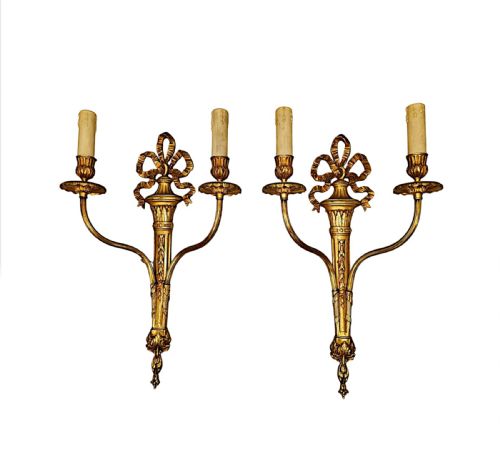
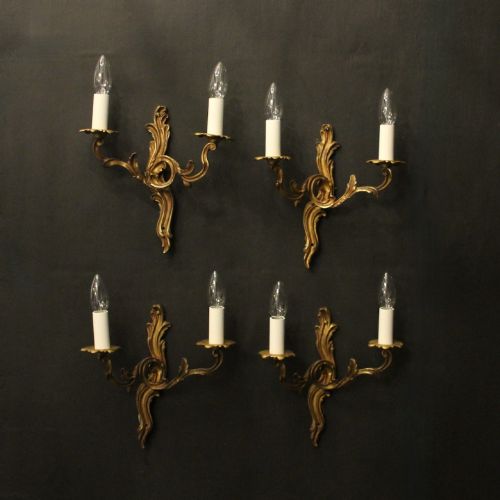
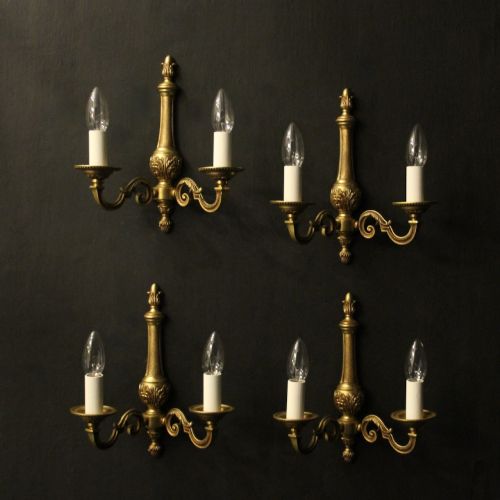
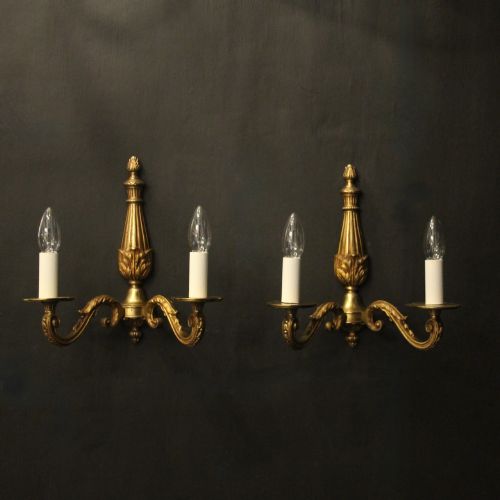
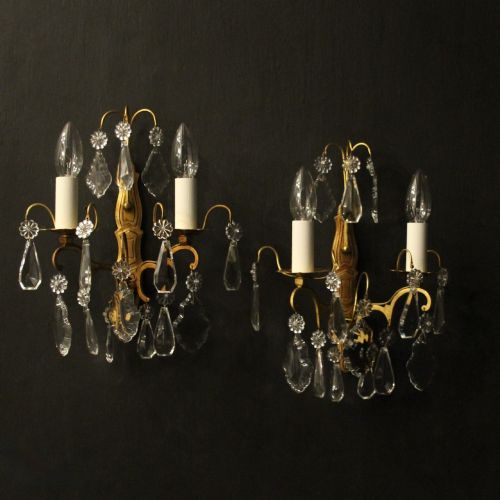
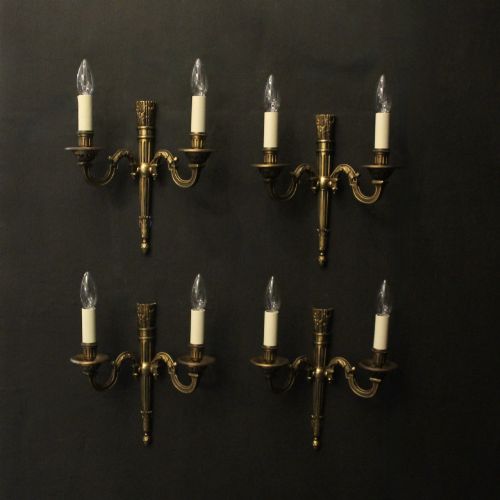
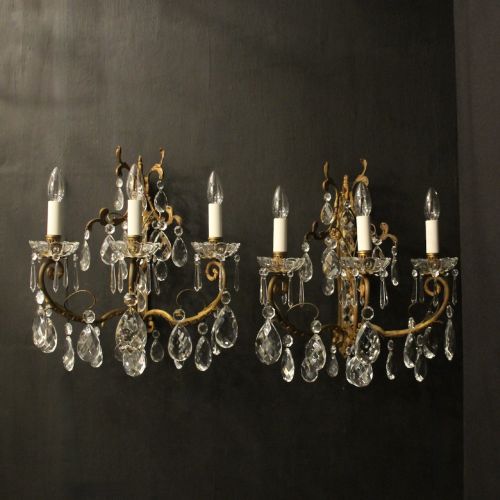
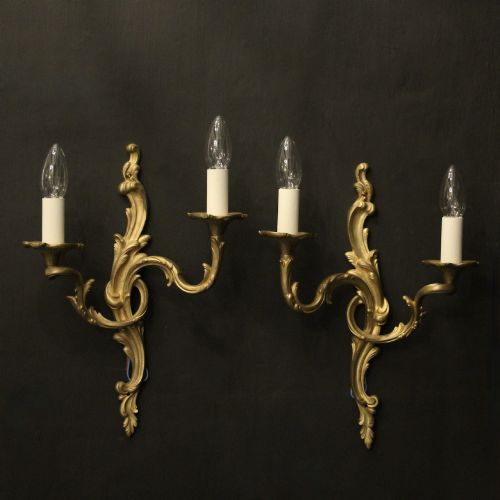
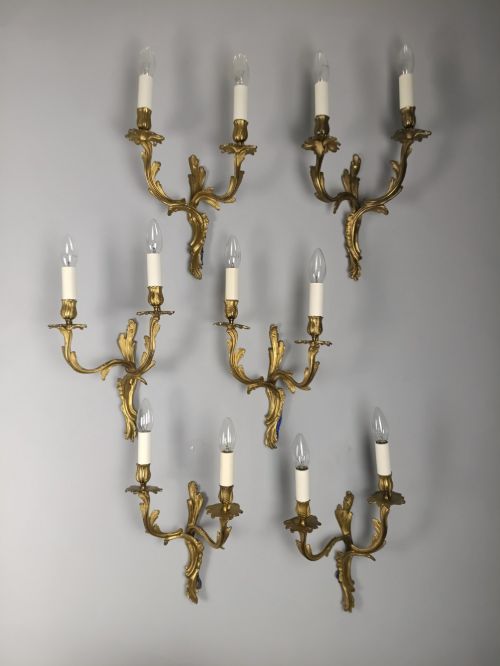
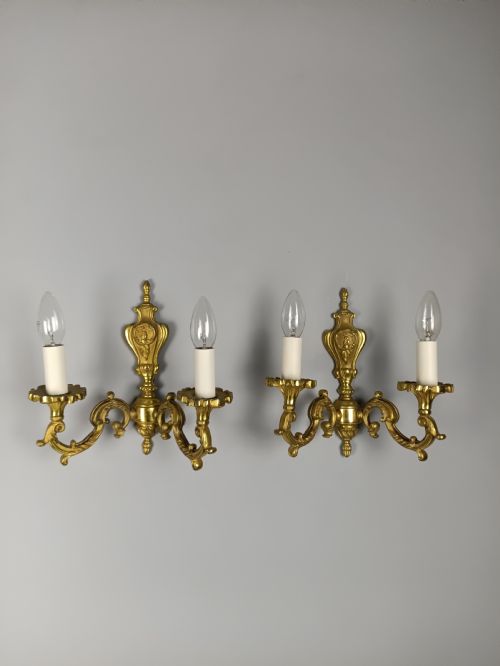
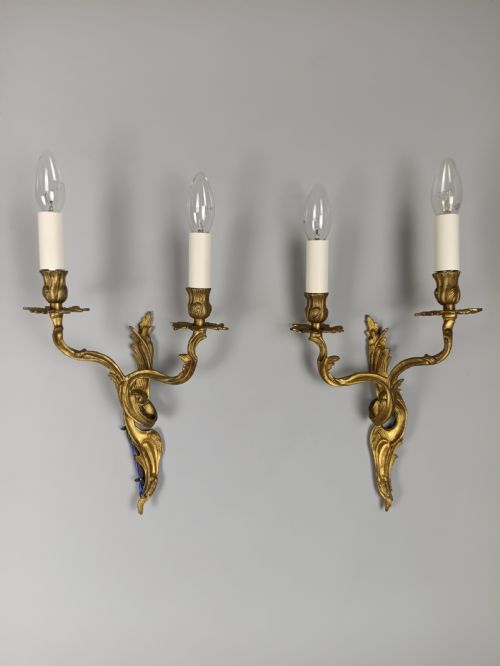
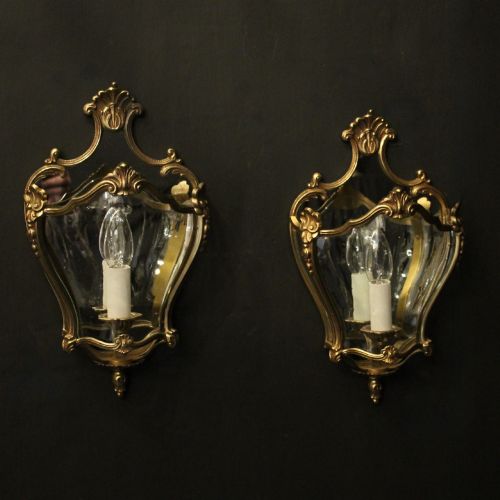
Gilded brass light sconces are wall-mounted lighting fixtures designed to hold candles or electric bulbs, predominantly originating from French workshops across the nineteenth and twentieth centuries. The pieces available here include twin-arm, triple-arm, and single-arm configurations, alongside girandoles, wall mirrors with candelabra branches, and half lanterns.
The most common examples met on this page are French twin-arm and triple-arm wall lights dating from the 1920s and 1930s, reflecting classical revival styles. Buyers frequently select these fixtures to illuminate hallways, dining rooms, and parlours where wall-mounted metallic highlights complement existing interior decoration.
The inventory spans periods from the mid-nineteenth century through to mid-century English designs, incorporating materials such as ormolu, gilt bronze, brass, and crystal. Formats range from modest single-arm brackets to substantial sets of four or six matching sconces.
How they were made
The foundational structures of these fixtures rely upon brass, gilt bronze, and ormolu, shaped through metal casting techniques that allowed makers to form intricate scrollwork and acanthus leaves. Molten metal was poured into moulds, then chased and finished by hand to sharpen the decorative details.
Gilding was applied to the brass or bronze surfaces to produce a durable golden finish, using traditional mercury gilding on earlier nineteenth-century pieces or electrogilding on twentieth-century examples. Glass components, crystal drops, and occasional onyx elements were integrated to catch and reflect the light from candles or early electric fittings.
Some nineteenth-century mirror-back sconces were specifically designed to bounce candlelight into dark corridors, effectively acting as early decorative spotlights.
What varies in quality
Quality in gilded brass light sconces is determined by the crispness of the metal casting and the depth of the hand-chasing work on the bronze or brass surface. Superior pieces exhibit sharply defined foliage, symmetrical scrollwork, and a rich, even application of gilding that retains its warmth across recessed areas.
The weight and gauge of the metal also dictate quality, with better examples utilising heavier cast brass or bronze backplates that sit flush against the wall without bending. Additional indicators include the integration of high-grade crystal drops and robust arm joints that maintain their alignment over decades of use.
The Gilded Brass Light Sconces Glossary
- Ormolu
- Gilt bronze produced by applying a mercury and gold amalgam to a bronze base and heating it until the mercury vaporised, leaving a golden surface. This technique was widely utilised in fine French decorative metalwork.
- Girandole
- A branched wall light or sconce, frequently incorporating a mirror backplate that reflects and multiplies the illumination. These fixtures often feature crystal drops and ornate Rococo frames.
- Appliqué
- A French term for a wall-mounted light fixture or sconce fixed directly to the wall surface. The term appears frequently in descriptions of nineteenth-century gilt bronze lighting.
- Champlevé
- An enamelling technique where troughs or cells are sunk into the surface of the metal and filled with vitreous enamel before firing. It is occasionally found on nineteenth-century candlesticks and associated metalwork.
- Rococo Revival
- A nineteenth-century design movement that reinterprets the asymmetrical scrolls, shell motifs, and naturalistic curves of the eighteenth-century French Rococo style. Sconces from this period display exuberant, flowing botanical forms.
Gilded Brass Light Sconces: Frequently Asked Questions
How do I wire antique wall sconces?
Many twentieth-century pieces are rewired by specialists to meet current electrical standards using hidden internal flex. Qualified electricians can mount them directly to standard wall junction boxes.
Older ormolu fixtures designed strictly for candles require professional conversion if electrical illumination is preferred over traditional candlelight.
Where should I position wall sconces?
Sconces are traditionally mounted at eye level, roughly one and a half to two metres from the floor, to ensure balanced illumination. They work effectively in pairs flanking mirrors, fireplaces, or doorways.
Placing sets of four or six along a hallway creates a rhythmic decorative pattern while distributing ambient light evenly across the space.
How do I clean gilded brass?
Dusting gently with a soft, dry microfibre cloth is the safest method for routine maintenance. Avoid chemical brass cleaners or abrasive polishes, as these will strip away the delicate gold gilt layer.
Moisture should be kept away from crystal drops and electrical components during any gentle surface cleaning.
What is the difference between ormolu and brass?
Ormolu is a term specifically denoting gilded bronze, possessing a deep, rich lustre resulting from the application of gold to a copper-alloy bronze base. Brass is an alloy of copper and zinc that can also be gilded, but it generally has a slightly different weight and grain when cast.
Both materials were utilised interchangeably across various periods to achieve a bright golden appearance on wall lights.