





Gilded Brass Desk Lamp
A gilded brass desk lamp brings warmth to a workspace through centuries-old metalwork and candlelamp adaptations.
Gilded Brass Desk Lamp
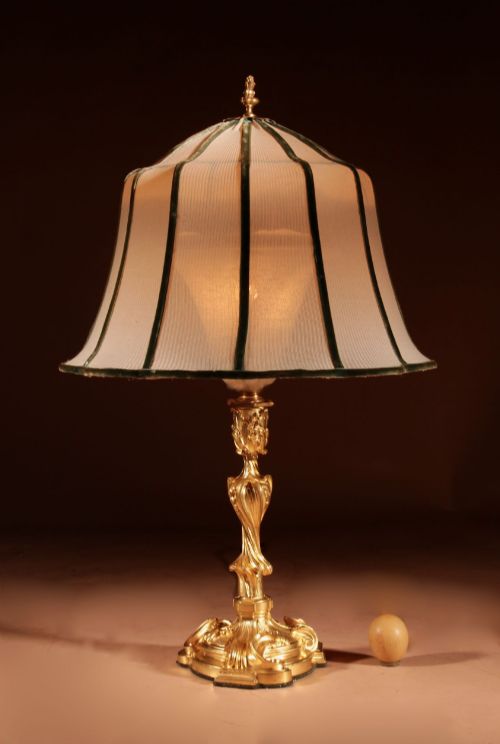
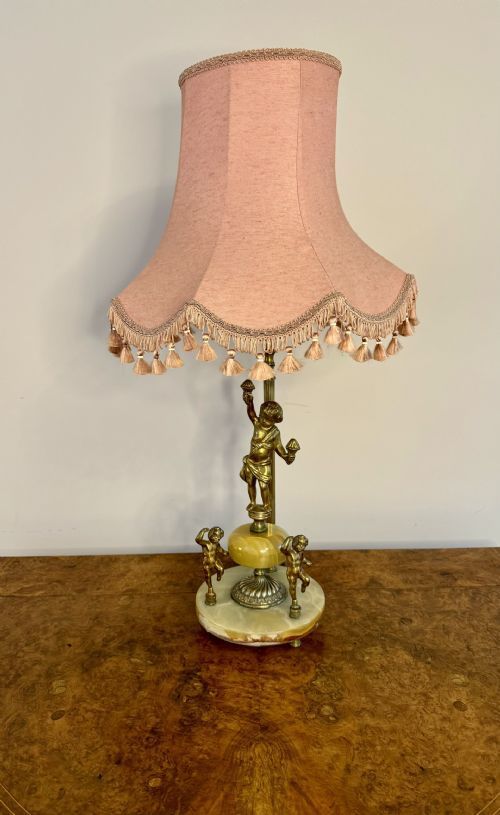
A gilded brass desk lamp is a functional light source cast in bronze, brass, or ormolu, often emerging from nineteenth-century European workshops in styles ranging from French Rococo Revival to Empire. These pieces combine utilitarian illumination with decorative cast figures, cherubs, rams heads, and classical motifs designed for nineteenth-century studies and salons.
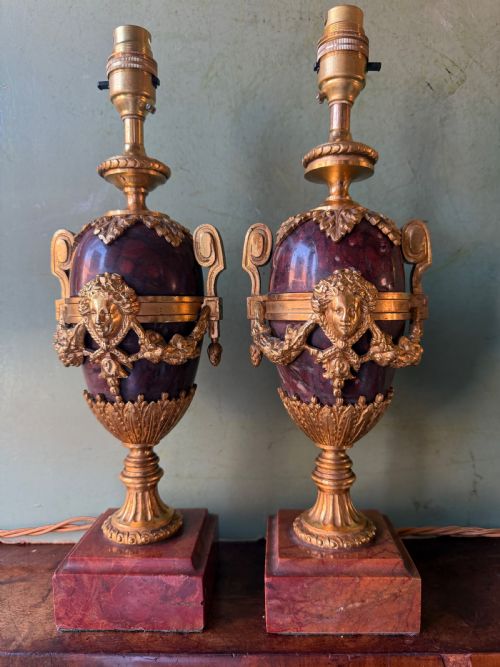
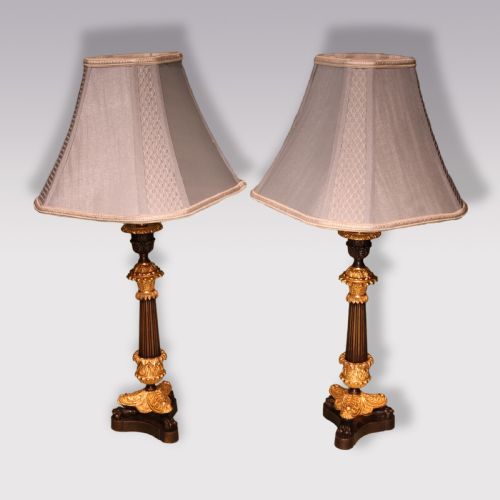
Buyers are most likely to encounter nineteenth-century ormolu and gilt bronze table lamps alongside Edwardian examples featuring onyx or marble bases. The selection leans heavily toward French models executed in the Louis XV and Louis XVI styles, occasionally incorporating fabric shades or functioning as candlestick lamps.
Materials and construction
Makers utilised brass, bronze, and ormolu as primary metals, often employing mercury gilding or fire-gilding techniques to achieve a rich surface finish on cast components. Marble and onyx frequently served as heavy, supportive plinths for monumental or paired lamp bases, while fabric elements were added for diffusion.
Foundry work involved intricate sand casting or lost-wax casting methods to shape detailed figures such as putti, young girls, and cavalry dress swords. These cast elements were then chased by hand to sharpen the decorative details before assembly.
Gilded Brass Desk Lamp Retail Price Guide 2026
Typical asking prices for gilded brass desk lamp among the pieces listed under this phrase on Sellingantiques today, from the lower quarter to the upper quarter. They describe what is for sale here now, not the wider market.
Several lamps are modelled directly on cavalry dress swords, proving that nineteenth-century desk illumination could double as military theatre.
Distinctions in craftsmanship
Quality rests in the crispness of the hand-chasing on the metal surface and the depth of the gilding, where superior examples retain sharp relief in decorative foliage and figures. Masser production yields softer contours and flatter surface decoration, whereas finer pieces exhibit precise detailing executed by skilled metalworkers.
The integrity of the material pairing, such as solid rouge marble or genuine onyx matched with heavy ormolu mounts, distinguishes higher-grade productions from simpler brass constructions. The weight and stability of the base reflect the original intended status of the desk or table lamp.
The Gilded Brass Desk Lamp Glossary
- Ormolu
- A gilded bronze or brass application used extensively in French furniture and lighting manufacture. The technique involves coating base metal with a finely ground gold-mercury amalgam.
- Gilt Bronze
- Bronze metal treated with a thin layer of gold to give the appearance of solid gold. This material resists tarnishing and provides a durable finish for decorative objects.
- Neoclassical
- A style reviving classical Roman and Greek motifs, visible in clean architectural lines and symmetry. It dominated European decorative arts during the eighteenth and nineteenth centuries.
- Spelter
- A zinc alloy commonly utilised as a less expensive alternative to bronze for cast figures and lamp bases. It often received a bronze or gilt coating to imitate more costly metals.
Gilded Brass Desk Lamp: Frequently Asked Questions
How do I wire an antique lamp?
Rewiring requires a qualified electrician to insert modern internal flex while preserving the historic outer metal housing and original candlelamp fittings.
Careful installation ensures the wiring passes safely through the central channel without altering the patinated ormolu or bronze structure.
What is the difference between ormolu and gilt bronze?
Ormolu specifically denotes the historic French process of mercury gilding applied to brass or bronze mounts. Gilt bronze describes any bronze object coated in a layer of gold, which encompasses a broader range of techniques.
Both finishes create a bright golden surface that ages with a distinctive mellow tone over the centuries.
Are these lamps suitable for daily use?
These pieces function well for daily illumination when fitted with appropriate low-heat LED bulbs that protect historical materials from thermal stress.
Placement on stable desks or side tables ensures the heavy marble or bronze bases remain secure during everyday operation.
How do I date an ormolu lamp?
Dating relies on stylistic clues such as the symmetry of Empire designs or the elaborate asymmetry of Louis XV Revival casting. Examining the construction of the brass screws and the composition of the underlying bronze provides further chronological context.
Comparative analysis with documented nineteenth-century foundry pieces helps narrow the decade of production.