



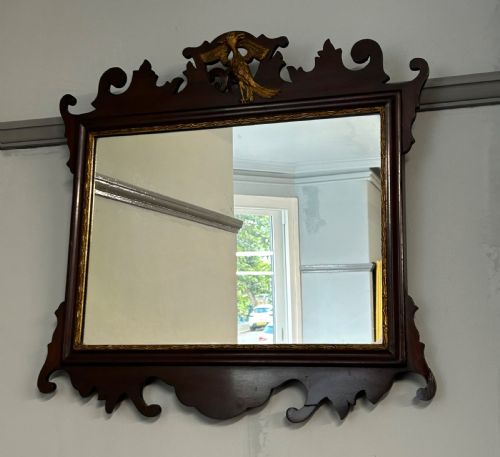

Gilded Bird Mirror
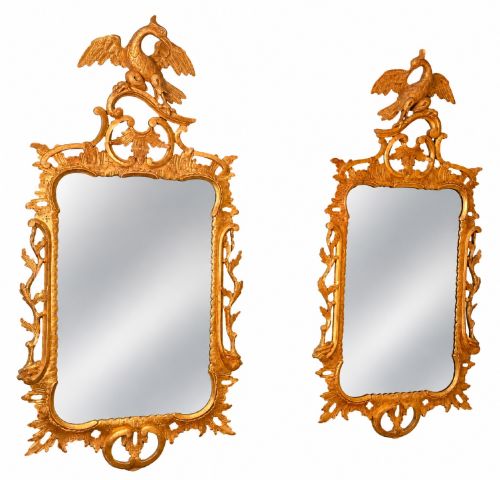
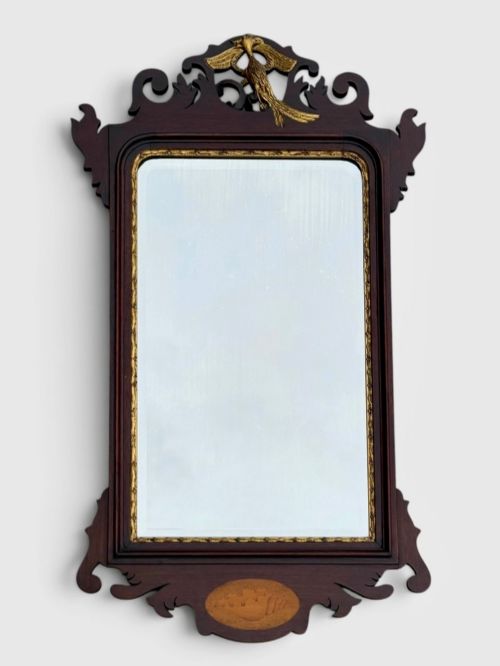
A gilded bird mirror brings spirited carved wildlife and bright leaf finish into a room, drawing the eye upwards to perched creatures.
Gilded Bird Mirror
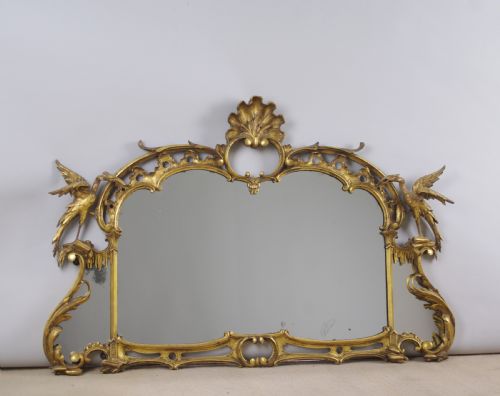
Most examples found here combine carved timber with bright metallic leaf or gesso coatings, reflecting the enduring influence of Chinese Chippendale and Rococo design. Buyers encounter both compact fretwork wall mirrors and large, room-anchoring overmantel pieces.
The aesthetic bridges classical formality with playful naturalism, incorporating detailed bird crests, squirrels, and intricate fret-cut silhouettes into domestic interiors.
How they were made
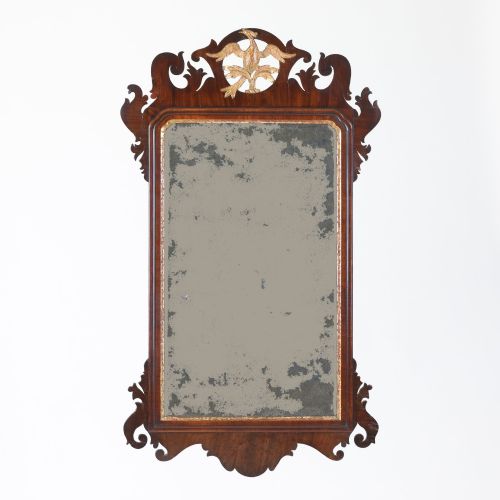
Craftsmen shaped frames from timbers such as mahogany and birds eye maple, often utilising fretwork techniques to create layered, pierced outlines. Skilled carvers rendered the distinctive birds and foliage by hand before finishing the wood.
Giltwood and gilt gesso surfaces received layers of gold leaf or paint applied over prepared grounds to achieve their reflective metallic sheen. Some specialised pieces incorporated reverse painting on glass to complement the gilded framing.
Gilded Bird Mirror Retail Price Guide 2026
Typical asking prices for gilded bird mirror among the pieces listed under this phrase on Sellingantiques today, from the lower quarter to the upper quarter. They describe what is for sale here now, not the wider market.
Current listings feature materials including mahogany, birds eye maple, giltwood, gesso, and glass across Georgian, Regency, and Victorian periods.
What varies in quality
The depth and animation of the wood carving separate ambitious workshop pieces from simpler productions, particularly in the rendering of bird crests and foliage. Fluidity of line in fret-cut frames indicates superior hand execution.
The preservation of original gold leaf and gesso surfaces dictates the visual authority of the piece, as later re-gilding can soften crisp architectural details. Harmony between the glass plate and the surrounding frame structure also marks better manufacture.
The Gilded Bird Mirror Glossary
- Giltwood
- Wood that has been coated with gold leaf or gold paint. This finish creates a luminous surface that catches natural daylight.
- Gesso
- A plaster-like mixture applied to wood frames to provide a smooth base for gilding. It allows carvers to crisp up fine decorative details.
- Fret-cut
- A woodworking technique where patterns are pierced and cut through thin timber boards. It creates the intricate, lattice-like silhouettes seen on these frames.
- Overmantel
- A large mirror designed specifically to hang above a fireplace mantelpiece. These pieces often feature extended horizontal proportions.
- Ho-ho bird
- A stylized mythical phoenix figure derived from Chinese art and adopted into European Rococo design. It forms the prominent crest on many antique mirrors.
Gilded Bird Mirror: Frequently Asked Questions
Where should I hang a gilded bird mirror?
These mirrors command attention above living room mantelpieces or as focal points in hallways. Their height and carved crests require unobstructed wall space to display the woodwork properly.
Positioning them opposite a window maximises light reflection while allowing viewers to appreciate the detailed bird carvings at eye level.
How do I care for giltwood frames?
Dusting requires a very soft, dry brush to protect delicate leaf surfaces from abrasion. Moisture and chemical polishes damage historic gilding permanently.
Keeping the mirror away from direct heat sources prevents the underlying gesso and wood from drying out and cracking over time.
What distinguishes Georgian from Regency examples?
Georgian pieces often display elaborate fretwork and asymmetric Rococo or Chinese Chippendale influence with naturalistic bird crests. Mahogany and giltwood dominate this era.
Regency examples tend toward bolder architectural lines, rectilinear mirror plates, and crisp gesso mouldings while retaining the decorative bird motif.
Are the mirror plates original?
Older pieces may retain their original silvered glass, which often exhibits gentle foxing and age spots. Replacement plates typically present a clearer, more uniform reflection.
Both original and replaced glass appear across surviving examples depending on the history of the piece.