

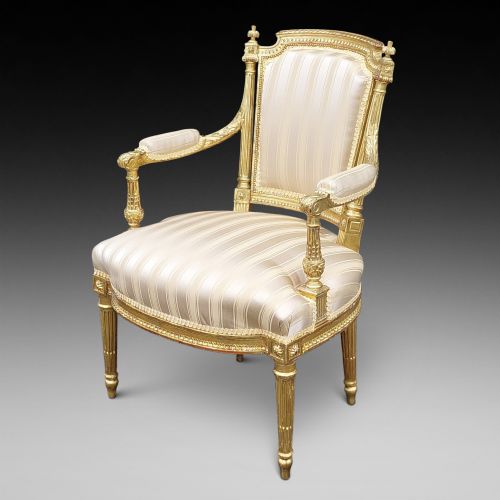


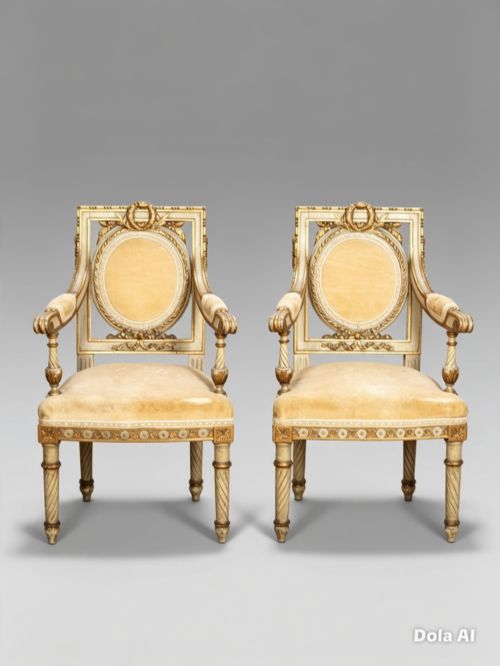


Gilded Bedroom Armchair
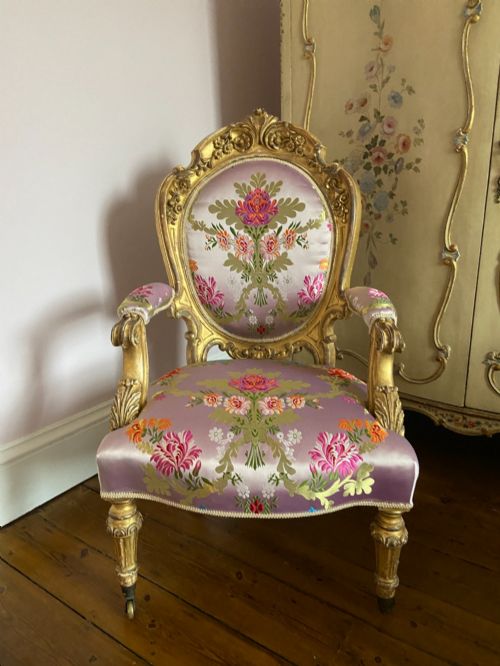
A gilded bedroom armchair brings immediate warmth and formal decorative presence to a private room, offering carved gilt surfaces and soft upholstery.
Gilded Bedroom Armchair
A gilded bedroom armchair is a decorative seating piece designed for private chambers, drawing rooms and salons, combining carved wooden frames with metallic leaf finishes. When you search for a gilded bedroom armchair, you encounter pieces that range from small boudoir chairs to large open armchairs and fauteuils.
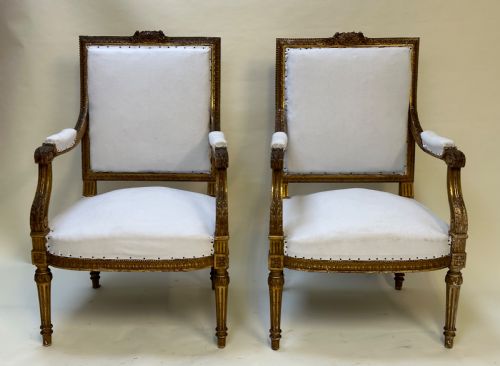
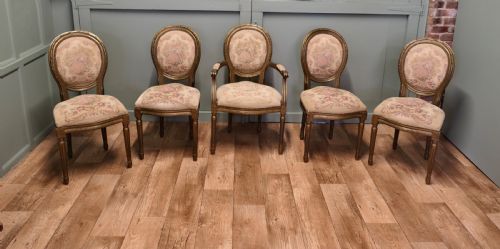
The selections span the nineteenth century and the twentieth century, taking influence from French styling such as Louis XVI, Rococo Revival and Regency designs. You find both English and French examples, including single chairs, matched pairs and larger sets of salon furniture.
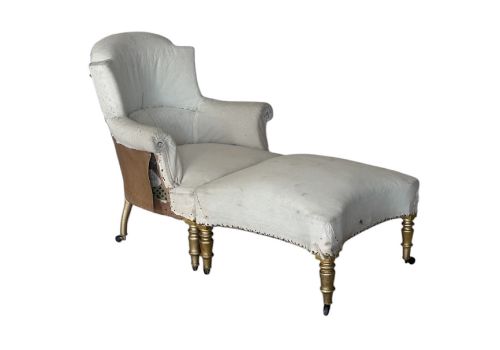
Forms vary from standard upholstered armchairs and bergères to specific salon and bedroom chairs, occasionally accompanied by matching stools or footstools. These seats frequently feature textile coverings including silk, velvet, calico and patterned fabrics.
How they were made
Makers constructed these frames predominantly from wood, utilising timber such as walnut, alongside painted and silver-gilt applications or traditional gold leaf gilding. Structural stability relied on traditional joinery techniques suited to supporting carved wooden arms and open frames.
The decorative surfaces received hand-applied giltwood treatments, sometimes paired with contrasting ebonised details or painted accents to highlight the carved motifs. Upholstery was traditionally secured over webbing and springs using materials like calico, silk, velvet and various decorative textiles.
Metal components such as brass occasionally appeared in structural or decorative hardware, supporting the overall assembly of the chair frame.
Gilded Bedroom Armchair Retail Price Guide 2026
Typical asking prices for gilded bedroom armchair among the pieces listed under this phrase on Sellingantiques today, from the lower quarter to the upper quarter. They describe what is for sale here now, not the wider market.
Several listings include miniature children's salon chairs, proving that tiny aristocrats required proper giltwood seating too.
What varies in quality
Quality separates through the crispness and depth of the wood carving on the frame, where hand-chiseled details distinguish superior craftsmanship from simpler production. The application and preservation of the giltwood or gold leaf finish also indicate the grade of the piece, showing how well the metallic surface catches the light.
The integrity of the structural proportions and the choice of primary timbers, such as English walnut, influence the underlying standard of the furniture. Additionally, the execution of revival styles, whether following Louis XVI or Regency canons, dictates the refinement of the silhouette.
Holland & Sons
The Gilded Bedroom Armchair Glossary
- Giltwood
- Wood that has been coated with gold leaf or a gold-coloured metallic finish. This surface treatment gives the carved frame its characteristic bright, reflective appearance.
- Fauteuil
- An open-framed upholstered armchair with wooden arms, originating in France. These seats typically feature exposed carved woodwork around the back and supports.
- Bergère
- An enclosed upholstered armchair with solid upholstered sides and a padded back. The wooden frame is often gilt or painted, providing a substantial seating option.
- Louis XVI style
- A neoclassical design vocabulary characterised by straight tapered legs, geometric forms and classical ornamentation. Chairs in this style often display carved fluting and rectangular backs.
- Regency revival
- A nineteenth or twentieth century interpretation of early nineteenth century British furniture design. These pieces incorporate classical motifs and clean structural lines.
Gilded Bedroom Armchair: Frequently Asked Questions
What is a gilded bedroom armchair?
A gilded bedroom armchair is a decorative seat featuring a carved wooden frame finished with gold leaf or metallic paint, designed for use in private rooms and formal salons. These chairs incorporate upholstered elements and stylistic influences from nineteenth-century French and English periods.
They function as both practical seating and decorative focal points, often matching the wider aesthetic of a period interior.
How do I identify the period?
Identifying the period involves examining the specific revival style, such as Louis XVI or Rococo, alongside the characteristics of the wood and the gilding technique. Nineteenth-century examples often display hand-carved detailing and traditional joinery methods that distinguish them from later reproductions.
Reference to specific design movements like Regency or Napoleon III provides further clues to the decade of manufacture.
Where were these chairs used?
These chairs were primarily placed in formal bedrooms, boudoirs, dressing rooms and drawing rooms of large houses and chateaux. Their decorative gilt surfaces were intended to display taste and status in private entertaining spaces.
Smaller scale salon chairs and children's chairs were also utilised in specialised sitting rooms.
How do I care for giltwood?
Caring for giltwood requires keeping the frame away from direct sunlight, excessive moisture and rapid temperature changes to protect the delicate metallic leaf. Dusting should be done gently with a soft, dry cloth without applying chemical polishes or abrasive cleaners.
Preserving the original surface maintains the historical character of the carved woodwork.