

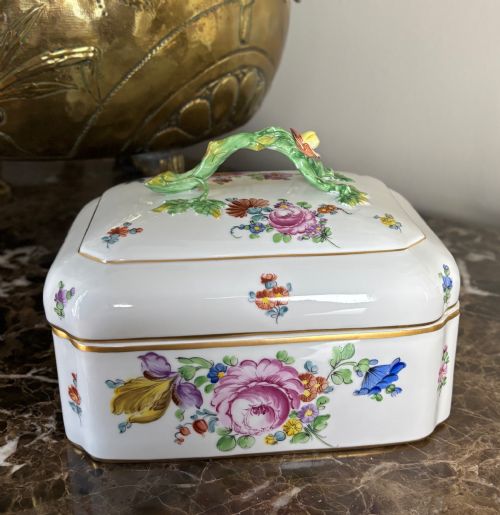


German Porcelain Trinket Dish
A german porcelain trinket dish brings cabinet-scale craft to a dressing table, combining painted Saxon bouquets with gilded detail.
German Porcelain Trinket Dish
A german porcelain trinket dish encompasses small decorative dishes, lidded boxes, and potpourri bowls originating from various German factories and studios. These vessels served practical roles on dressing tables and desks, holding pins, powder, or small valuables.
The pieces on this page span several distinct periods, reaching from eighteenth-century glazed ceramic ware through nineteenth-century Rococo Revival creations up to geometric Art Deco powder boxes from nineteen-thirty. Forms range from simple heart-shaped dishes to elaborate lidded bonbonnières and figural jars.
Makers and regional workshops represented include Dresden, Meissen, and Dorotheenthal alongside studios such as Paul Müller Selb. Buyers will encounter both hand-painted floral motifs and striking transfer prints, reflecting the changing tastes of European households across two centuries.
How they were made
Production relies on fired porcelain and tin-glazed earthenware bodies shaped into lidded boxes, bowls, and shaped dishes. Artisans applied vitreous glazes to seal the ceramic body before adding detailed overglaze enamel painting.
Decoration frequently incorporates gilt, gold leaf, and delicate gilding to highlight moulded rims, handles, and figural elements. Some workshops utilised transfer printing alongside skilled brushwork to achieve complex motifs such as Chinoiserie dragons or Saxon bouquets.
German Porcelain Trinket Dish Retail Price Guide 2026
Typical asking prices for german porcelain trinket dish among the pieces listed under this phrase on Sellingantiques today, from the lower quarter to the upper quarter. They describe what is for sale here now, not the wider market.
Listings feature periods from the eighteenth century through the nineteenth century and into nineteen-thirty, using porcelain, tin-glazed earthenware, and gold leaf.
What varies in quality
Quality rests in the crispness of the moulding and the finesse of the hand-painting, particularly on pieces featuring intricate floral sprays or figurative subjects. Superior examples display precise brushwork and well-preserved gilding that remains bright against the white porcelain ground.
The weight and finish of the ceramic body also distinguish factory output, with Meissen and Dresden wares often showing superior translucency and glaze smoothness. Original lids that fit their bases precisely indicate higher manufacturing standards.
Paul Müller Selb·Helena Wolfsohn
The German Porcelain Trinket Dish Glossary
- Porcelain
- A hard, fine-grained ceramic fired at high temperatures until vitrified and translucent. It provides the smooth white ground essential for detailed enamel painting.
- Gilding
- The application of gold leaf or powdered gold to ceramic surfaces. This technique emphasises rims, handles, and decorative borders.
- Potpourri
- A mixture of dried plant materials scented with spices, placed inside pierced lidded bowls to fragrance a room. German factories produced specialised vessels for this purpose.
- Bonbonniere
- A small ornamental box designed to hold sweets or confections. These lidded containers were luxury items on formal dining and dressing tables.
- Enamel
- Coloured glass paste fused to the porcelain surface through firing. It creates the vibrant, permanent pigments seen in hand-painted floral and figural motifs.
German Porcelain Trinket Dish: Frequently Asked Questions
What were german porcelain trinket dishes used for?
These lidded boxes and small dishes held personal items such as pins, rings, face powder, and small sweets on dressing tables or desks. They kept delicate belongings secure while adding colour and ornament to a room.
Wealthy households used them in private chambers and reception rooms alike. Their varied forms reflect the changing domestic habits of European collectors over three centuries.
How do I date a german porcelain dish?
Dating relies on stylistic clues, form, and factory output rather than a single rule. Eighteenth-century pieces often show simpler tin-glazed earthenware bodies, while nineteenth-century items lean towards Rococo Revival curves and floral sprays.
Twentieth-century examples, such as those from nineteen-thirty, frequently adopt Art Deco geometric lines or figural powder box lids. Comparing the painted motifs and baseline forms helps place a piece in its correct era.
What is the difference between Dresden and Meissen?
Meissen refers to the pioneering German porcelain manufactory established early in the eighteenth century, known for its fine paste and crossed swords mark. Dresden developed later as a decorator's hub where multiple studios decorated white porcelain blanks sourced from various kilns.
Dresden pieces often display exuberant Rococo Revival styles and hand-painted Saxon bouquets. Meissen items carry a reputation for strict factory control and distinct historical periods of sculptural and painted design.
How do I care for antique porcelain?
Antique porcelain requires gentle handling to protect delicate overglaze enamels and applied gold leaf. Dusting with a soft, dry cloth is usually sufficient for regular maintenance.
Avoid immersing gilded or hand-painted pieces in water or using abrasive cleaners. Displaying them away from direct sunlight preserves the vibrancy of the original colours.