




German Landscape Painting Art
German landscape painting art captures vast mountain vistas, quiet rivers, and bustling townscapes through the lens of nineteenth-century realism, romanticism, and expressionism.
German Landscape Painting Art
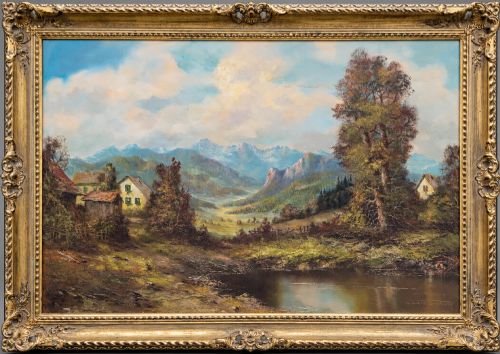
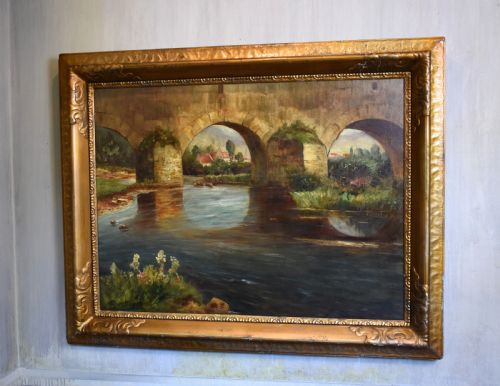
German landscape painting art encompasses oil paintings on canvas depicting alpine scenes, rural fields, and architectural townscapes. These works originate from various periods including the nineteenth century, nineteen-seventy, nineteen-hundred, nineteen-twenty, and nineteen-forty.
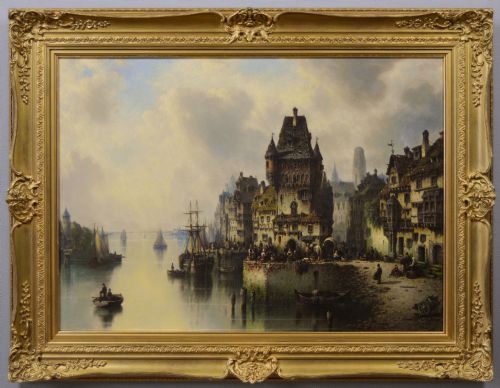
Buyers will encounter oil paintings executed by named artists and regional schools such as the nineteenth-century German school and Biedermeier movements. The subjects range from quiet winter canals to grand Bavarian castles and mountain landscapes.
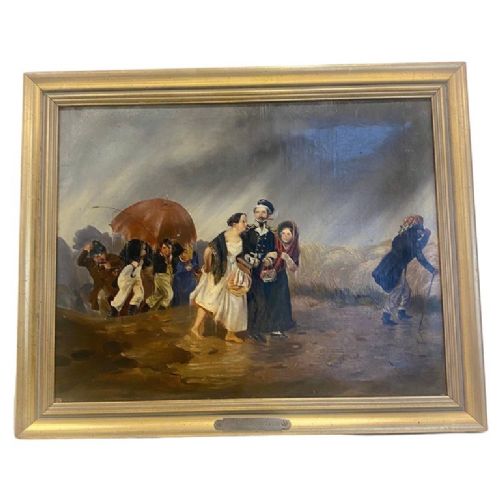
Many canvases are housed within their original gesso and giltwood frames adorned with gold leaf. These frames frequently complement the era of the painting, ranging from mid-nineteenth-century romantic compositions to later expressionist works.
Materials and Techniques
Artists utilise oil paint applied to canvas or wood panels, building rich textures and atmospheric light effects. The medium allows for both meticulous realism and the looser brushwork seen in impressionist and expressionist works.
Frames are constructed from wood, finished with layers of gesso to create smooth surfaces for intricate ornamentation. Gilding with gold leaf provides a bright metallic finish that frames the painted canvas.
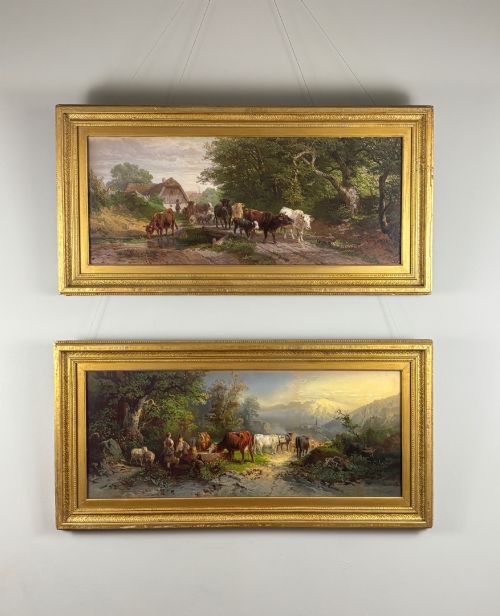
Cattle rest peacefully in rural pastures across nineteenth-century canvases, seemingly unbothered by the dramatic mountain weather unfolding around them.
Quality Variations
The sophistication of brushwork and the handling of atmospheric light distinguish finer examples from simpler student or workshop pieces. Skilled artists capture depth, movement, and mood with precision.
Originality of the matching gesso and giltwood frame enhances the integrity of the piece. Period frames that survive intact alongside the canvas contribute to the overall historical value.
Karl Gatermann·Johann Friedrich Voltz·Paul Ehrenberg·Carl Adolf Mende·Heinrich Harder·Hein Hoppmann·Karl Herrle·Franz Reder Broili·Ludwig Hermann·Wilhelm Alexander Meyerheim
The German Landscape Painting Art Glossary
- Oil on Canvas
- A painting medium where pigments are suspended in a drying oil and applied to a stretched woven fabric support. This technique became standard for durable and expressive fine art.
- Giltwood
- Wood carved and coated with thin gold leaf or metal powder for a decorative metallic finish. It is commonly found on ornate antique frames.
- Gesso
- A paint mixture consisting of a neutral binder mixed with chalk, gypsum, or pigment used to prepare wood surfaces for gilding or painting. It provides a smooth base for gold leaf application.
- German Expressionism
- An early twentieth-century modernist movement focused on presenting the world from a subjective perspective to evoke moods or ideas. These works often feature distorted forms and striking brushwork.
- Biedermeier
- A style of art and interior design from the mid-nineteenth century depicting domestic scenes and serene landscapes. It emphasises clean realism and understated daily life.
German Landscape Painting Art: Frequently Asked Questions
How do I identify a nineteenth-century German landscape?
Examine the canvas material, the subject matter, and any signature or attribution noting regional schools. Nineteenth-century works frequently feature romantic or realist interpretations of forests, mountains, and rivers.
Look closely at the framing materials, such as original gesso and giltwood, which often correspond to the period of the painting. Documentation or signatures by artists from this era further confirm the origin.
What is the difference between realism and expressionism in these paintings?
Realist and romantic works from the nineteenth century focus on detailed accuracy, natural light, and faithful depiction of topography and weather. Artists rendered rural scenes, cattle, and castles with careful attention to proportion.
Expressionist works from later decades prioritise emotional impact and psychological depth over strict visual accuracy. They utilise bold brushstrokes and vivid colour choices to convey the artist's inner state.
How should I care for an oil painting on canvas?
Keep the canvas away from direct sunlight, excessive moisture, and rapid temperature fluctuations to prevent the oil paint and wood stretcher from warping. Display the artwork in a stable environment.
Dust the surface gently with a soft, dry brush without applying pressure to the paint layers. Avoid using chemical cleaners on either the canvas or the giltwood frame.
Are original frames important for these artworks?
Original gesso and giltwood frames provide historical context and complement the aesthetic design of the painting. They show how the artwork was presented during its specific period.
A matching period frame preserves the integrity of the piece, whereas a later replacement may alter the visual balance. Collectors often value pieces that retain their original frames.