


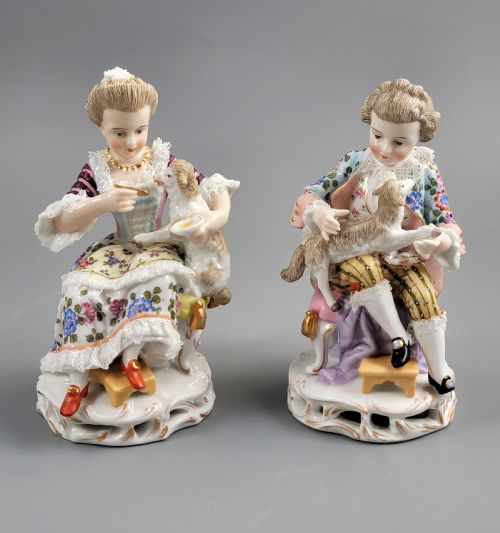


German Ceramic Pastoral Figures
German ceramic pastoral figures bring rustic charm and refined artistry into a room through delicate depictions of shepherds, gardeners, and rural life.
German Ceramic Pastoral Figures
German ceramic pastoral figures encompass porcelain figurines, decorative groups, and figural candlesticks that celebrate rural and agricultural themes. These pieces frequently depict gardeners, grape harvesters, children with lambs, and traditional shepherds.
The selections available span from the eighteenth century through the Victorian era and into the early twentieth century. Buyers will encounter both eighteenth-century heritage works and nineteenth-century revivals such as Rococo Revival pieces.
Originating from notable European workshops and schools, these porcelain sculptures range from single figures to balanced pairs. They serve as decorative focal points that reflect historical tastes for idealized pastoral scenes.
How they were made
These figures rely upon hard-paste porcelain shaped into intricate forms such as figurines and candlesticks. Artisans utilised glazed and bisque porcelain finishes to create contrasting textures across garments, foliage, and skin.
Decoration involved hand-applied enamel painting to bring naturalistic colour to clothing and pastoral attributes. Accents of gold leaf, gilt, and gold gilt further highlight the fine details moulded into the porcelain body.
German Ceramic Pastoral Figures Retail Price Guide 2026
Typical asking prices for german ceramic pastoral figures among the pieces listed under this phrase on Sellingantiques today, from the lower quarter to the upper quarter. They describe what is for sale here now, not the wider market.
Listings feature hard-paste porcelain and bisque pieces decorated with enamel and gold gilt from the eighteenth and nineteenth centuries.
What varies in quality
The application of enamel and the precision of the gilding contribute significantly to the visual depth of a piece. Superior examples exhibit clean brushwork and controlled use of gold leaf that accentuates the underlying porcelain contours without obscuring them.
Meissen Porcelain·Limbach Porcelain·Sitzendorf Porcelain·Carl Thieme Dresden·Ludwigsburg Porcelain
The German Ceramic Pastoral Figures Glossary
- Hard-paste porcelain
- A durable ceramic composition fired at high temperatures using kaolin and petuntse. This material produces a dense, bright white body capable of holding exceptionally sharp modelled details.
- Bisque porcelain
- Unglazed porcelain that presents a matte, porous finish resembling smooth marble. It is frequently utilised to highlight the naturalistic form of figures without the distraction of glossy reflection.
- Gilt
- A thin layer of gold applied to the surface of the porcelain for decorative effect. It adds bright metallic highlights to bases, garments, and accessories.
- Rococo Revival
- A nineteenth-century design style that revives the ornate, asymmetrical curves, scrollwork, and playful natural themes of the eighteenth century. Figures from this period often stand upon elaborate, scroll-moulded bases.
- Blanc-de-Chine
- A term describing white porcelain lacking polychrome enamel decoration. It relies entirely on the quality of the white glaze and the crispness of the modelling to create visual interest.
German Ceramic Pastoral Figures: Frequently Asked Questions
How were pastoral figures used?
These pieces served primarily as decorative ornaments displayed on mantelpieces, side tables, and cabinets. Figural candlesticks combined this ornamental role with practical illumination.
During formal dinners, similar porcelain groups often formed part of elaborate tablescapes. They provided visual conversation pieces for guests and demonstrated the host's cultural refinement.
How do I date these porcelain pieces?
Dating relies on observing stylistic markers, such as the exuberant curves of Rococo Revival bases versus the stricter symmetry of earlier pieces. Materials also offer clues, as nineteenth-century revivals often utilise brighter enamels and different paste textures compared to eighteenth-century originals.
Factory marks stamped or painted on the underside provide the most precise indication of origin and period. Comparing the modelling style to known historical works helps narrow down the decade of production.
How do I care for antique porcelain?
Antique porcelain requires gentle handling away from high-traffic areas where accidental knocks might occur. Dusting should be performed dry using a soft, clean brush rather than cloths that might catch delicate protruding elements like fingers or basket handles.
Keep pieces out of direct sunlight to prevent the hand-painted enamels from fading over time. Avoid using water or chemical cleaners on items with gilt or delicate enamel work.