



German Carved Wall Clock
These german carved wall clock pieces bring intricate timber work and mechanical timekeeping into domestic spaces.
German Carved Wall Clock
A german carved wall clock brings traditional craftsmanship into domestic spaces through elaborate woodwork and mechanical timekeeping. Buyers searching for a german carved wall clock often encounter Black Forest cuckoo clocks alongside Vienna style regulators.
Materials and construction
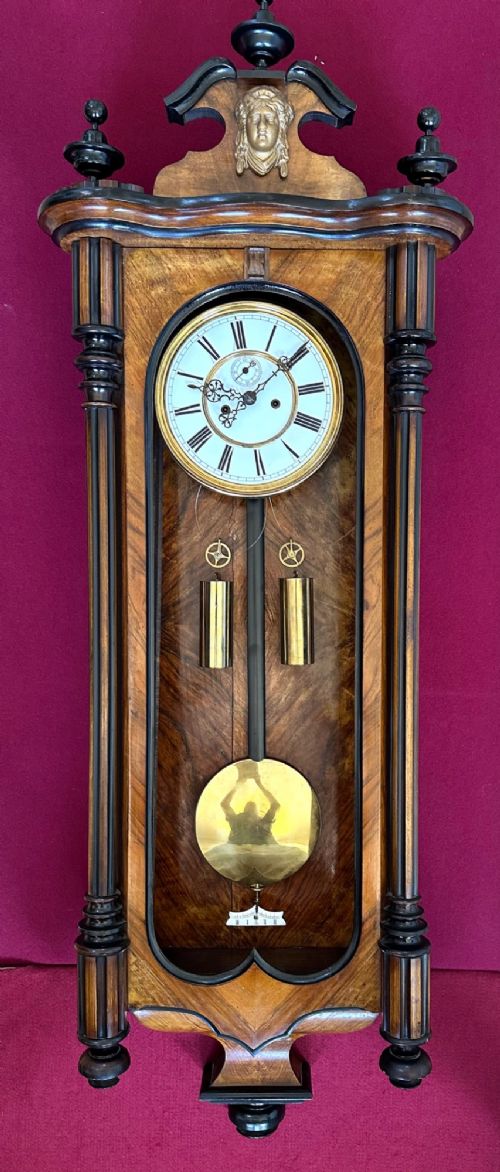
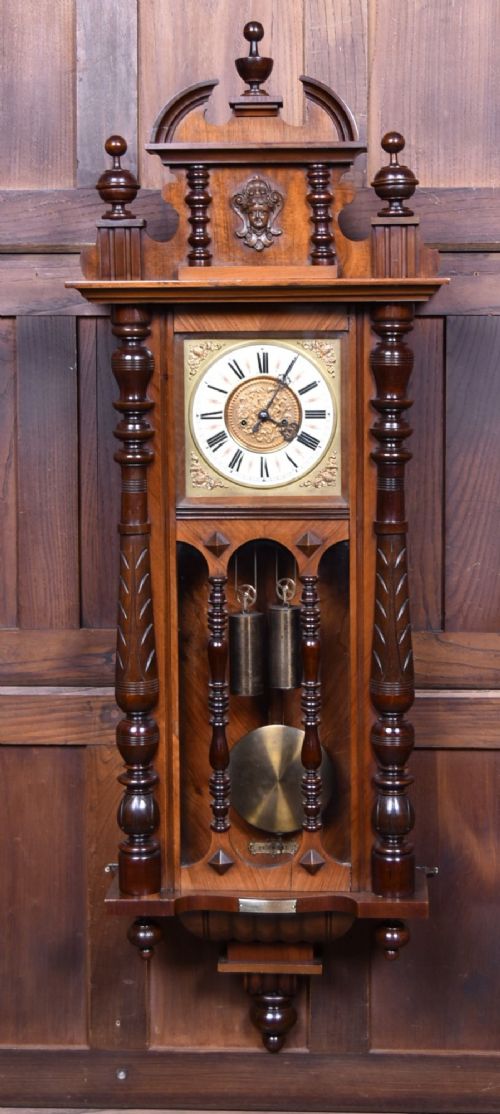
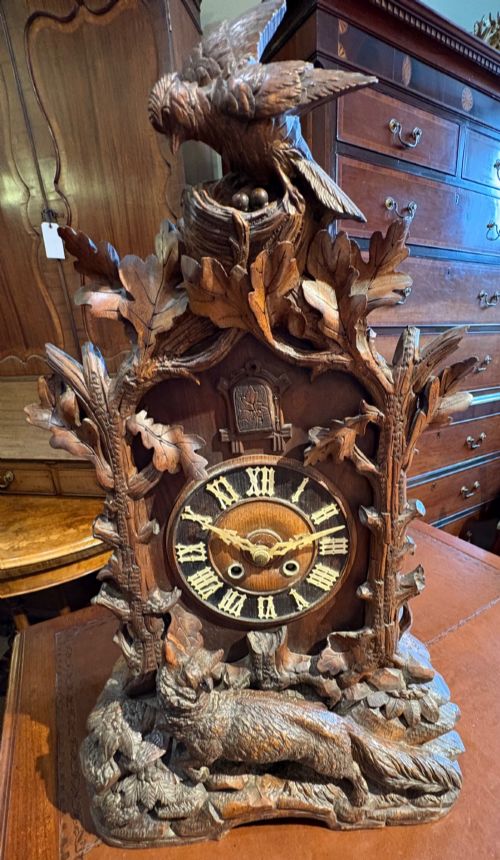
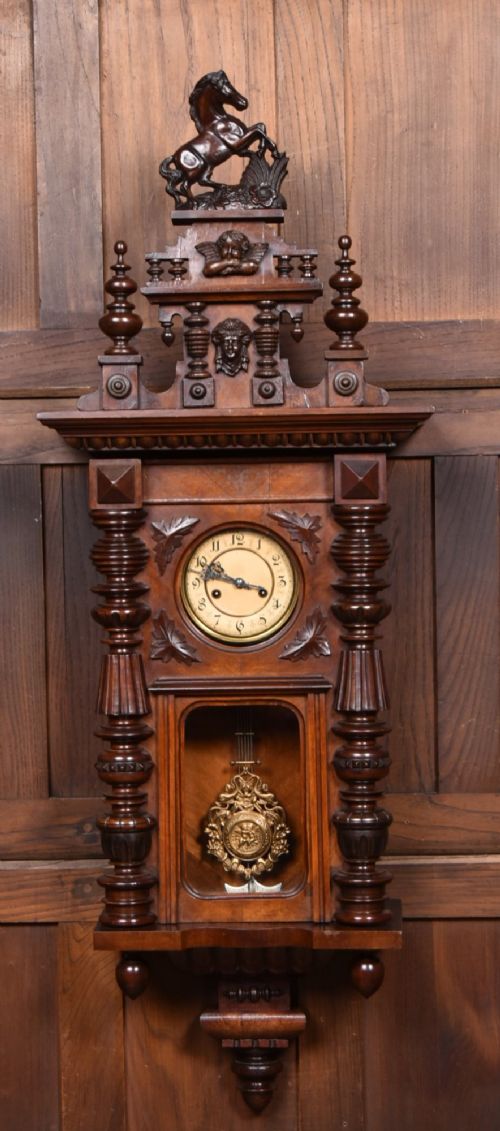
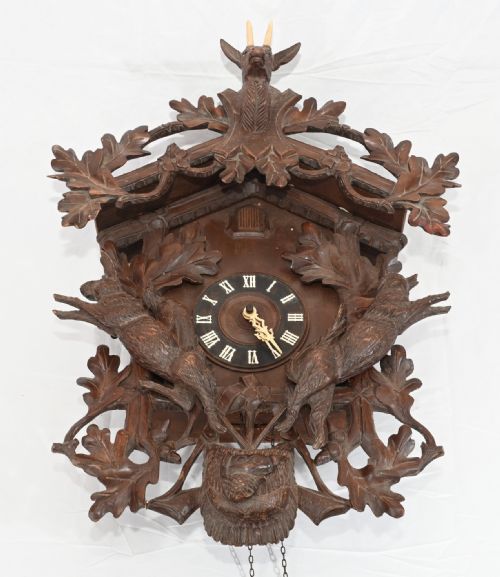
Makers utilised solid walnut and carved wood for the casework, applying hand carving techniques to achieve deep relief motifs such as foliage and animals. Glass panels protect the dials while exposing the swinging pendulums.
Movements incorporate brass, metal, and cast iron components to drive the mechanical gear trains. Enamel dials provide legible faces with roman or arabic numerals.
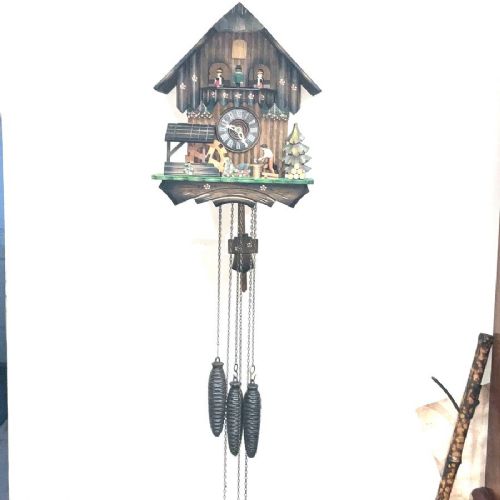
Mechanical birds pop out of miniature timber doors to announce the hour, powered entirely by weights and bellows.
Factors of quality
The depth and crispness of the hand carving separate standard production from superior examples. Natural wood figures and balanced proportions indicate higher skill in the workshop.
Complexity of the movement, such as musical automata or double and triple weight systems, defines the technical standard of the clock. Original components and well preserved enamel dials further distinguish the pieces.
Gustav Becker·Johann Baptist Beha·Lenzkirch
The German Carved Wall Clock Glossary
- Cuckoo clock
- A striking clock that uses bird automata and pipes to imitate the call of the common cuckoo. These mechanisms often operate via bellows and weights.
- Vienna regulator
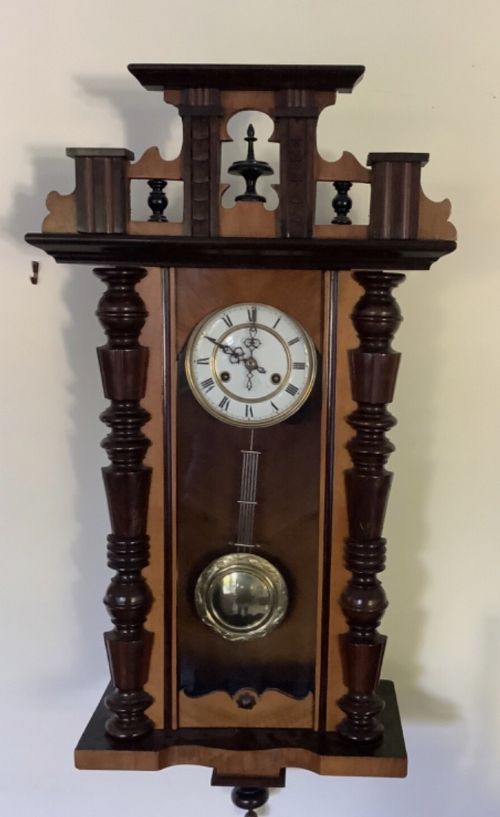
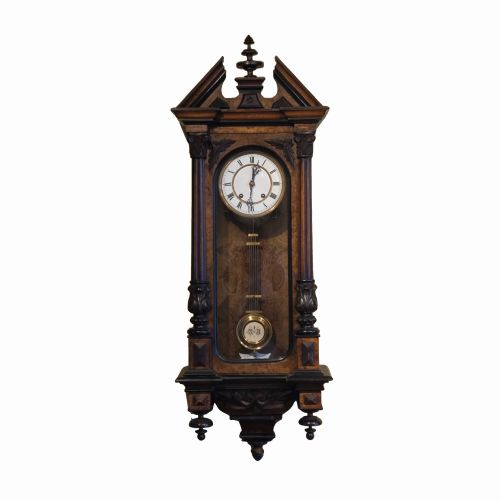
- A precision wall clock developed in Austria and Germany, usually featuring a long glass door to view the pendulum and weights. These movements display high mechanical accuracy.
- Grande sonnerie
- A complication in a striking clock that chimes the hours and the quarters on every quarter hour. This system requires sophisticated gear trains.
- Ebonised wood
- Timber treated with a finish to imitate ebony. This dark staining technique appears frequently on nineteenth century clock cases.
- Anemometer
- An instrument for measuring wind speed, though barometers appear alongside clocks in this category to record atmospheric pressure.
German Carved Wall Clock: Frequently Asked Questions
How do I wind a wall clock?
Use the winding key to turn the arbors clockwise until resistance stops the motion. Care ensures the springs or weights engage properly without over winding.
Suspend weights evenly if the mechanism uses them, and avoid forcing the key past its natural stop.
What is a Vienna regulator?
A Vienna regulator is a precision timepiece housed in a tall wooden case with glass sides and a front door. These clocks were designed for accuracy and display.
Weight driven movements power the pendulum, making them sensitive to level positioning on the wall.
How do cuckoo clocks work?
Weights drive a gear train that operates both the timekeeping hands and the sound mechanism. Bellows push air through small pipes to create the bird call.
Carved wooden automata emerge from miniature doors simultaneously with the audio sequence.
Where should I hang my clock?
Mount the clock securely to a sturdy wall stud using appropriate fixings to support the weight of the timber case and movement. Plumb the case vertically so the pendulum swings evenly.
Keep the clock away from direct sunlight, drafts, and damp environments to protect the wood and metal components.