


Georgian Wooden Steps
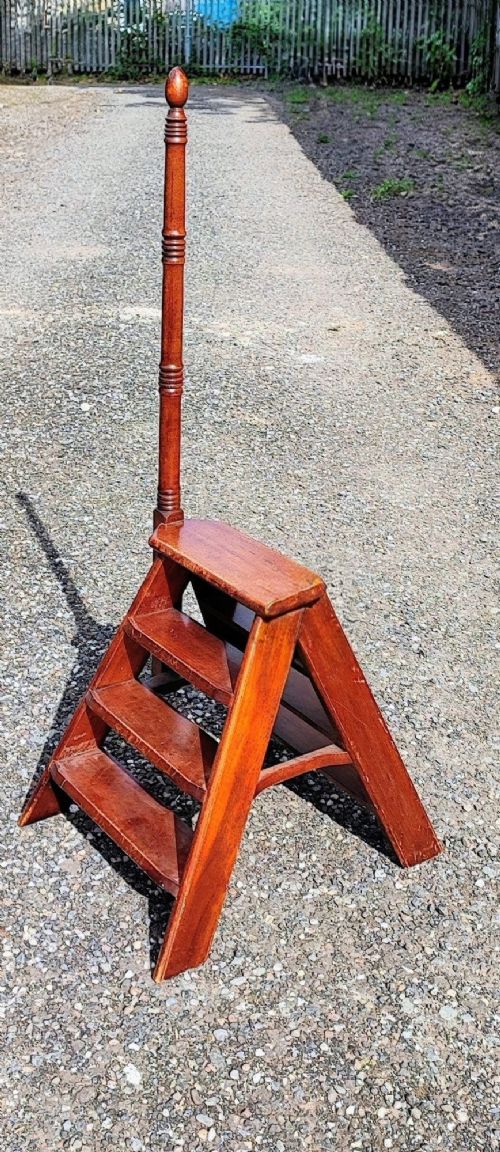
Georgian wooden steps are practical items of period furniture that help you reach high shelves or beds with elegance.
Georgian Wooden Steps
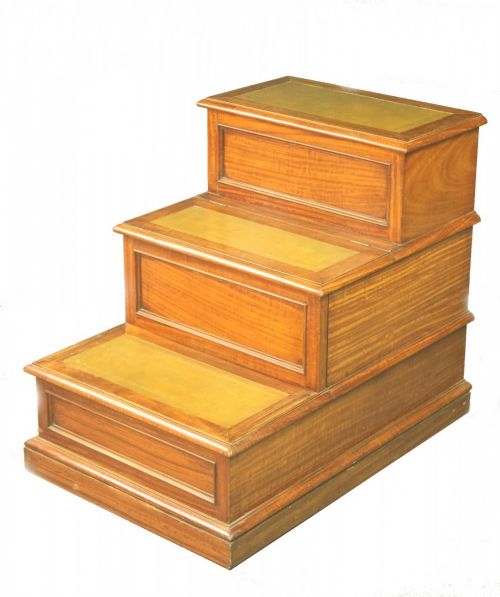
When you search for georgian wooden steps, you encounter functional household pieces designed for the library or bedroom. These items include library steps, bed steps, and folding library steps armchairs.
The versions you are most likely to meet on this page span the 18th century, Regency period, and 19th century. They combine utility with classic craftsmanship, often taking the form of tiered steps or ingenious metamorphic furniture.
How they were made
Cabinet makers utilised dense timbers such as mahogany, oak, satinwood, and fruitwood to build sturdy frames capable of supporting weight. Flame mahogany veneer frequently adds decorative grain to the exterior surfaces.
Fine details include brass mountings, leather treads for grip, and fabric inserts. Folding and metamorphic mechanisms allowed single pieces to transform from chairs or boxes into functional staircases.
Some chairs hid their climbing ambitions entirely until someone pulled the seat forward.
What varies in quality
The standard of timber selection and veneer matching defines the visual appeal of a piece. Finer examples display carefully chosen flame mahogany or richly figured oak that shows deep grain patterns.
The ingenuity and smoothness of mechanical joints separate basic steps from superior metamorphic library chairs. Solid construction in the A-frame or folding framework dictates long-term stability and daily utility.
J.Jarvis·Morgan and Sanders
The Georgian Wooden Steps Glossary
- Metamorphic
- Furniture designed to transform from one object into another, such as an armchair converting into library steps.
- Bed steps
- Small staircases used to climb into high-set historical beds.
- A-frame
- A structural frame shaped like the letter A, providing sturdy support for folding library steps.
- Flame mahogany veneer
- A thin slice of wood with a flamelike pattern applied to a secondary timber base.
- Commode
- A piece of furniture that often doubled as a bedside table or enclosed chamber pot.
Georgian Wooden Steps: Frequently Asked Questions
What are georgian wooden steps used for?
These steps provided practical access to high bookshelves in grand libraries or lofty beds in period bedrooms. Their sturdy wooden construction ensured safe elevation in daily domestic life.
Today, they serve both their original functional purpose and as decorative accent pieces in traditional interiors.
What woods were used for these steps?
Cabinet makers predominantly used mahogany, oak, satinwood, and fruitwood to construct these durable items. Flame mahogany veneer was often applied to enhance the visual grain of the exterior.
Secondary materials like brass hinges, leather treads, and fabric inserts complete the construction of surviving examples.
How do I care for antique wooden steps?
Keep wooden steps away from direct sunlight and sudden temperature changes to protect the timber and veneer from cracking. Regular dusting and occasional application of appropriate wax maintain the finish.
Check that folding mechanisms and leather treads remain clean and free from excessive moisture during routine maintenance.