
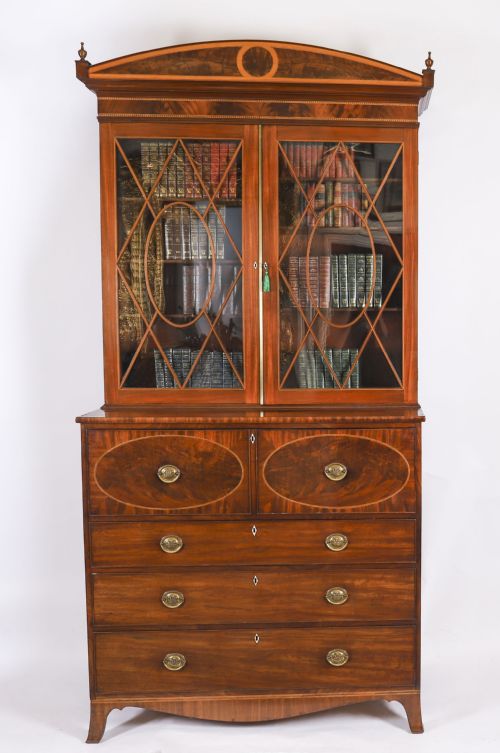
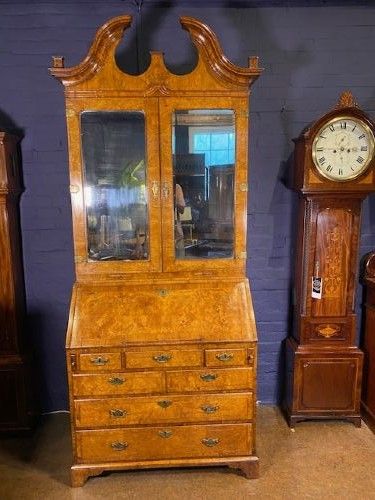
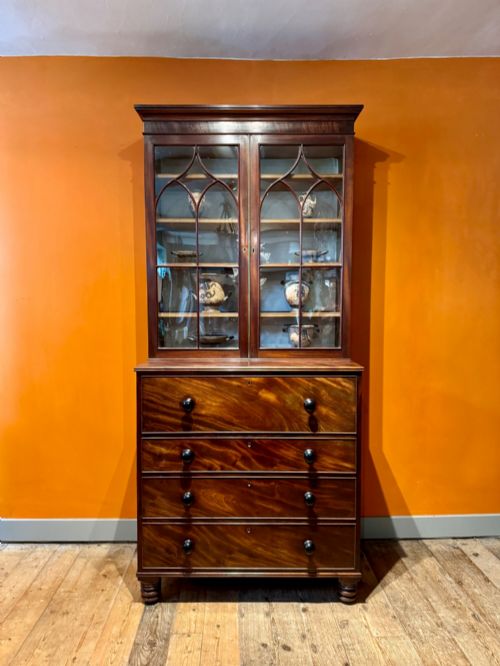


Georgian Wooden Desk Bookcase
A georgian wooden desk bookcase combines a writing bureau with a glazed cabinet, offering sturdy workspace and enclosed shelving.
Georgian Wooden Desk Bookcase
A georgian wooden desk bookcase brings together a fitted writing compartment and upper shelving behind glazed doors. These dual-purpose pieces served as both writing furniture and libraries in period interiors.
The versions met most often on this page date from the Georgian and Regency eras, with forms such as bureau bookcases and secretaire bookcases dominating the selection.
Makers utilised various timber types across different decades, ranging from early red walnut examples to later flame mahogany pieces decorated with marquetry inlay.
How they were made
Cabinet makers constructed these pieces primarily using solid and veneered timbers such as mahogany, oak, and walnut. Flame mahogany and red walnut provided striking decorative grain patterns across large flat surfaces.
Listings feature mahogany, oak, walnut, and brass across pieces spanning the seventeenth century to the twentieth century Edwardian era.
What varies in quality
The standard of timber selection and veneer matching defines the visual strength of each piece. Superior examples display carefully chosen flame mahogany or figured walnut across the entire facade.
The complexity of internal pigeon holes, small drawers, and writing slides dictates the sophistication of the desk section. Finer cabinets exhibit precise joinery in these concealed spaces alongside original brass mounts.
The Georgian Wooden Desk Bookcase Glossary
- Bureau bookcase
- A combined furniture form featuring a sloping desk front above drawers, surmounted by a glazed bookcase. This dual-purpose item formed a central part of period domestic interiors.
- Secretaire bookcase
- A cabinet containing a pull-out drawer with a fitted writing surface rather than a sloping flap. The drop-front mechanism conceals pigeon holes and small storage compartments.
- Flame mahogany
- A tropical hardwood veneer cut to produce a distinctive, flickering flame-like grain pattern. It was widely utilised on high-status furniture during the eighteenth and nineteenth centuries.
- Marquetry inlay
- Decorative patterns created by fitting contrasting pieces of wood veneer into a prepared ground. This technique adorned the surfaces of finer cabinets and desks.
- Red walnut
- An early variant of walnut timber valued for its warm reddish hue and rich grain. It appears on pieces dating from the earlier part of the eighteenth century.
Georgian Wooden Desk Bookcase: Frequently Asked Questions
How do I date a wooden desk bookcase?
Dating relies on examining the timber species, construction methods, and stylistic details present in the piece. Walnut predominates in earlier examples, while mahogany becomes more common later in the eighteenth century.
Inlay styles, brass hardware designs, and the configuration of internal pigeon holes offer further clues to the period of manufacture.
How do I maintain period timber furniture?
Keep wooden furniture away from direct heat sources and strong sunlight to prevent the timber and veneers from drying out. Maintaining stable room humidity protects both the wood and the structural joinery.
Apply traditional wax polish sparingly and buff with a soft cloth to preserve the finish without building up heavy residues.
Where should I place a large bookcase?
Position these substantial pieces against sturdy interior walls where floor levels are reasonably even. Ensuring adequate clearance allows drop-front desks and cupboard doors to open fully without obstruction.
Consider the natural light in the room to highlight the grain patterns of the mahogany or walnut surfaces.