





Georgian Washstand Vanity
A georgian washstand vanity combines domestic utility with refined cabinet-making, offering clever folding tops and basins for daily toilette.
Georgian Washstand Vanity
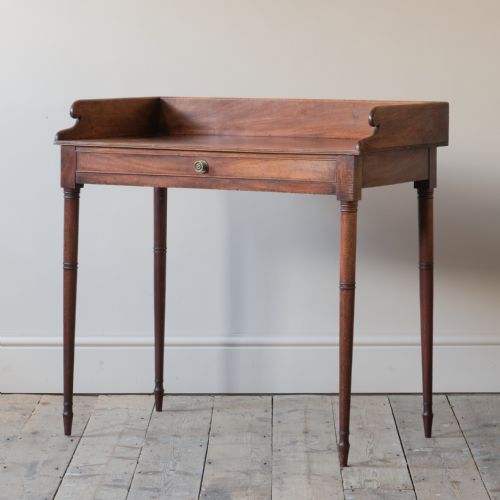
When you search for a georgian washstand vanity, you find a range of timber furniture designed for personal washing and grooming in the bedroom. These pieces date from the Georgian, Regency, and early Victorian periods, capturing an era when ablutions were handled privately with bespoke furniture.
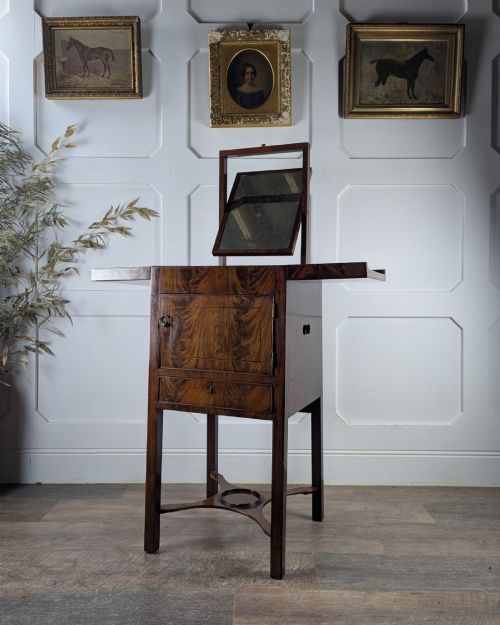
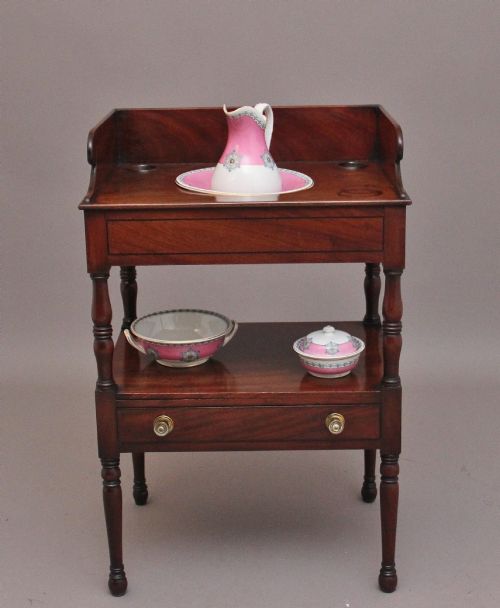
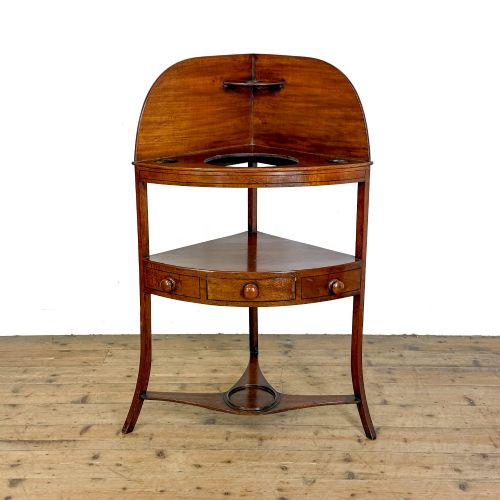
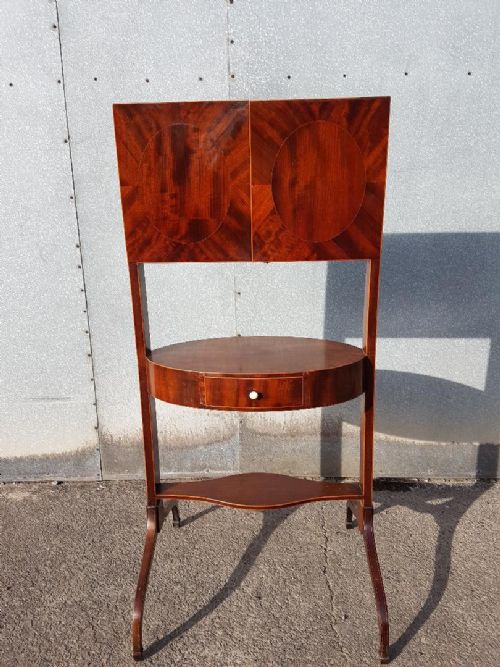
The forms vary from corner washstands to fold-away designs, gentleman's dressing tables, and campaign pieces with round basins on triform stands. Mahogany is the dominant timber, often enhanced by boxwood inlay or combined with satinwood, pine, and brass fittings.
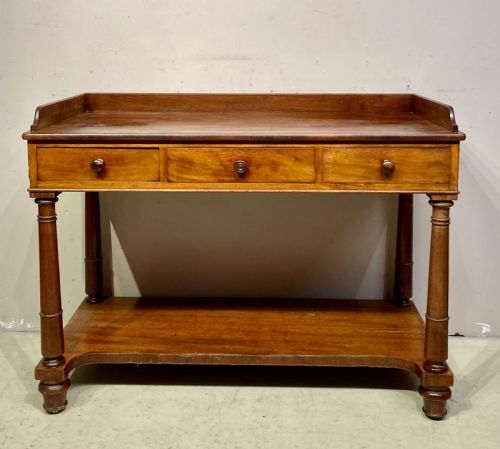
You are most likely to encounter mahogany examples featuring compartmented tops or three-quarter gallery upstands. Some incorporate mirrors and ingenious folding mechanisms designed to conceal the basin when not in use.
Assessing quality in cabinet work
Quality rests in the precision of the joinery and the selection of timber figures, particularly in Cuban mahogany and contrasting satinwood veneers. Finer pieces demonstrate careful attention to inlaid details and structural harmony in complex fold-away mechanisms.
Proportion and the retention of original brass hardware or ceramic basins separate standard utilitarian items from exceptional gentleman's dressing tables and campaign pieces.
The furniture spans George III, Regency, and early Victorian periods, including specialised campaign designs.
The Georgian Washstand Vanity Glossary
- Washstand
- A piece of furniture designed to hold a basin, jug, and washing accessories. These items date predominantly from the Georgian and nineteenth-century periods.
- Campaign
- Portable furniture designed for travel, featuring durable construction and brass mounts. Campaign washstands and dressing chests dismantle or fold compactly.
- Gallery
- A low raised wooden border surrounding the top of a table or washstand. This feature prevented water jugs or small items from rolling off the surface.
- Kneehole
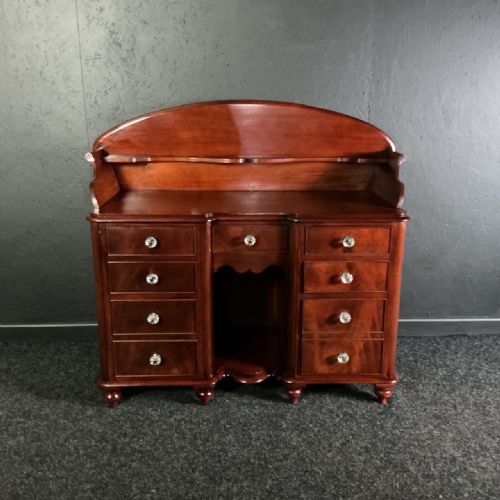
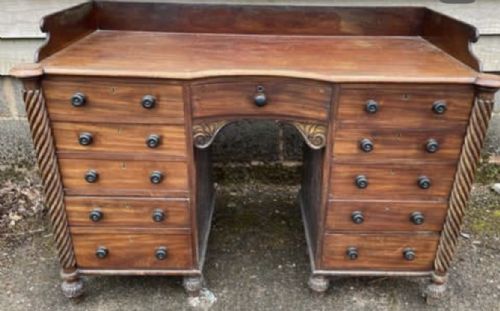
- A recessed space beneath the centre of a dressing table or desk designed to accommodate the user's legs. These tables often include banks of small drawers on either side.
- Triplate
- A dressing table mirror arrangement featuring three adjustable plates hinged together. This allowed the user to view themselves from multiple angles during grooming.
Georgian Washstand Vanity: Frequently Asked Questions
How did people use a georgian washstand vanity?
These pieces served private bedrooms for morning washing, shaving, and grooming before plumbed bathrooms existed. Ingenious folding tops and compartments concealed basins, water jugs, and shaving mirrors when the routine finished.
Gentlemen and ladies relied on them for daily toilette, utilising the surface space and drawers for powders, brushes, and personal linens.
What is the difference between a washstand and a dressing table?
Washstands were specifically built to hold water basins and washing hardware, often featuring cut-out tops or gallery surrounds to contain splashes. Dressing tables focused more on mirrors, drawers, and surface space for cosmetics and hairdressing.
Many pieces bridge this divide, functioning as dual-purpose gentleman's dressing chests or convertible campaign vanities.
How do I identify a George III piece?
George III pieces typically display classic proportions, high-grade mahogany timbers, and restrained decorative elements such as boxwood stringing or subtle inlay. The cabinet work prioritises structural honesty and balanced joinery without heavy Victorian ornamentation.
Looking underneath and inside the drawers reveals period construction methods, hand-cut dovetails, and secondary woods consistent with the eighteenth century.
Where should I place one in a modern home?
A corner washstand fits neatly into unused angles of a bedroom or bathroom, utilising vertical space efficiently. Fold-away tables work well as functional side surfaces where you can lift the lid to display or store small items.
Their compact footprints and warm mahogany tones suit hallways, guest rooms, or living spaces as distinctive accent furniture.