



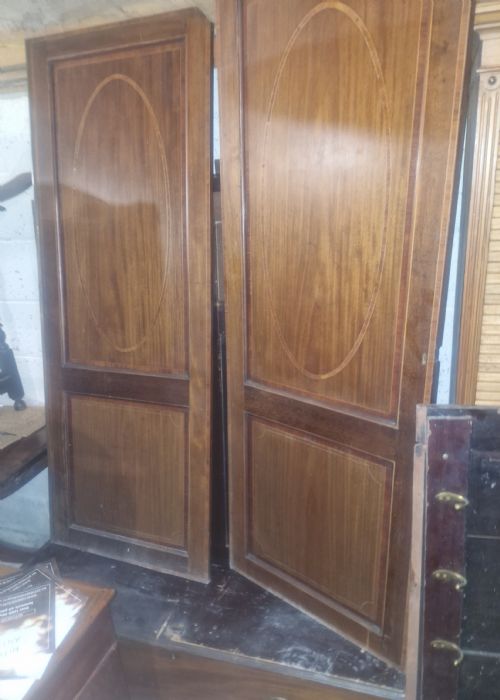

Georgian Wardrobe Furniture
Georgian wardrobe furniture brings architectural presence to a bedroom, offering substantial storage through timber presses and hanging cupboards built to last.
Georgian Wardrobe Furniture
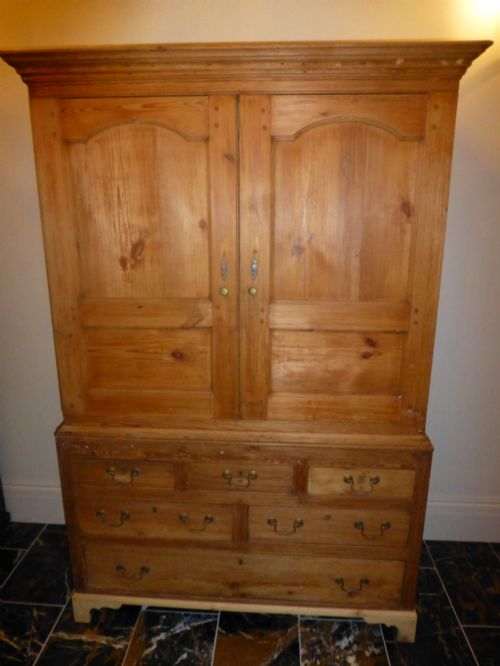
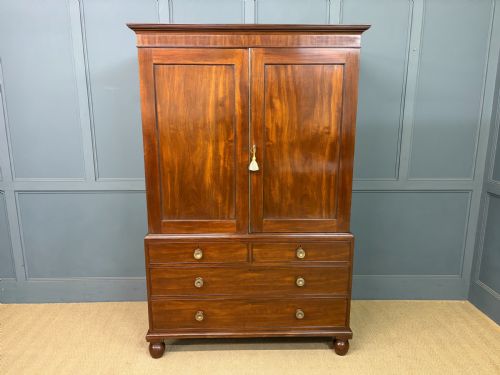
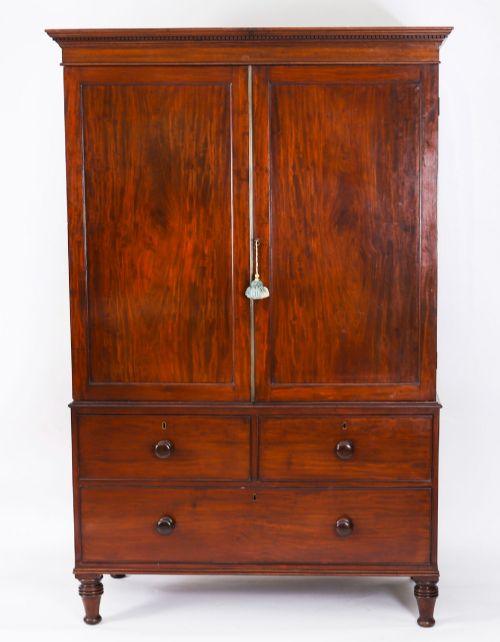
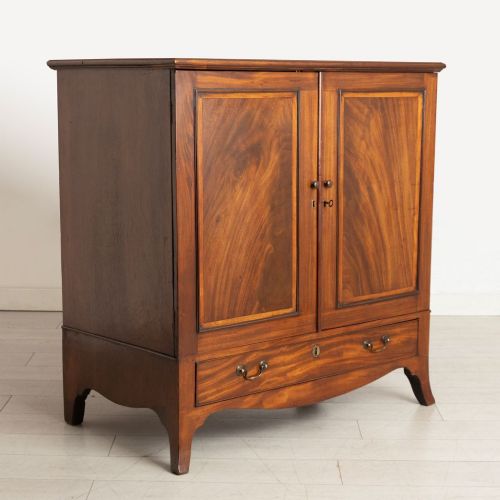
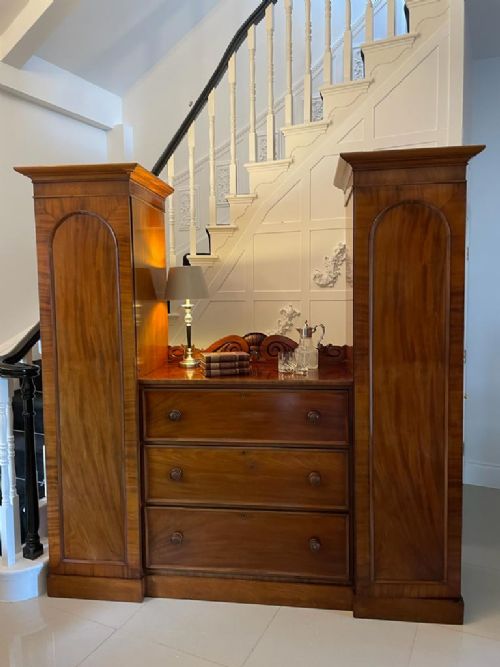
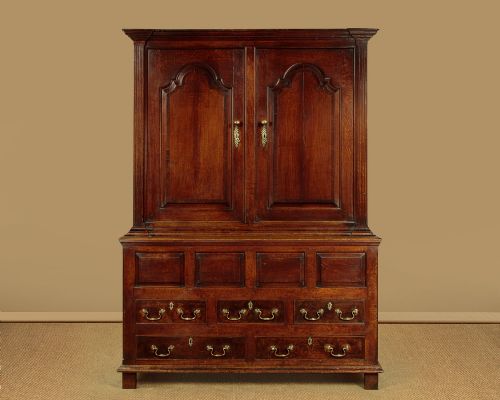
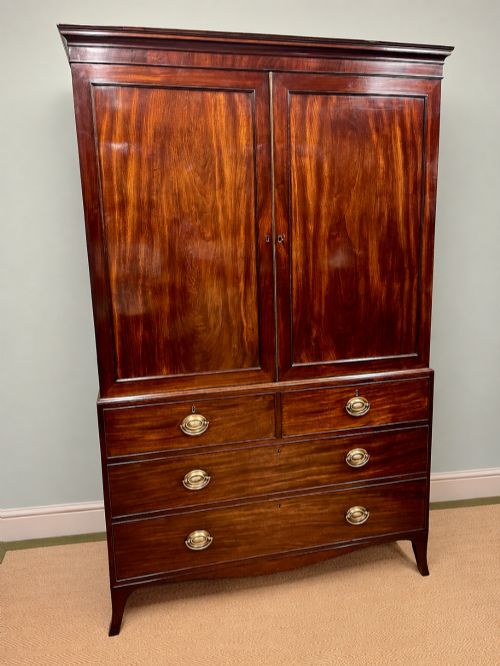
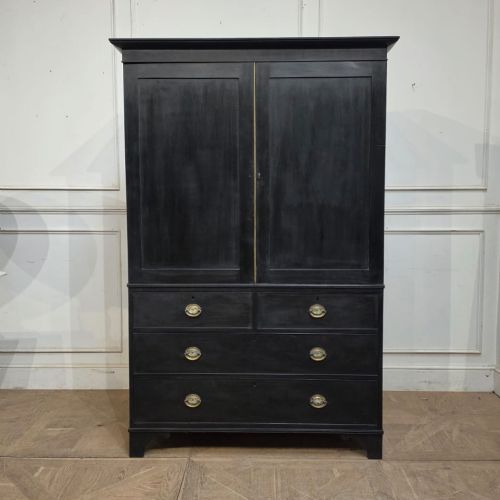
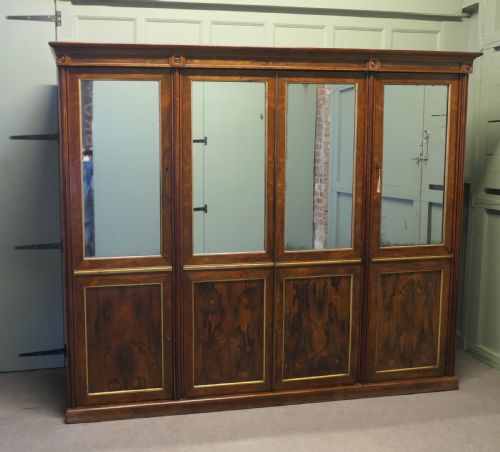
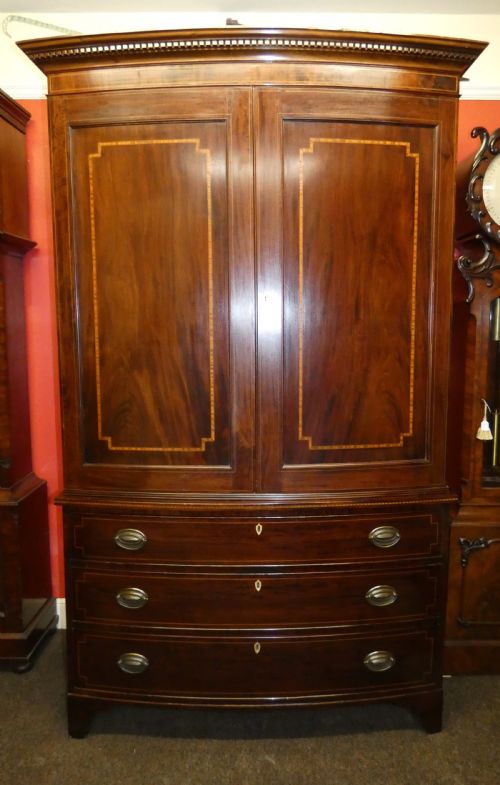
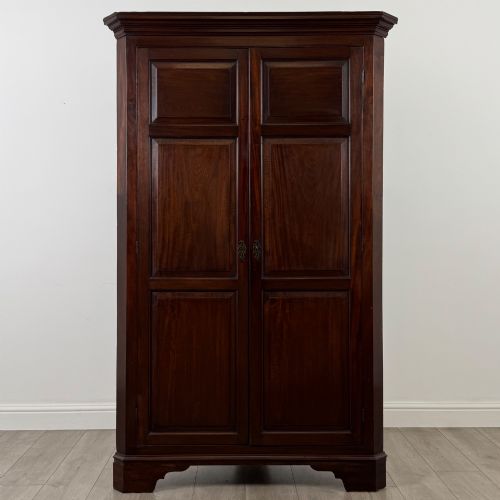
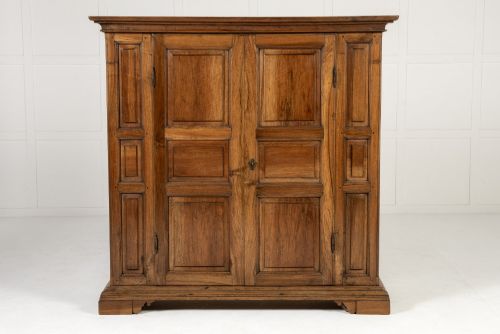
Georgian wardrobe furniture encompasses tall timber storage pieces designed for domestic organisation, spanning linen presses, hanging cupboards, and compactums from the eighteenth and early nineteenth centuries. The pieces on this page range from compact oak tack cupboards and corner cabinets to grand breakfront mahogany wardrobes.
Buyers will most frequently encounter mahogany and oak examples originating from English, Welsh, and Channel Island workshops. These items often combine upper linen storage with lower drawer sections, reflecting the domestic requirements of period households.
Materials and construction methods
Cabinet makers utilised dense hardwoods like mahogany, frequently employing flame or curl veneers on primary surfaces to create striking grain patterns. Oak and pine served as structural timbers, particularly in regional vernacular pieces such as Welsh housekeeper cupboards.
Construction relied on traditional joinery techniques, incorporating brass hardware for handles and escutcheons. Surfaces were finished with wax or paint, allowing the natural figuring of walnut, satinwood, and rosewood to show through on higher-status pieces.
Georgian Wardrobe Furniture Retail Price Guide 2026
Typical asking prices for georgian wardrobe furniture among the pieces listed under this phrase on Sellingantiques today, from the lower quarter to the upper quarter. They describe what is for sale here now, not the wider market.
Several cupboards are noted as ready to wax or paint, offering a tactile project for buyers wanting to put their own stamp on history.
Standards of craftsmanship
Quality in these pieces rests on the selection of timber and the precision of the cabinet work, particularly in the matching of veneer grains across large doors and drawer fronts. Superior examples display thoughtful proportions and careful detailing, such as fine inlay or panelled construction.
The integration of internal sliding trays within linen presses versus simple hanging space affects both utility and historical accuracy. Original brass fittings and sound structural integrity distinguish finer workshops from more utilitarian regional items.
Francis Brodie
The Georgian Wardrobe Furniture Glossary
- Linen press
- A large storage cabinet featuring upper sliding trays for textiles and lower drawers for bulkier garments. This form dominated domestic storage before full-length hanging wardrobes became common.
- Compactum
- A multi-compartment wardrobe combining hanging space, sliding trays, and drawers within a single carcass. These pieces offered comprehensive clothing storage for the household.
- Breakfront
- A cabinet design where the central section projects forward from the flanking wings. This architectural arrangement created visual depth on large wardrobes.
- Fielded panel
- A wooden panel with bevelled edges set into a recessed frame to allow for timber expansion. This construction method prevented warping in large cupboard doors.
- Campaign wardrobe
- A modular storage piece built to dismantle for transport by travellers or military officers. These items utilised robust brass corners and knock-down frames.
Georgian Wardrobe Furniture: Frequently Asked Questions
What is a linen press?
A linen press is a tall storage unit that pairs upper sliding shelves with lower drawers. It was designed to keep household textiles flat and organised.
Over time, many of these pieces were converted into standard hanging wardrobes by removing the internal trays to accommodate modern clothing lengths.
How do I distinguish oak from mahogany pieces?
Oak pieces generally exhibit a pronounced, textured grain with visible medullary rays, often associated with regional vernacular or earlier Georgian periods. Mahogany presents a smoother, reddish-brown surface that took fine veneers and inlay work well.
Regional country pieces tended to favour oak or pine, while fashionable urban workshops utilised imported tropical hardwoods.
Where should I place a large wardrobe?
Large wardrobes require adequate wall space and ceiling clearance, particularly breakfront or double-door models from the Regency era. Measuring access routes through hallways and doorways is essential before positioning them in a bedroom.
Many period pieces, such as knockdown pine wardrobes, were constructed to be disassembled for easier transport and room placement.
How do I care for antique timber?
Maintaining these pieces involves keeping them away from direct heat sources and dramatic humidity fluctuations to prevent wood splitting. Regular application of traditional beeswax helps nourish the timber and preserve the finish.
Harsh chemical cleaners should be avoided in favour of a soft, dry cloth for everyday dusting.