

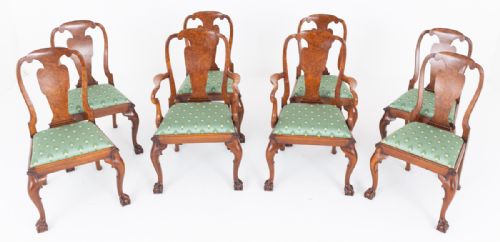


Georgian Walnut Carver Chairs
Georgian walnut carver chairs bring rich timber tones and commanding armrests to a room, offering both practical seating and traditional presence.
Georgian Walnut Carver Chairs
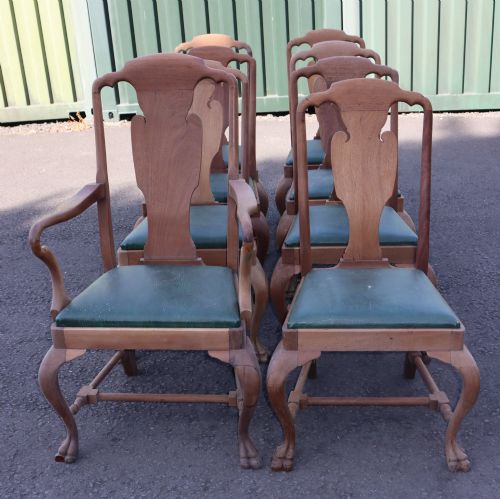
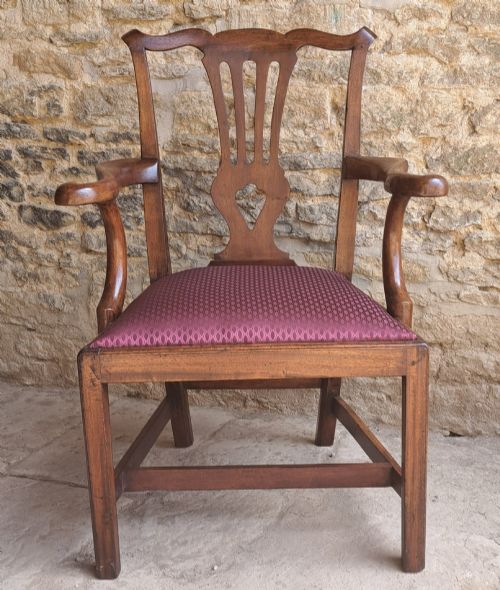
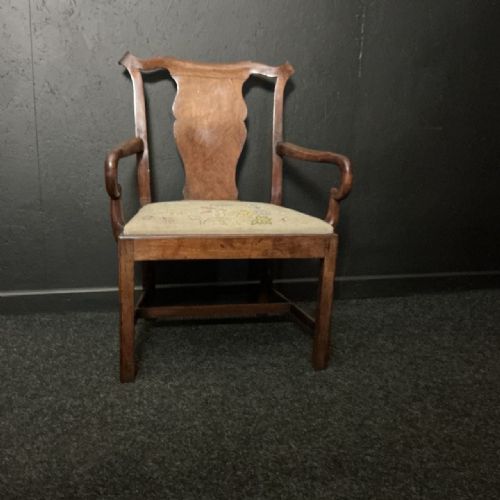
When you search for georgian walnut carver chairs, you encounter seating designed with substantial armrests, commonly called carvers or elbow chairs, alongside matching sets of dining and desk chairs. The selection ranges from authentic eighteenth-century examples to later revival pieces produced around nineteen hundred and the early decades of the twentieth century.
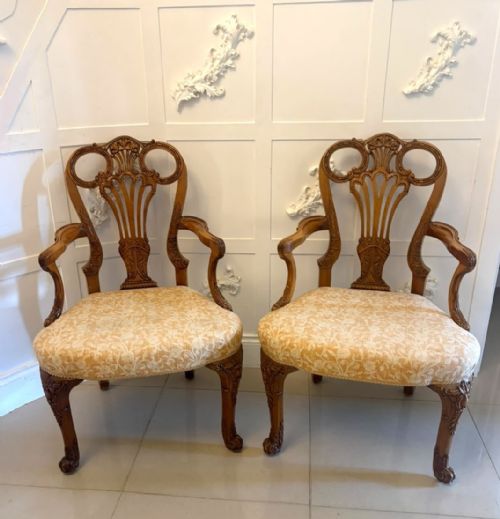
The forms span several distinct aesthetic movements, including Queen Anne, George I, George II, and Chippendale styles, occasionally drawing upon French rococo influences. Buyers often find single armchairs, pairs, or larger suites designed for dining and study use.
How they were made
The primary timber used is walnut, frequently highlighted by the striking grain patterns of burr walnut veneers. Frames are constructed using traditional joinery methods, supporting various upholstered elements.
Upholstery materials recorded across the pieces include fabric, leather, textiles, velvet, and tapestry, sometimes accented with brass detailing such as castors or tacking.
Georgian Walnut Carver Chairs Retail Price Guide 2026
Typical asking prices for georgian walnut carver chairs among the pieces listed under this phrase on Sellingantiques today, from the lower quarter to the upper quarter. They describe what is for sale here now, not the wider market.
Spillman & Co left their mark on a carved walnut dining set, ensuring their nineteenth-century ambition outlasted the dining room.
What varies in quality
Quality in these chairs rests upon the depth of the timber's grain, particularly the choice between straight walnut and figured burr walnut veneers. Finer examples display crisp hand-carving along the splats, knees, and arm terminals, whereas simpler pieces rely on plain turned members.
The integrity of the frame construction and the fidelity of the period revival styling further separate standard workshop production from exceptional cabinet work.
Spillman & Co
The Georgian Walnut Carver Chairs Glossary
- Carver chair
- An armchair, often used at the head of a dining table or as a desk chair, featuring prominent elbow supports.
- Burr walnut
- A specialised timber cut from the wart-like growths on walnut trees, prized for its swirling and highly decorative grain patterns.
- Splat
- The vertical central strip of wood down the middle of a chair back, frequently shaped in fiddle or vase forms.
- Elbow chair
- An alternative historical term for an armchair, referencing the supportive arms designed to rest the user's elbows.
- Revival style
- A design movement later in history, such as the Queen Anne or George II revivals, which reinterprets earlier historic forms.
Georgian Walnut Carver Chairs: Frequently Asked Questions
Are carver chairs meant only for dining tables?
While many sets include carvers intended to sit at the heads of a dining table, numerous examples function equally well as standalone desk chairs or study armchairs.
Their substantial armrests and supportive backs make them versatile enough for various rooms beyond the dining space.
How do I distinguish an eighteenth century piece from a revival chair?
Distinguishing the original period pieces from later nineteenth and twentieth-century revivals involves examining the construction methods, timber patination, and tool marks hidden beneath the frame.
Revival pieces often reflect the specific manufacturing techniques and stylistic interpretations popular around nineteen hundred rather than authentic eighteenth-century workshop practices.
What is the difference between a carver and a standard dining chair?
The primary distinction lies in the addition of armrests, which transform a standard side chair into an imposing seat suitable for a host.
These arm components require sturdier structural joinery to withstand daily lateral pressure.
Which timber variations appear most frequently?
Plain walnut serves as the standard timber for many frames, while exceptional examples utilise burr walnut for its decorative surface figure.
Upholstered components introduce contrasting textures through fabric, leather, velvet, and tapestry.