


Georgian Walnut Bow Front
A georgian walnut bow front brings rich, curved grain and historic depth into a room.
Georgian Walnut Bow Front
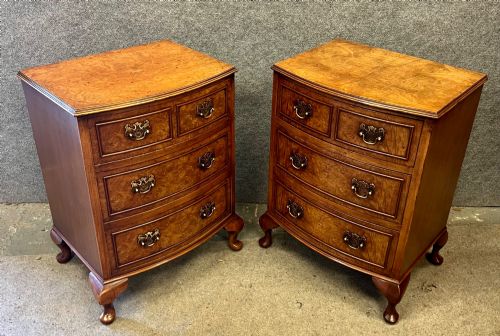
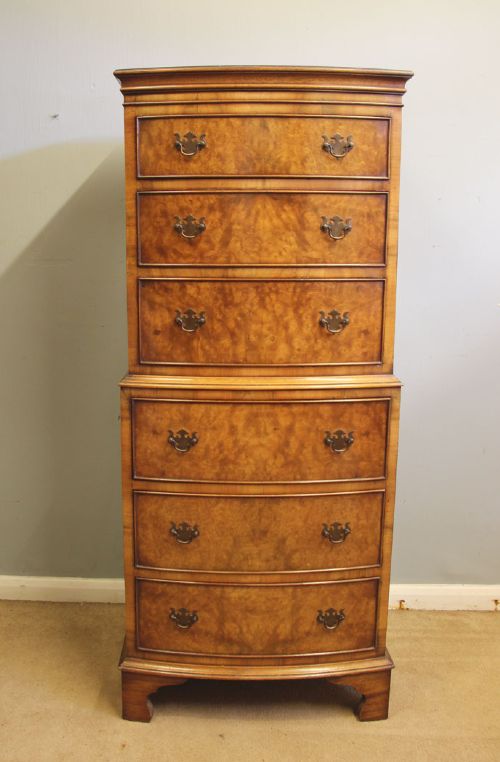
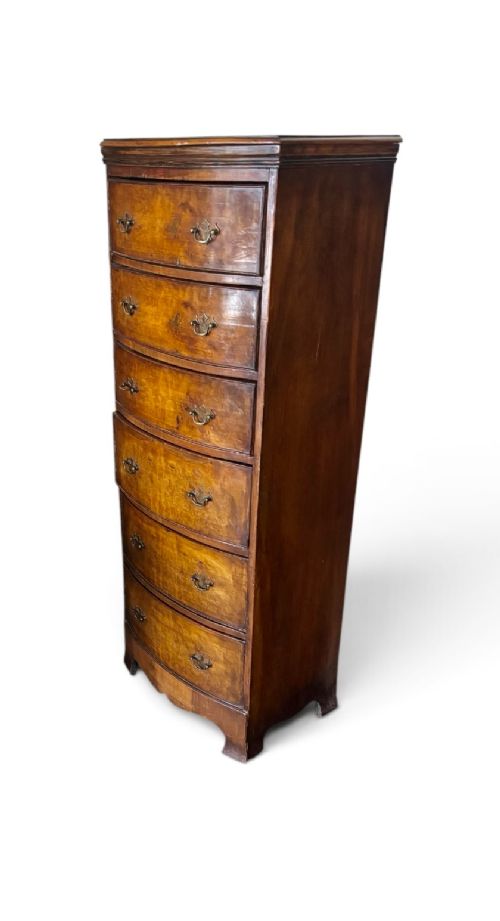
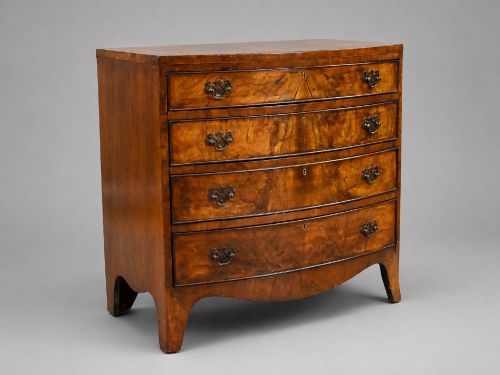
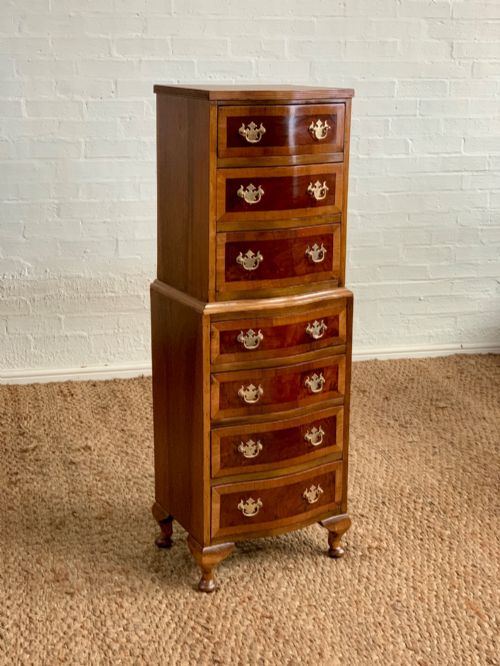
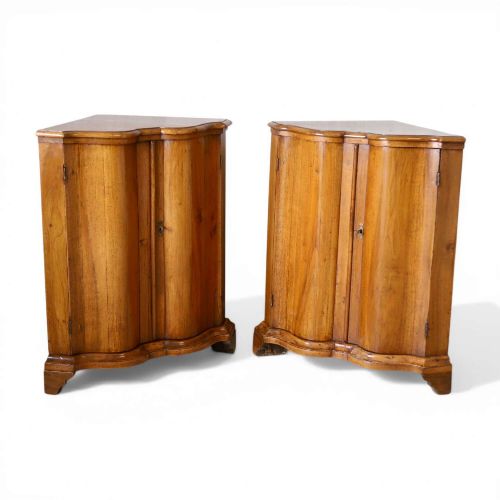
A georgian walnut bow front typically takes the form of a chest of drawers, tallboy, or corner cupboard. These pieces feature the characteristic outward-curving front that softens the corners of a traditional furniture silhouette.
You will encounter pieces originating from the eighteenth century alongside later revivals from the early twentieth century. These later interpretations often adopt Georgian or Queen Anne styles using burr or figured veneers.
Alongside chests and cupboards, the selection includes sideboards, writing side tables, desks, and console tables. Each object harnesses the natural figuring of walnut to create a striking focal point.
How they were made
Makers utilised solid timbers such as oak, elm, and painted wood for foundational carcases and internal structures. These robust woods provide stability for the curved facades.
The decorative surfaces rely on carefully selected walnut veneers, including burr and figured varieties, applied to create symmetrical patterns across the curved drawer fronts and doors. Brass hardware such as handles and escutcheons finish the construction.
Materials documented across these listings include solid oak, elm, and brass alongside burr, figured, and painted walnut.
What varies in quality
The visual appeal depends largely on the choice and matching of the veneer. Burr and highly figured walnut displays complex grain patterns that elevate the overall presence of the furniture.
Construction methods and proportions dictate the refinement of each piece. Finely executed curves on a bow front, paired with complementary secondary timbers like oak and elm, separate standard production from superior work.
The Georgian Walnut Bow Front Glossary
- Bow front
- A convex, outward-curving furniture facade that softens linear angles. This curved design became popular for chests of drawers and side tables.
- Tallboy
- A tall chest of drawers, often constructed in two stacked sections. Versions in this selection frequently incorporate a bow front and upper cabinet components.
- Corner cupboard
- A triangular cabinet designed to fit neatly into the corner of a room. These pieces often feature panelled doors and internal shelving.
- Figured walnut
- Timber exhibiting distinctive, decorative grain patterns resulting from the natural growth of the tree. Cabinetmakers select these boards for maximum visual impact.
Georgian Walnut Bow Front: Frequently Asked Questions
What is a bow front?
A bow front is a convex, curved furniture facade that projects outward in the centre. This design creates a softer silhouette than a flat-fronted cabinet.
It appears frequently on chests of drawers, side tables, and corner cabinets across different periods.
How do I date a piece?
Dating relies on examining the construction methods, secondary timbers like oak and elm, and stylistic cues. Eighteenth-century examples contrast with early twentieth-century revivals.
Looking at the backboards, drawer linings, and hardware helps determine the exact period of manufacture.
Where should I place a corner cupboard?
Corner cupboards fit efficiently into unused room angles, making them ideal for smaller spaces. Hanging or freestanding versions maximise storage without dominating the floor plan.
They work well in dining rooms or hallways to display tableware or books.
How do I care for walnut veneer?
Walnut veneer requires protection from direct sunlight and excessive moisture to prevent fading and warping. Regular dusting with a soft, dry cloth preserves the polished surface.
Applying appropriate wax occasionally maintains the lustre of the figured grain.