


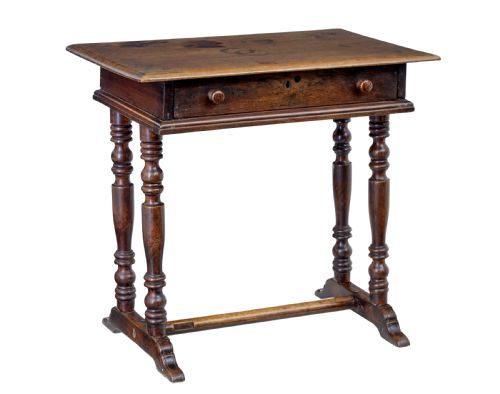


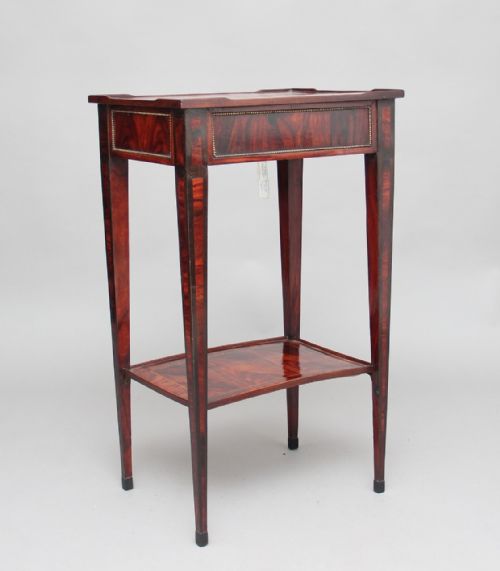
Georgian Timber Lamp Table
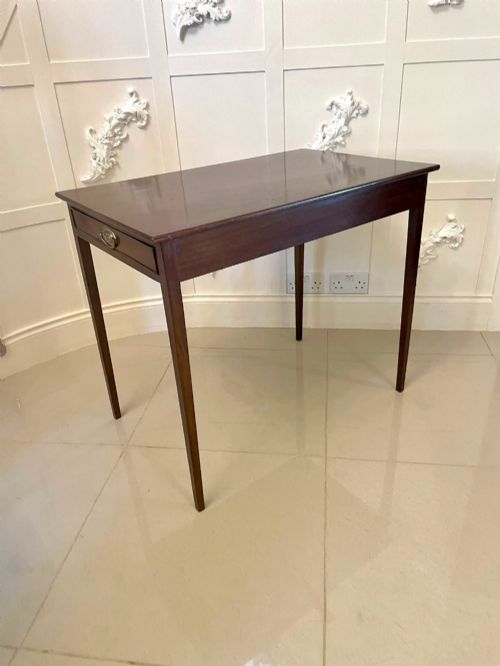
A georgian timber lamp table brings warm mahogany, oak or walnut and compact seventeenth to nineteenth-century proportion directly beside an armchair.
Georgian Timber Lamp Table
A georgian timber lamp table encompasses small occasional, side, wine and cricket tables designed for domestic utility and surface space. The examples gathered here span periods from early Georgian to Victorian, alongside provincial and nineteenth-century interpretations.
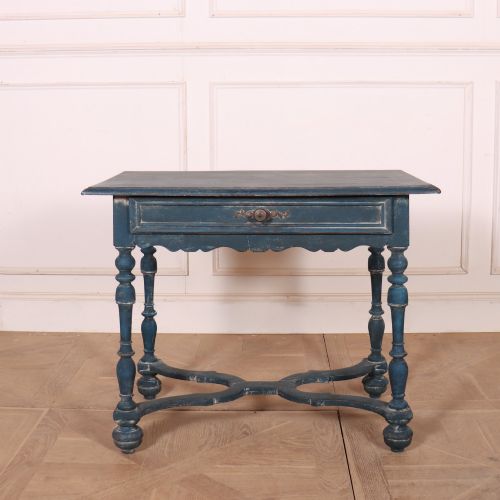
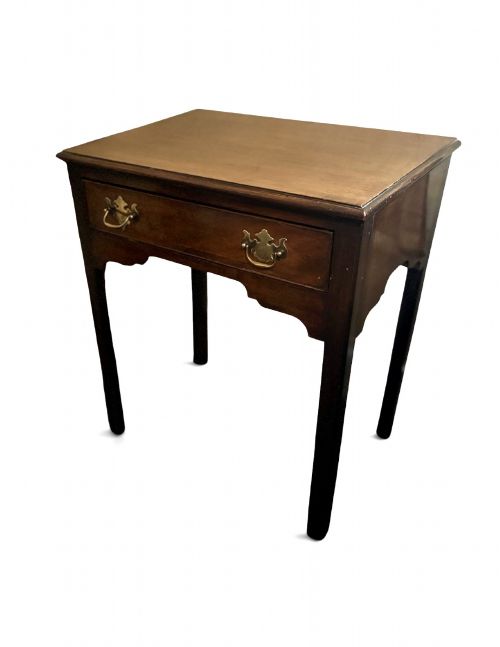
Most pieces meet the eye as compact timber surfaces in mahogany, oak, elm or walnut, often standing on tripod bases or straightforward legs. Forms range from lowboys and tilt-top wine tables to rustic cricket tables and painted occasional pieces.
Buyers seeking a georgian timber lamp table will encounter English country designs alongside refined George III and Regency examples. These small tables served practical purposes beside seating or walls and continue to function effectively in modern rooms.
How they were made
Cabinetmakers utilised solid timbers such as oak, elm and mahogany, frequently selecting figured walnut or specimen woods for decorative surfaces. Construction methods relied on traditional joinery suited to smaller domestic items intended for regular movement around a room.
Tripod bases turned on lathes to support tilting or fixed tops, while side tables utilised straightforward leg-and-rail construction with occasional brass handles or fittings. Painted finishes and bleached treatments appeared on provincial pieces alongside polished hardwood surfaces.
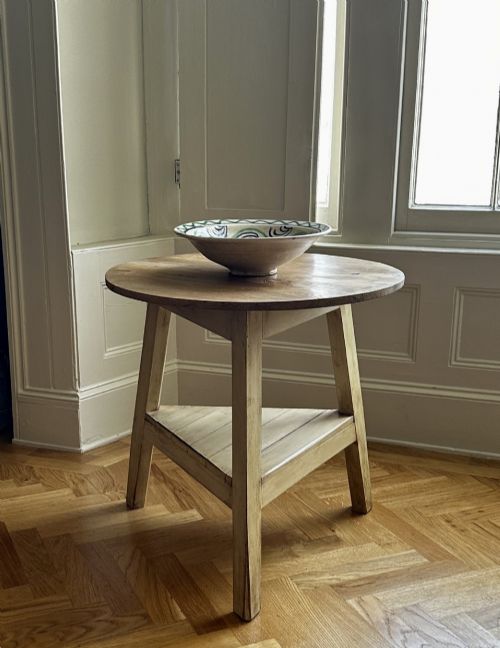
Elm cricket tables bring stable three-legged charm originally designed to stay steady on uneven cottage floors.
What varies in quality
Quality in these smaller tables rests upon the selection of timber, such as figured walnut or dense mahogany, and the crispness of turning on tripod stems and legs. Finer pieces demonstrate careful proportion and harmonious grain matching across the top.
Simpler provincial or rustic items rely on the honest charm of elm and oak, where simpler construction is balanced by character and age. The distinction lies between utilitarian everyday pieces and those shaped by cabinetmakers with greater decorative ambition.
The Georgian Timber Lamp Table Glossary
- Tilt top
- A table mechanism allowing the wooden surface to pivot vertically when not in use. This clever design saved valuable floor space in smaller period rooms.
- Lowboy
- A small low dressing or side table featuring drawers beneath the surface. These pieces typically stand on slender legs and date from the eighteenth century.
- Cricket table
- A small three-legged round table with a wooden top, traditionally used in English cottages. The three-legged format ensured stability on uneven floors.
- Tripod base
- A pedestal support branching into three feet. This arrangement provides stable footing for small lamp and wine tables.
- Pie crust
- A carved, raised decorative edge shaped along the perimeter of a circular tabletop. This detail demanded considerable skill from the timber carver.
Georgian Timber Lamp Table: Frequently Asked Questions
What is a lamp table?
A lamp table is a small occasional surface designed to hold lighting, drinks or books beside seating.
Historically adapted for various domestic tasks, these compact pieces fit easily into corners or beside armchairs.
How old are these tables?
The pieces span from the seventeenth century through the Georgian and Regency eras into the nineteenth and early twentieth centuries.
Earlier examples display provincial construction, while later nineteenth-century pieces often reflect revival styles or practical domestic updates.
What woods were used?
Cabinetmakers utilised accessible native timbers such as oak and elm alongside imported hardwoods like mahogany.
Figured walnut and specimen woods also appear on decorative surfaces, sometimes paired with brass fittings.
Where should I place one?
Their compact dimensions make these tables suited for placement beside sofas, armchairs or in narrow hallways.
They function well as designated surfaces for lamps or small decorative objects without dominating the room.