



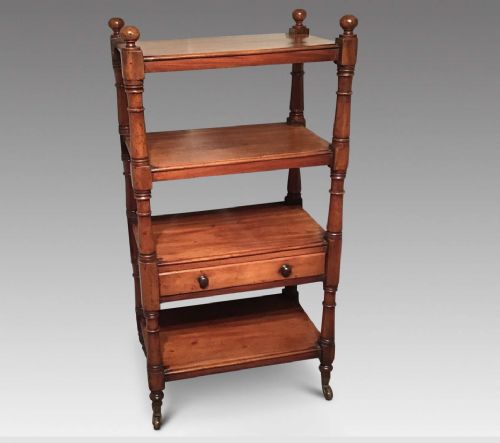

Georgian Tiered Server
A georgian tiered server is a practical multi-level wooden stand designed to hold dishes and drinks during dining.
Georgian Tiered Server
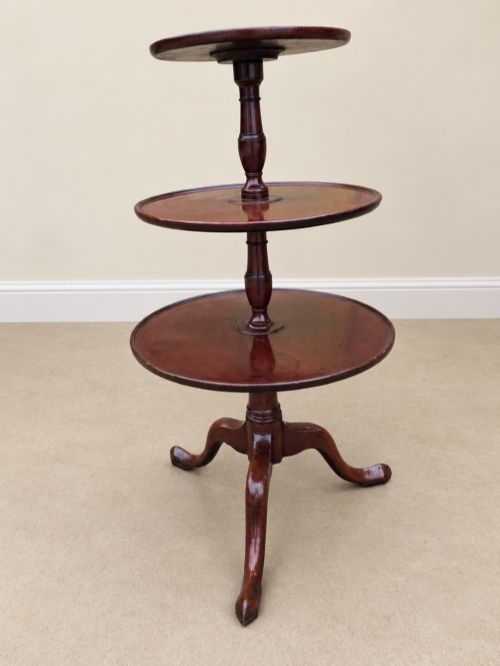
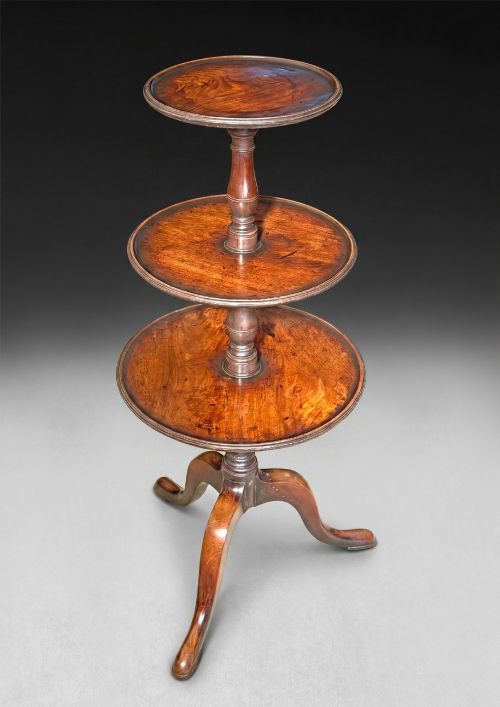
A georgian tiered server primarily takes the form of a dumb waiter or buffet, functioning as a multi-level stand for dining rooms. These pieces date across the eighteenth and nineteenth centuries, spanning Georgian, Regency, and William IV periods.
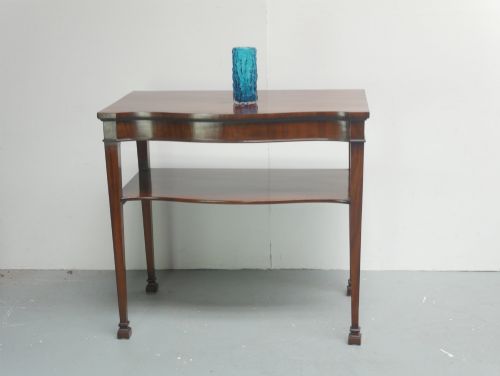
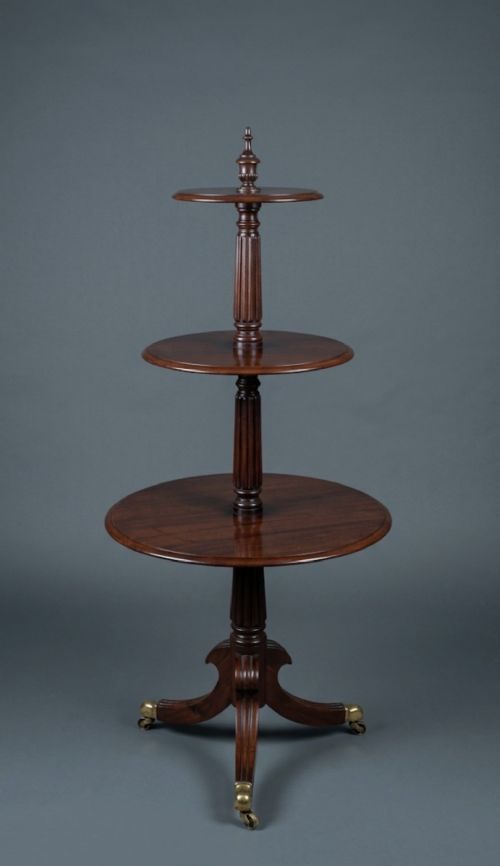
The most common version found on this page is the circular three-tier mahogany dumb waiter, often featuring graduating revolving shelves supported on a tripod base. Some examples incorporate drop-leaves, rectangular shelves, or galleried edges to contain items securely.
Makers occasionally produced variant formats such as metamorphic buffets, console tables, and two-tier revolving stands. These items served dining spaces by holding extra plates and glassware without requiring extra servants at the table.
Materials and construction
Cabinetmakers built these tiered servers predominantly from solid and veneered mahogany, alongside occasional use of pollard oak and fiddleback mahogany. Brass components appear in castors, hinges, and drop-leaf supports that allow sections to fold away.
Turned central pillars and tripod or pedestal bases provide structural support for the heavy wooden tiers. Joinery methods connect graduated circular or rectangular shelves to the central shaft, sometimes incorporating revolving mechanisms or drop-leaf hinges.
Georgian Tiered Server Retail Price Guide 2026
Typical asking prices for georgian tiered server among the pieces listed under this phrase on Sellingantiques today, from the lower quarter to the upper quarter. They describe what is for sale here now, not the wider market.
Listings for this phrase include mahogany and pollard oak woods, spanning the Georgian, Regency, and Victorian periods across various dumb waiter and buffet forms.
Judging the workmanship
Quality shows in the selection of timber grain, particularly where fiddleback or pollard oak veneers display rich figuring across the tiers. The weight and turning of the central column and leg supports indicate the stability and original cost of the piece.
The precision of the revolving mechanisms and the crispness of edge mouldings separate standard production from superior examples. Finely turned pedestals and well-fitted folding drop-leaves demonstrate skilled carpentry from workshops of the period.
Gillows
The Georgian Tiered Server Glossary
- Dumb waiter
- A tiered serving table used in dining rooms to hold food, wine, and tableware. These pieces typically feature two or three circular rotating trays stacked vertically on a central pillar.
- Tripod base
- A three-legged support structure commonly found beneath the central pillar of round servers. This design ensures stability on uneven floors.
- Pollard oak
- Timber taken from trees that have been pollarded, producing a tightly grained, highly decorative burr pattern. Cabinetmakers used this wood for striking surface veneers.
- Drop-leaf
- A hinged section of a shelf that can be folded down when not in use to save space. This mechanism appears on rectangular and circular servers.
- Galleried
- A raised border or rim around the edge of a shelf designed to prevent plates and glasses from sliding off. This detail frequently decorates upper tiers.
Georgian Tiered Server: Frequently Asked Questions
What is a georgian tiered server used for?
A georgian tiered server was originally placed beside a dining table to hold dishes, bottles, and glasses during meals. This allowed diners to help themselves without servants hovering nearby.
Today, these stands function well in dining rooms or living spaces as display tables or drinks stands. The multiple tiers offer practical surface area without occupying excessive floor space.
How do I tell an 18th century server from a 19th century one?
Eighteenth century pieces generally display simpler, robust proportions associated with the George III period, often utilising solid mahogany with tripod bases. Wood patination and construction marks offer clues to the age of the timber.
Nineteenth century examples sometimes introduce decorative veneers like pollard oak or incorporate metamorphic designs, console shapes, and brass castors typical of Regency and William IV furniture.
Do the tiers rotate on all models?
Many circular tiered servers feature revolving trays designed to let diners easily reach different dishes. This mechanism allows each shelf to spin independently around the central column.
Other variants incorporate fixed shelves, rectangular drop-leaves, or static buffet configurations that do not rotate. The presence of a revolving mechanism depends on the specific object type and period.
How do I fit a tiered server into a modern room?
These servers fit well in corners or against walls in dining areas, where they can hold glassware or decorative objects. Their vertical design maximises display space while maintaining a compact footprint.
Models with drop-leaves offer flexibility, allowing you to lower the sides when space is restricted. They also serve effectively as occasional tables in hallways or drawing rooms.