



Georgian Table Cooler
A georgian table cooler is a handsome vessel designed to chill wine at the dining table, combining practicality with fine cabinet-making or metalwork.
Georgian Table Cooler
A georgian table cooler encompasses wine coolers, ice pails, and cellarettes designed for the dining room during the Georgian and Regency periods. These items served to keep bottles and ice chilled close to the table during lengthy meals.
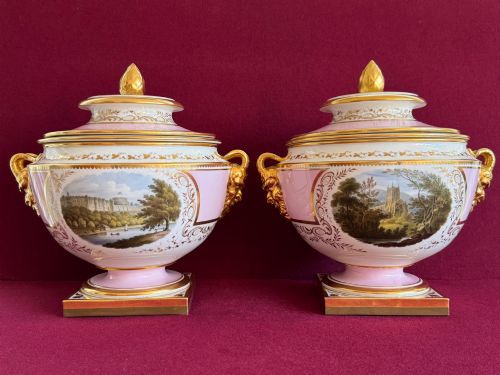
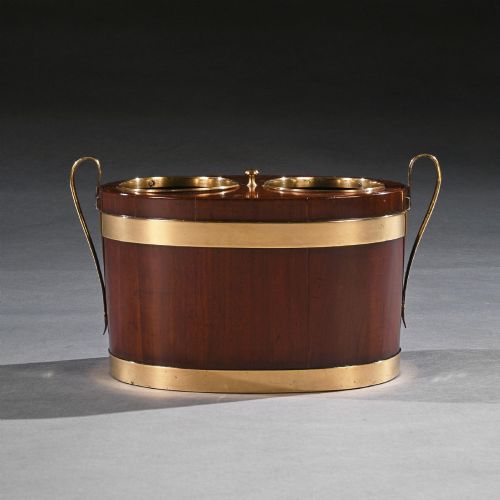
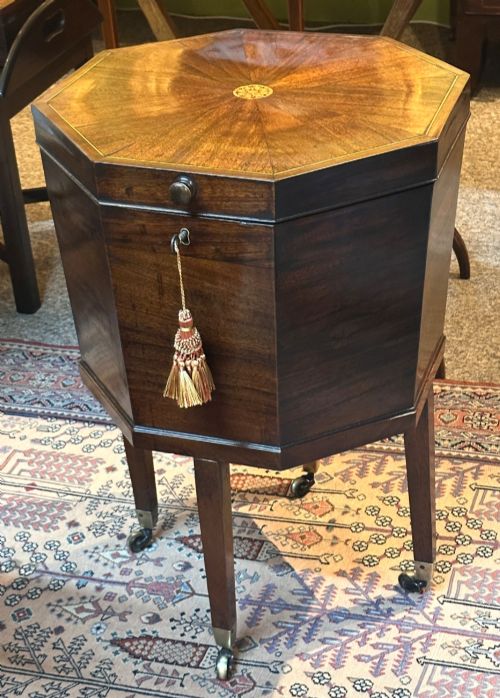
The versions most commonly met on this page include mahogany cellarettes and tables, alongside Old Sheffield plate and silver plated campana vessels. Examples range from oval brass-bound mahogany buckets to elaborate ceramic ice pails.
Makers and manufacturers varied from provincial workshops to renowned porcelain works such as Flight, Barr and Barr Worcester. Forms also extend to specialised pieces like teapoys and metamorphic tables incorporating cooling compartments.
How they were made
Cabinet-makers utilised solid and veneered timbers such as mahogany and satinwood, often accentuating the grain with brass bands, gold leaf, or delicate inlay. Metal vessels relied upon copper, brass, and Old Sheffield plate fused over a base metal.
Porcelain ice pails required specialised ceramic throwing and firing techniques followed by hand-painted enamel decoration. Silversmiths and platers shaped Old Sheffield plate into classical campana urn designs using fused silver and copper sheets.
Georgian Table Cooler Retail Price Guide 2026
Typical asking prices for georgian table cooler among the pieces listed under this phrase on Sellingantiques today, from the lower quarter to the upper quarter. They describe what is for sale here now, not the wider market.
Some nineteenth-century hosts preferred guests to admire cooling vessels lined with lead or copper while fine claret chilled beside the roast.
What varies in quality
Quality rests upon the crispness of the cabinet-making, the integrity of the timber, and the weight and finish of the metal or porcelain. Superior mahogany pieces display careful selection of figured wood and robust original brass fittings.
Plate quality depends on the preservation of the silver layer over the copper base, where heavy wear reveals the underlying metal. Porcelain versions derive distinction from the fineness of the paste and the artistry of the painted enamel decoration.
Flight Barr and Barr
The Georgian Table Cooler Glossary
- Cellarette
- A lockable container or cabinet used to store wine bottles near the dining table. They frequently stood on legs or directly on the floor beneath the sideboard.
- Campana
- A bell-shaped vessel form inspired by classical antiquity, widely utilised for metal and ceramic wine coolers during the Regency era.
- Old Sheffield Plate
- A composite material made by fusing a thin sheet of silver to a thicker copper ingot. This technique preceded modern electroplating.
- Teapoy
- A small stand or table fitted with containers for storing tea leaves. Some examples shared similar cabinet-making forms with small cellarettes.
- Metamorphic
- A descriptive term for furniture designed to transform into another form or function. In this context, tables concealed cooling chambers beneath their tops.
Georgian Table Cooler: Frequently Asked Questions
What is a georgian table cooler used for?
These vessels were utilised at the dining table to hold ice and chill wine bottles during meals. They kept beverages at the correct temperature without guests needing to leave the dining room.
Over time, some pieces transitioned into decorative jardiniere stands or general storage vessels for the home.
How do I tell a cellarette from an ice pail?
Ice pails are generally smaller, bowl-shaped vessels designed specifically to hold ice and single bottles directly on the table. Cellarettes are larger, deeper freestanding or table-standing boxes built to hold multiple wine bottles.
Cellarettes often feature compartmentalized interiors and secure locking lids to protect expensive vintages.
How do I date a Regency piece?
Dating relies upon stylistic markers such as the presence of classical campana proportions, satinwood inlay, or specific manufacturing methods like Old Sheffield plate. Porcelain items often bear factory marks or specific paste characteristics associated with early nineteenth-century production.
Matching the construction techniques to documented cabinet-making practices of the period confirms the era.