






Georgian Style Slant Desk
A georgian style slant desk brings practical writing space and fitted interiors together in a traditional form that suits modern rooms.
Georgian Style Slant Desk
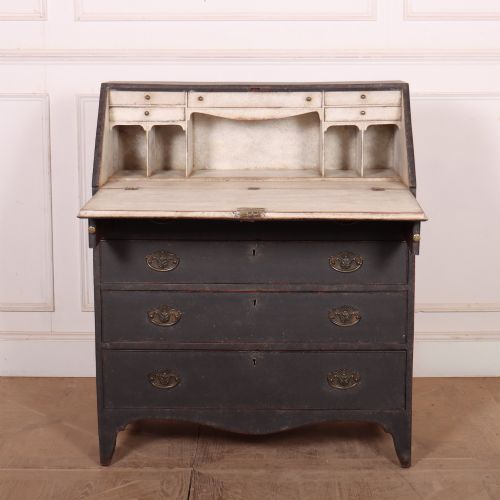
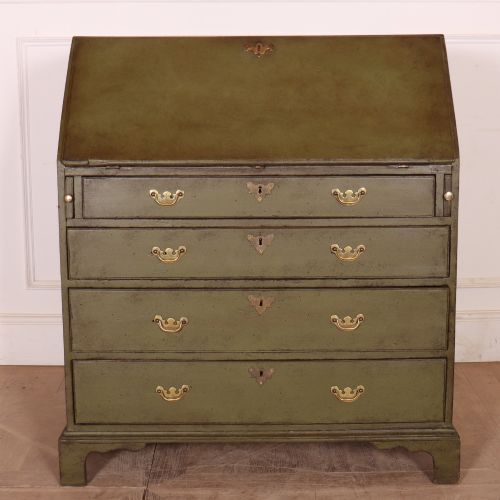
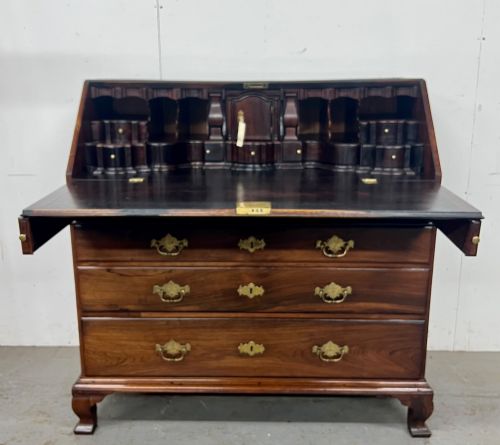
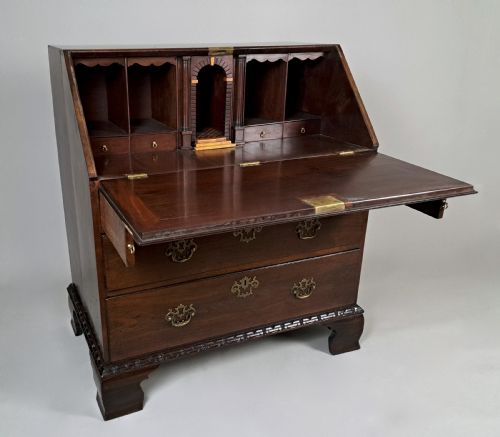
A georgian style slant desk combines a hinged sloping writing flap with a fitted internal cabinet of small drawers and pigeonholes. When you search for this phrase, you find freestanding writing furniture designed for domestic studies and bedrooms.
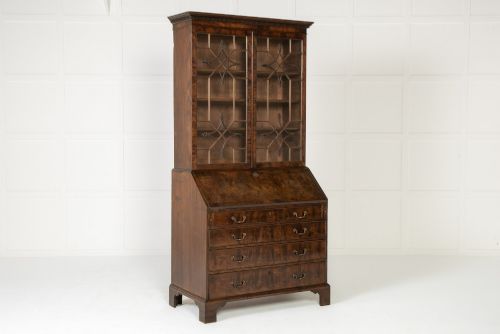
The pieces on this page span several centuries, including authentic 18th century examples alongside later 19th century and Edwardian revivals. You will encounter compact bureaus on stands as well as large bureau bookcases fitted with glass-fronted upper sections.
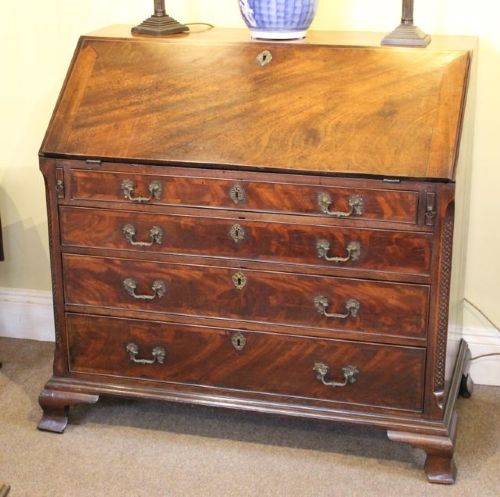
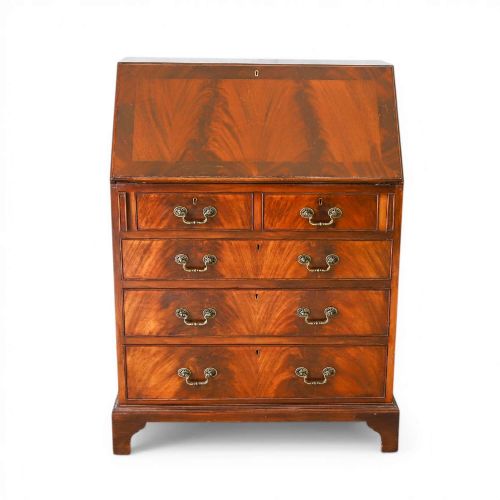
Makers produced these desks in diverse regional timbers and revival styles, ranging from plain country oak to elaborate walnut and mahogany pieces decorated with inlay or carved in the Chippendale manner.
Materials and construction methods
Cabinet makers built these desks using solid timbers and figured veneers over secondary woods, selecting mahogany, walnut, oak, and yew wood for their grain and durability. Craftspeople applied brass handles, escutcheons, and hinges to secure drawers and drop-front flaps.
Surfaces frequently feature decorative elements such as inlaid stringing, lacquer work, or carved mouldings that reflect prevailing historical styles. Interior compartments required precise joinery to create tiny secret drawers, pigeonholes, and sliding wells within the restricted space of the slant front.
Georgian Style Slant Desk Retail Price Guide 2026
Typical asking prices for georgian style slant desk among the pieces listed under this phrase on Sellingantiques today, from the lower quarter to the upper quarter. They describe what is for sale here now, not the wider market.
Several desks conceal tiny secret compartments behind dummy drawer fronts, designed for hiding love letters and household ledgers.
Factors that define quality
Quality rests in the selection of timber and the complexity of the internal arrangement, where finely figured burr walnut, flame mahogany, or padauk elevate a piece above standard regional oak. The crispness of carved details, such as bracket feet or dental mouldings, demonstrates the skill of the original workshop.
Structural integrity depends on the retention of original brass hardware, stable fall-front hinges, and well-fitted interior drawers that operate smoothly without excessive wear. Pieces that retain their original stands or matched upper bookcase cabinets command greater interest among collectors.
Waring & Gillow·Giles Grendy
The Georgian Style Slant Desk Glossary
- Bureau
- A desk featuring a sloping fall-front lid that opens to form a writing surface above a set of drawers. In British usage, this term specifically denotes writing furniture with a slanted front rather than a modern office desk.
- Secretaire
- A piece of furniture containing a drawer or compartment configured for writing, often disguised as a standard chest of drawers or integrated into a bookcase cabinet. It usually conceals fitted pigeonholes and small drawers behind a drop-down front.
- Bureau Bookcase
- A tall combination piece comprising a lower writing desk and an upper shelving cabinet enclosed by doors. These upper sections frequently feature glazed panels to display books or porcelain collections.
- Fall Front
- The hinged writing flap of a desk that drops down to a horizontal position for writing. This angled panel conceals the internal stationery compartments when closed.
Georgian Style Slant Desk: Frequently Asked Questions
What is inside a slant desk?
Lifting the sloping front reveals a fitted interior containing small drawers, pigeonholes, and sometimes a central concealed compartment. These compartments served to organise correspondence and account books.
Many examples also incorporate a sliding well or a small door in the centre of the interior fitted nest to allow access to hidden storage spaces beneath.
How do I tell an 18th century desk from a revival piece?
Original 18th century pieces exhibit period construction methods such as hand-cut dovetails, secondary woods appropriate to the region, and natural timber ageing. Revival pieces from the Edwardian era or 1920s often use later machine-cut elements and standardised hardware.
Examining the drawer linings, backboards, and block construction helps establish whether a desk dates to the Georgian period or was built during later revival movements.
Where should I place a bureau in my home?
These compact desks function well in studies, living rooms, and bedrooms where floor space is limited. The drop-front design allows you to close away paperwork instantly, keeping the room tidy.
Position the desk away from direct sunlight and heat sources to protect timber veneers and leather writing surfaces from drying out or fading over time.
What is a bureau on stand?
A bureau on stand is a compact writing cabinet elevated on a distinct frame with legs rather than resting directly on a chest of drawers. This lighter form often dates to the early 18th century or later revival periods.
The raised design creates an open silhouette that makes smaller rooms appear less crowded while offering standard writing facilities on top.