
Georgian Style Open Bookcase
A georgian style open bookcase brings architectural clarity to a room, offering practical display without visual weight.
Georgian Style Open Bookcase
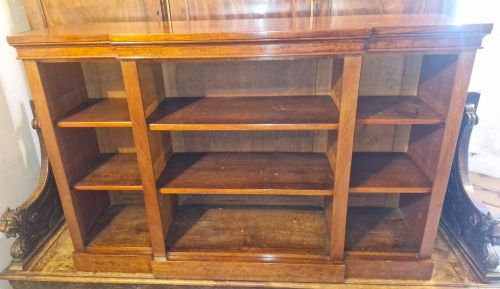
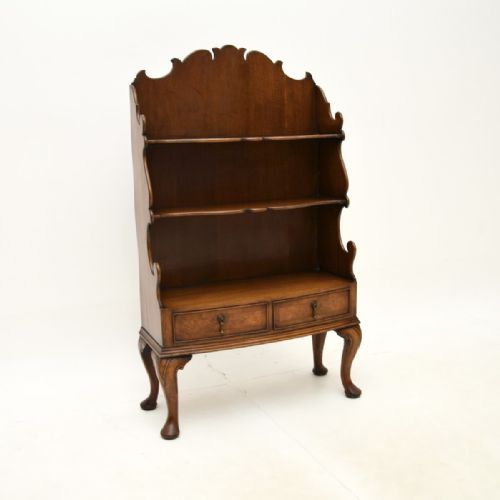
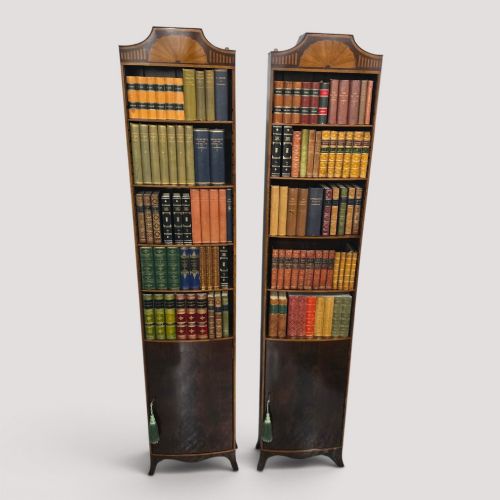
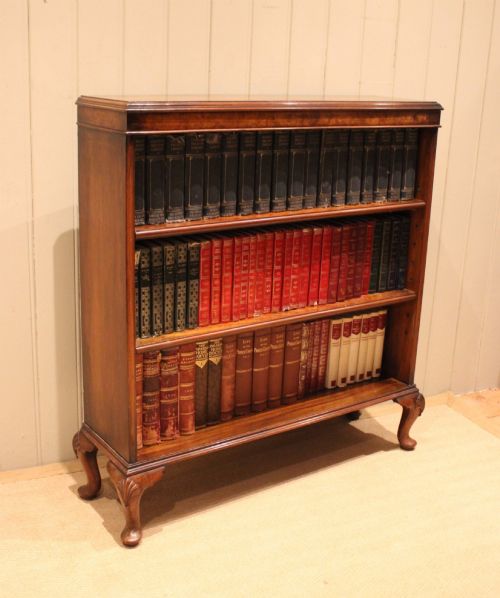
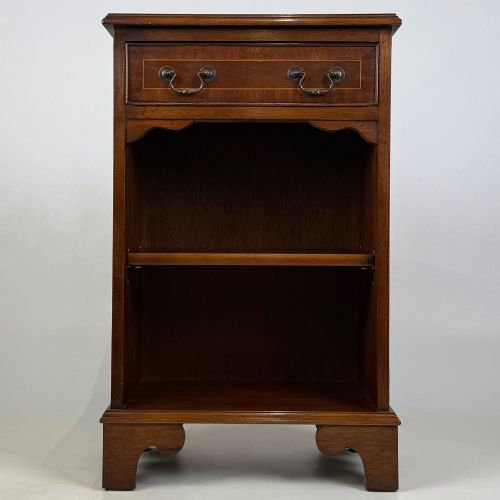
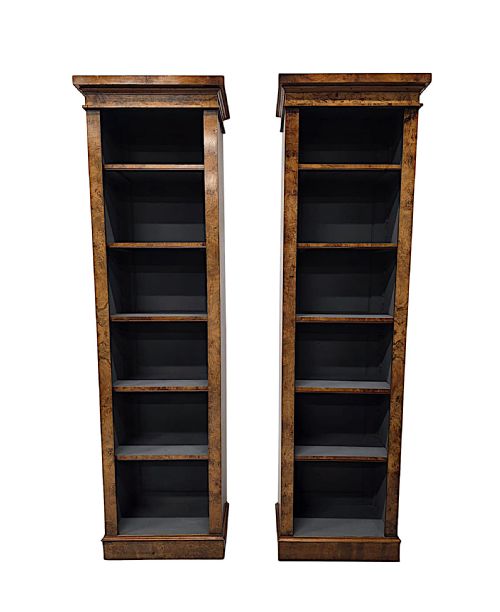
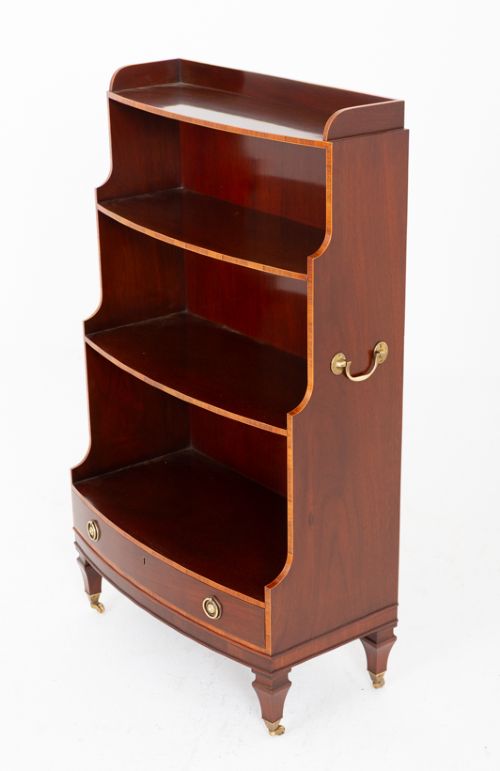
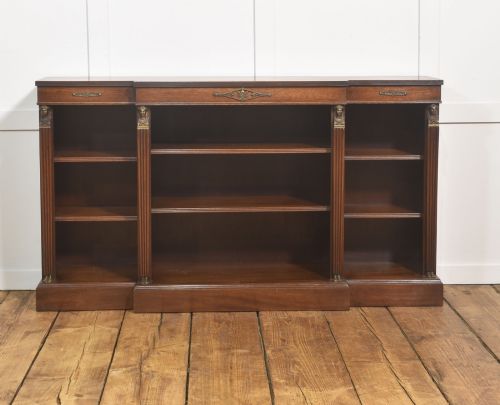
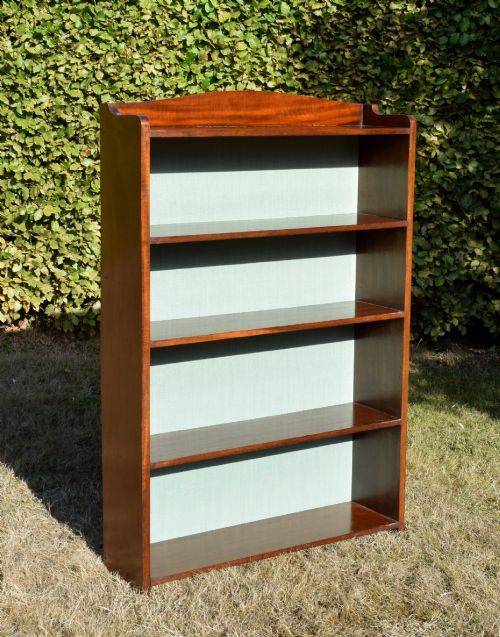
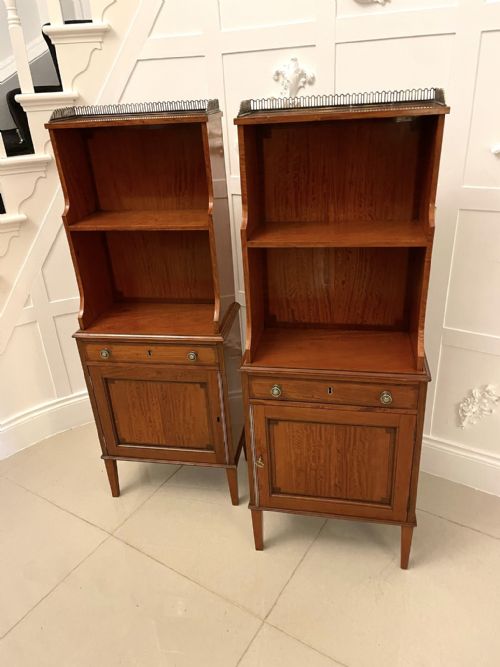
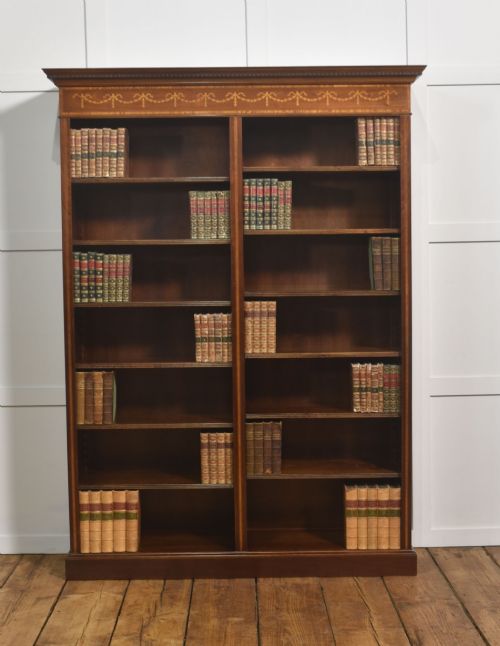
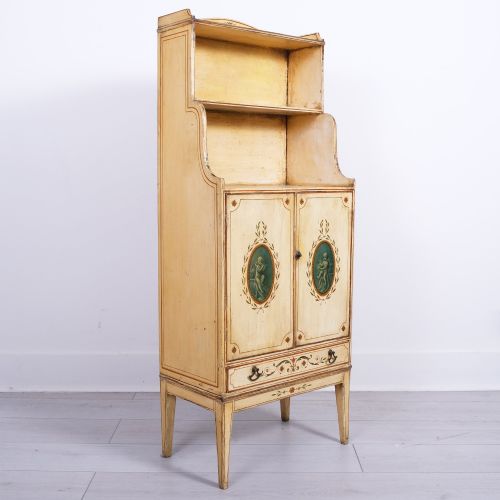
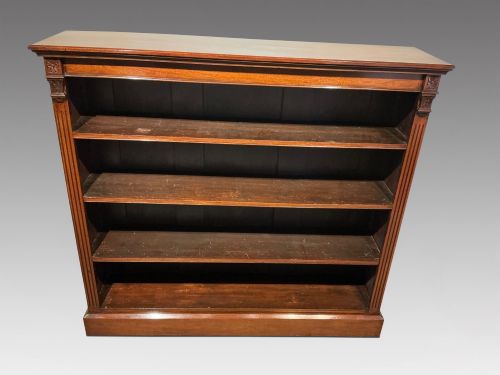
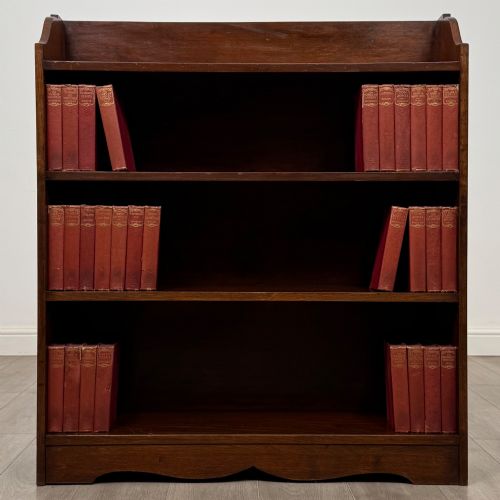
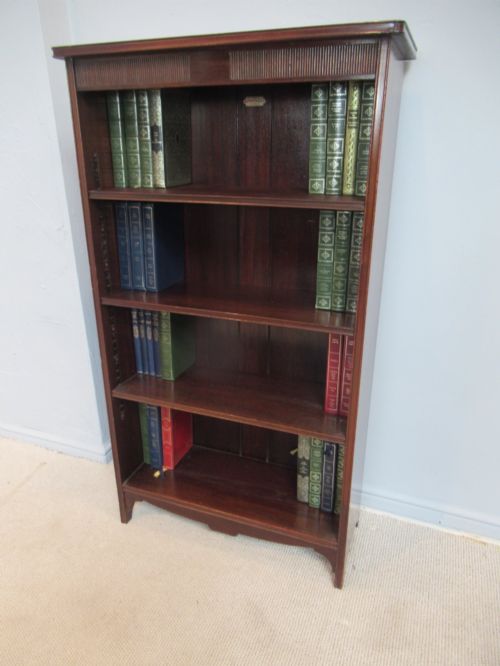
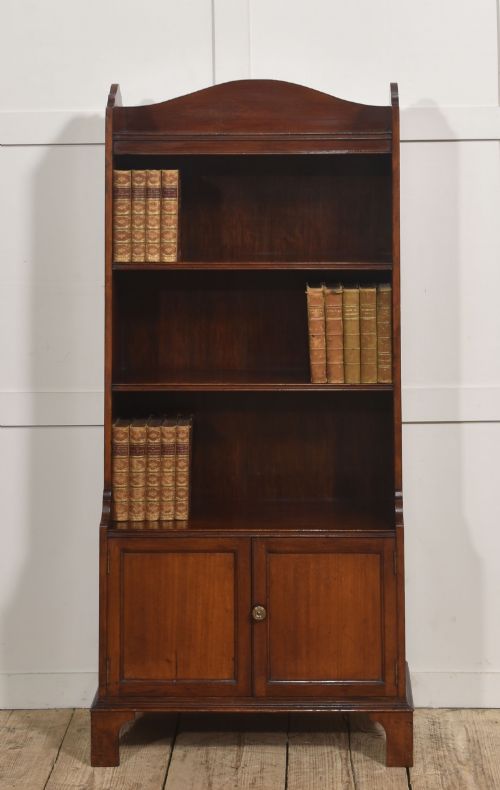
A georgian style open bookcase provides accessible shelving framed by classical proportions, appearing frequently in revival forms alongside authentic period pieces. The selection spans standard upright bookcases, breakfront formats, and tiered waterfall shelves designed for versatile room placement.
Most examples originate from the nineteenth and early twentieth centuries, drawing heavily on eighteenth-century design principles. Makers of the Edwardian era and later decades interpreted these earlier forms with varying scales, from diminutive library units to tall display shelves.
Judging quality
Quality rests on the precision of the timber matching, the crispness of any inlaid friezes, and the overall structural proportion. Finer pieces demonstrate careful selection of figured veneers and balanced joinery that respects classical architectural rules.
Simpler workshop productions rely on standard stock timbers with minimal embellishment, whereas superior examples integrate refined details such as adjustable shelving, integrated drawers, or complex breakfront profiles.
Waterfall bookcases appear in multiple wood types including mahogany, oak, burr walnut, and yew.
Gillows·Waring and Gillows·Maple and Co.
The Georgian Style Open Bookcase Glossary
- Breakfront
- A cabinet design where the central section projects forward from the flanking wings. This configuration creates visual depth and helps break up a long wall line.
- Waterfall bookcase
- A set of open shelves that steps back progressively from bottom to top, creating a cascading profile. These pieces often feature graduated shelf depths.
- Frieze
- The flat or decorated horizontal band running along the upper portion of a bookcase beneath the top moulding. It frequently receives inlay or veneer highlights.
- Inlay
- A technique where pieces of contrasting wood or other materials are inserted into depressions within the primary timber surface to form decorative patterns.
- Partridge wood
- A dense, heavily figured exotic timber displaying distinct partridge-feather markings. Cabinetmakers utilised this material for striking decorative contrast.
Georgian Style Open Bookcase: Frequently Asked Questions
How do I style a georgian style open bookcase at home?
Balance books of varying heights with decorative objects, leaving some open space to let the timber and back panels show through.
Position the bookcase against a flat wall in a study or living area where its classical proportions can anchor the room without obstructing pathways.
Are the shelves adjustable on these bookcases?
Many examples include functional mechanisms allowing shelves to move up and down to accommodate different book sizes.
Fixed shelves also appear frequently, particularly in smaller waterfall designs or specific period interpretations.
What is the difference between mahogany and walnut versions?
Mahogany pieces generally offer a rich, dark reddish-brown tone with a straight, dependable grain suitable for formal architectural styling.
Walnut and burr walnut variants provide highly figured, swirling grain patterns that catch the light and offer a softer, warmer visual texture.
How do I distinguish an Edwardian revival piece from an 18th-century original?
Revival pieces often display standardised machine-cut elements, specific secondary timbers inside, and construction methods typical of the early twentieth century.
Original eighteenth-century furniture bears distinct hand-tool marks, older oxidation patterns in the wood, and assembly techniques characteristic of earlier workshop traditions.