



Georgian Style Brass Pendant
A georgian style brass pendant brings period weight and structured light to a high hallway or reception room.
Georgian Style Brass Pendant
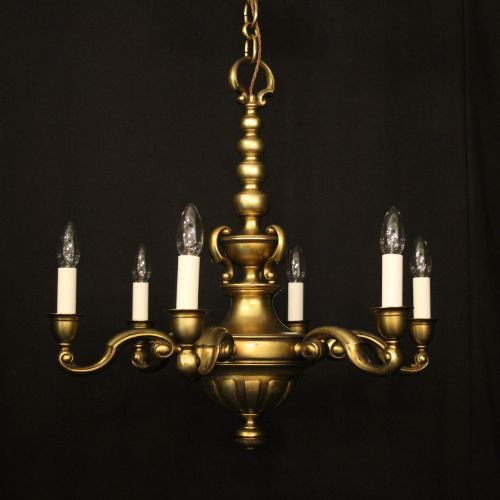
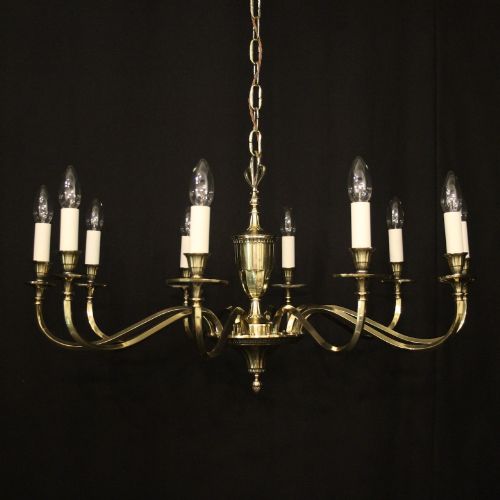
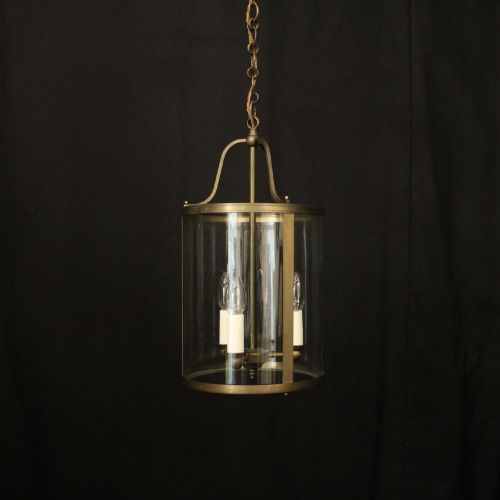
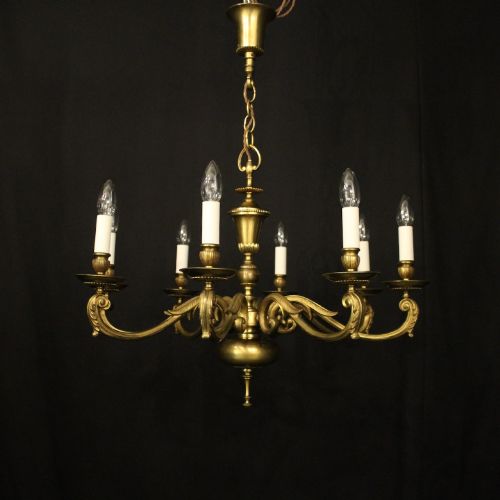
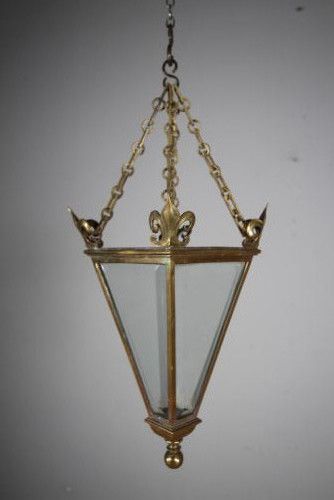
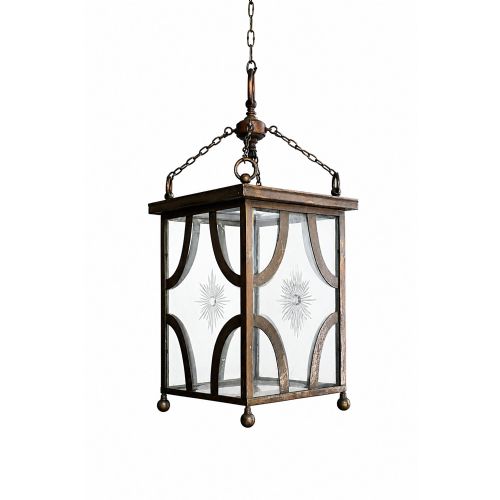
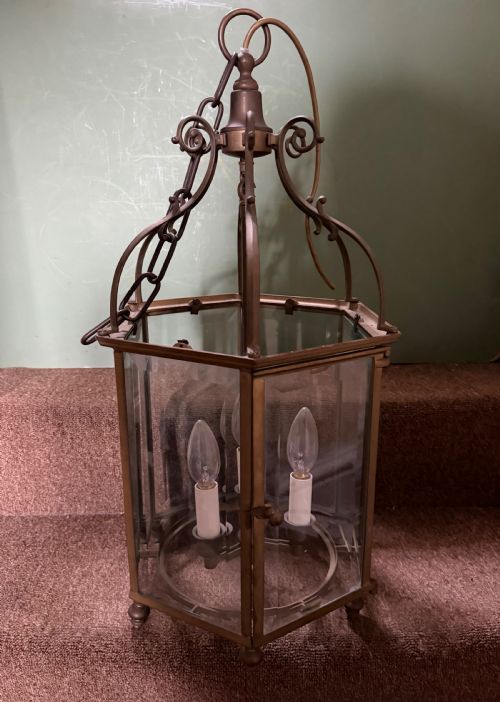
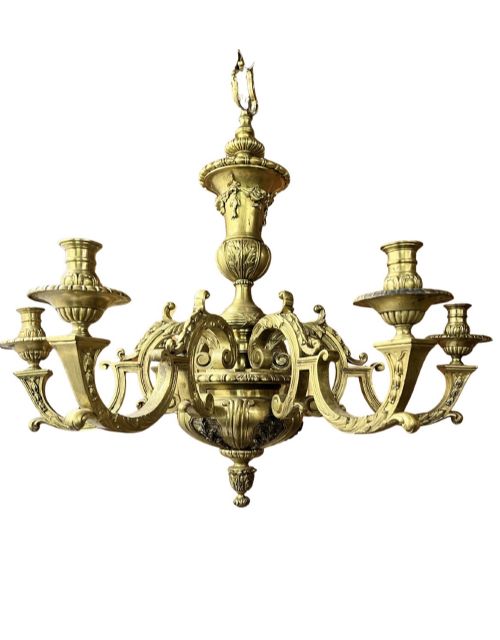
A georgian style brass pendant combines formal symmetry with warm metallic presence, appearing mostly in lanterns and chandeliers. These hanging fixtures range from multi-branch chandeliers to glazed hall lanterns designed to illuminate grand entryways.
The versions most commonly met on this page span the late eighteenth century through to early twentieth-century revivals. Pieces take forms such as hexagonal hanging frames, convex glass lanterns, and multi-light chandeliers rooted in English Regency and Georgian aesthetics.
Distinctions in quality
Quality rests upon the crispness of the brass casting and the architectural proportion of the frame. Superior examples demonstrate substantial weight in solid metal components and careful integration of glass panels without clumsy joints.
The distinction between standard production and finer execution lies in the handling of surface gilding and the complexity of the branch or lantern armature. Heavier multi-tier designs and refined period-style detailing separate standard items from superior interpretations.
Georgian Style Brass Pendant Retail Price Guide 2026
Typical asking prices for georgian style brass pendant among the pieces listed under this phrase on Sellingantiques today, from the lower quarter to the upper quarter. They describe what is for sale here now, not the wider market.
Listings feature brass pendants spanning the eighteenth, nineteenth, and early twentieth centuries, encompassing Georgian Revival, Regency, and Dutch Baroque styles.
The Georgian Style Brass Pendant Glossary
- Hall lantern
- A glazed hanging light fixture designed specifically for corridors, vestibules, and entrance halls. These fixtures often feature metal frames with glass panes to protect internal candles or bulbs from draughts.
- Chandelier
- A branched, ceiling-mounted lighting fixture holding multiple light sources in a tiered or circular arrangement. They provide central illumination for principal rooms.
- Gilded brass
- Brass that has been coated with a thin layer of gold leaf or gilt finish to enhance its visual warmth and mimic solid gold or fire-gilt bronze. This finish ages with a distinct patina over time.
- Regency style
- An English design aesthetic spanning the early nineteenth century characterised by classical restraint, symmetry, and inspiration drawn from ancient Greece and Rome.
Georgian Style Brass Pendant: Frequently Asked Questions
Where should a hall lantern hang?
These lanterns suit high-ceilinged entrance halls, landings, or wide corridors where adequate clearance allows the fixture to hang safely. Their enclosed glass designs protect the interior from breezes in high-traffic passageways.
Position the base of the pendant high enough to clear the heads of tall visitors while maintaining a central visual anchor in the space.
How do I clean antique brass?
Dust brass frames regularly with a dry, soft cloth to prevent grime accumulation in the cast details. Avoid harsh chemical polishes that strip away historical patina and softened metal surfaces.
Gentle cleaning maintains the aged character recorded on repolished and unpolished pieces alike.
Are these fixtures wired for electricity?
Many surviving fixtures have been adapted for modern electrical wiring while retaining their historic metal frames and glass panels. Buyers should inspect the internal lamp holders and consult a qualified electrician for installation.
Rewiring ensures the piece meets current safety standards without altering the exterior appearance.
How do I date a brass pendant?
Dating relies on examining the casting methods, screw types, glass beveling, and overall stylistic markers such as Regency or Dutch Baroque influences. Earlier pieces show hand-finished components and heavier gauge metalwork.
Revival pieces from later decades often replicate these historical forms while using manufacturing techniques characteristic of their specific period of production.