

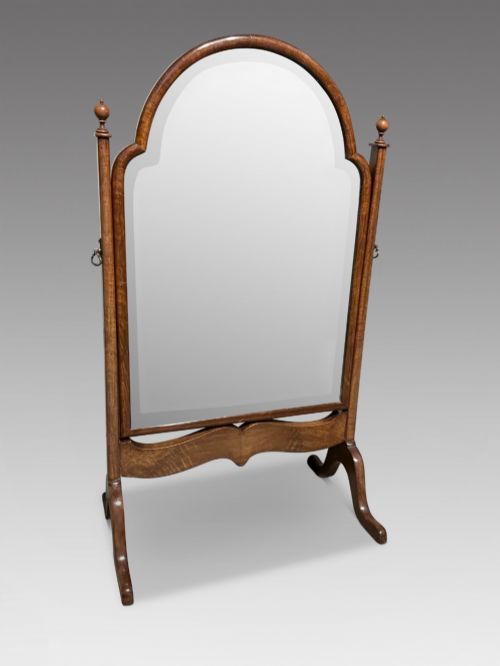


Georgian Standing Mirror
A georgian standing mirror offers a full-length reflection framed in rich timbers, designed to anchor a dressing room with quiet authority.
Georgian Standing Mirror
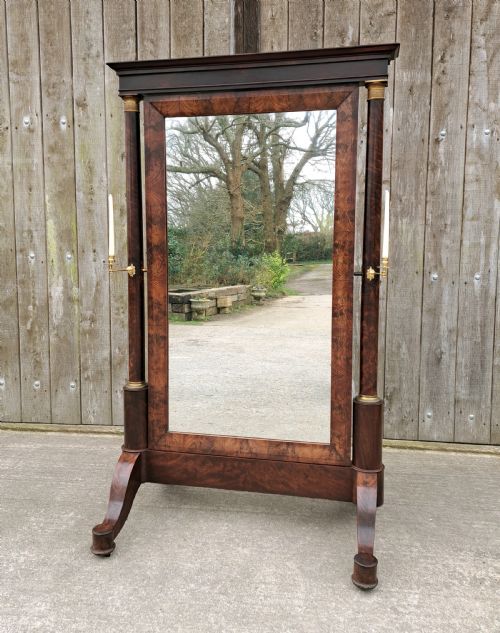
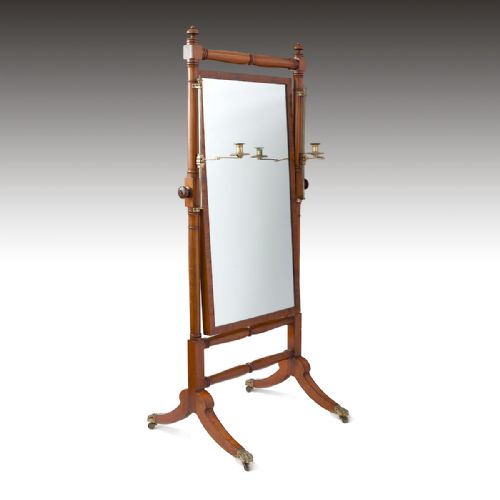
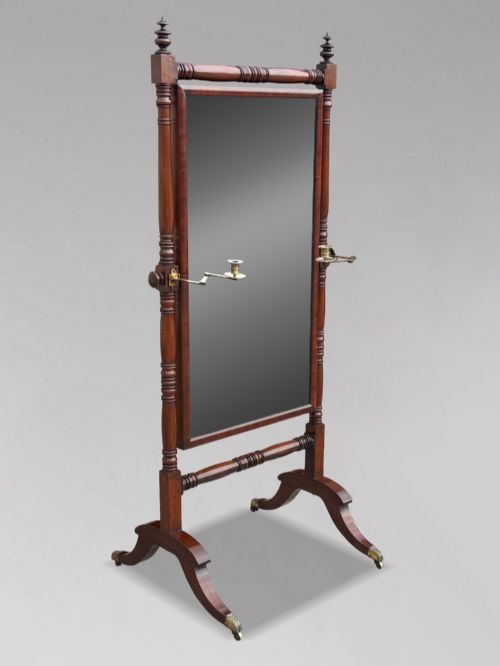
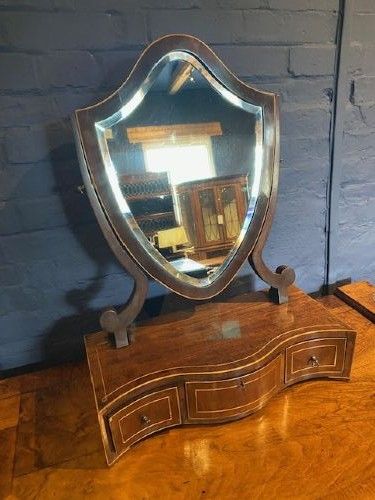
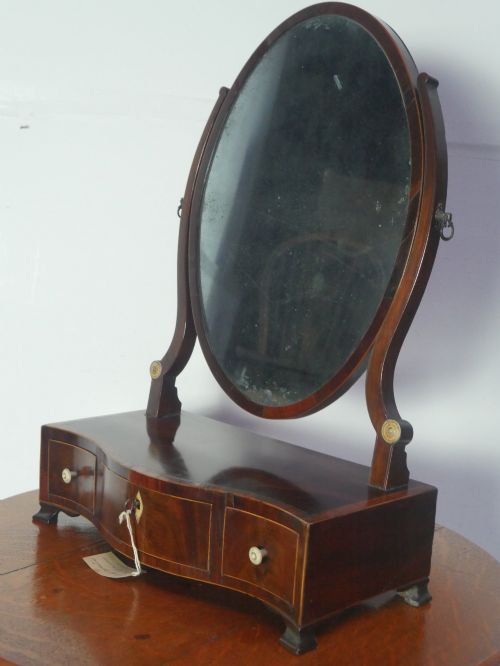
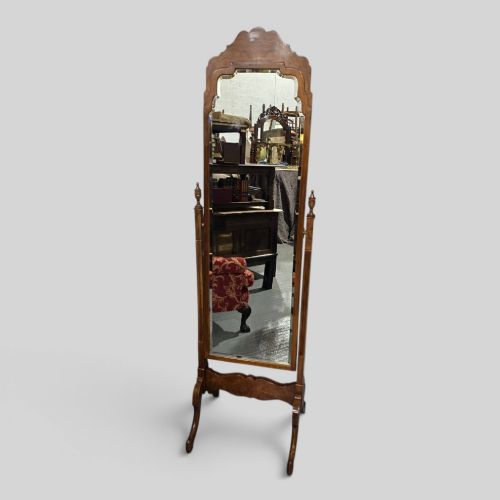
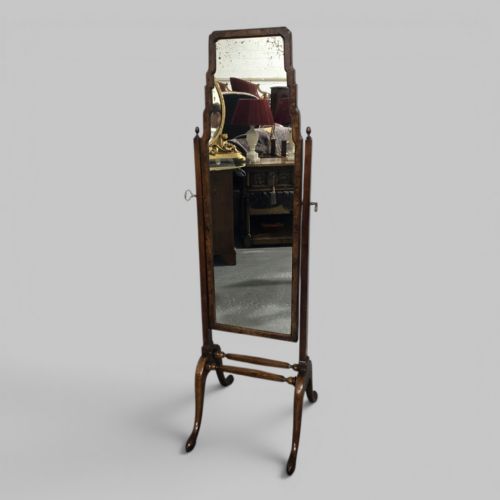
A georgian standing mirror typically takes the form of a cheval glass or a substantial dressing mirror mounted on a stable frame, allowing the glass to tilt. These pieces span periods from the eighteenth century into the nineteenth, alongside later revivals, reflecting the shifting domestic habits of elite households.
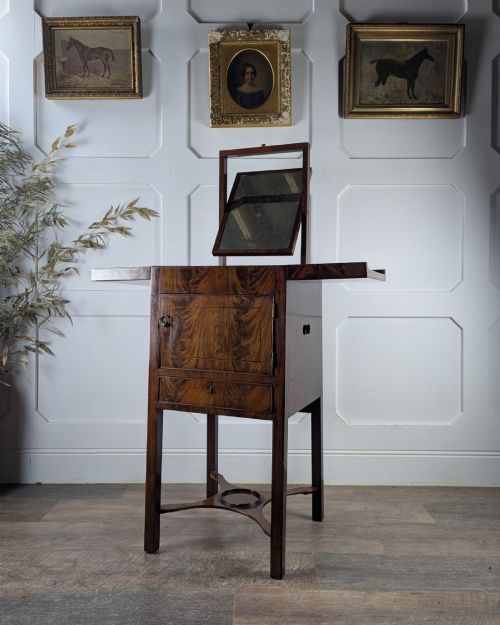
Mahogany and walnut form the backbone of these pieces, often enriched with satinwood or gilding. You will encounter floor-standing cheval mirrors designed for full-length use, as well as smaller table variants intended for dressing surfaces.
The selections on this page demonstrate the enduring appeal of floor-standing frames and smaller swing glasses alike. Buyers look for these mirrors to bring functional elegance and period timber grain into contemporary interiors.
Assessing quality and craftsmanship
The distinction between standard examples and the finest pieces lies in the selection of timber and the subtlety of the carving on the supporting frame. Superior mirrors exhibit crisp moulding profiles, carefully matched veneers, and well-balanced proportions that prevent the tall structure from appearing heavy.
Hardware integration also marks the better pieces, where original brass sabots and finely turned pivoting pins remain intact. The fluidity of the tilt mechanism and the integrity of the original mirror glass further separate exceptional cabinet work from simpler workshop production.
Georgian Standing Mirror Retail Price Guide 2026
Typical asking prices for georgian standing mirror among the pieces listed under this phrase on Sellingantiques today, from the lower quarter to the upper quarter. They describe what is for sale here now, not the wider market.
Listings feature mahogany, walnut, satinwood, and giltwood frames spanning the Georgian, Regency, and Victorian periods.
Gillows
The Georgian Standing Mirror Glossary
- Cheval mirror
- A large, full-length dressing glass suspended on a vertical frame with four legs or a stable base. This design allowed a person to view their entire outfit at once.
- Toilet mirror
- A smaller glass mounted on a box base or small frame, designed to sit upon a dressing table or chest. These often incorporate small drawers for personal items.
- Sabot
- A metal sleeve or shoe fitted to the foot of a furniture leg, commonly cast in brass to protect the timber and add a decorative finish.
- Tilt dressing glass
- A mirror plate hung on pivoting screws between two upright posts, enabling the user to adjust the angle of reflection easily.
Georgian Standing Mirror: Frequently Asked Questions
How do I use a standing mirror in a modern room?
Position the mirror to reflect natural light from a window, which instantly brightens the surrounding space and creates a sense of depth in smaller rooms.
Anchor the piece against a solid wall or within a dressing area where its vertical lines can complement contemporary furnishings without crowding the floor plan.
Were these mirrors meant for bedrooms or hallways?
Floor-standing cheval mirrors were primarily placed in bedrooms, dressing rooms, or private chambers to assist with full-length attire adjustments during the Georgian and Regency periods.
Some larger or more architectural examples were also positioned in grand hallways to serve as a final check before stepping out.
How do I distinguish an earlier period piece from a revival?
Examine the timber selection, secondary woods used in the backboards, and the style of the brass hardware, as eighteenth-century construction methods differ noticeably from twentieth-century reproductions.
Look closely at the bevel and silvering of the mirror glass itself, which often shows subtle signs of age and hand-working on genuine period examples.
What is the difference between a cheval mirror and a dressing mirror?
A cheval mirror is a tall, floor-standing piece designed for full-body reflection, supported by a heavy frame with four feet or a stable base.
A dressing mirror is considerably smaller and built to sit on top of a table or chest, featuring a box base fitted with small storage drawers.