



Georgian Spode China
Georgian spode china brings together refined early nineteenth-century porcelain and earthenware forms decorated with pattern numbers, transfer prints, and hand-painted enamels.
Georgian Spode China
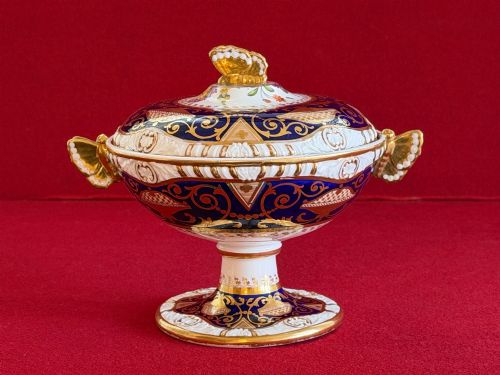
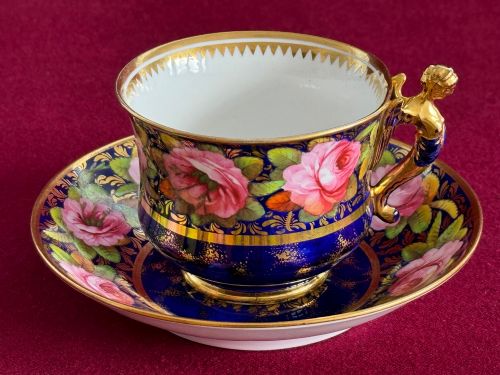
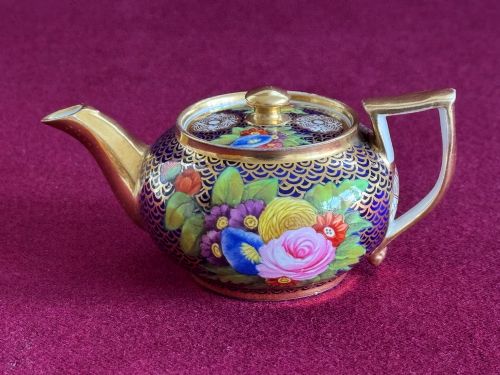
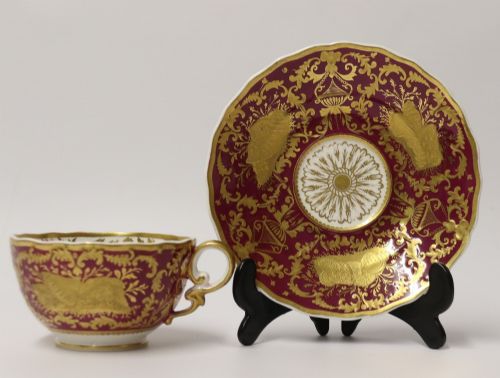
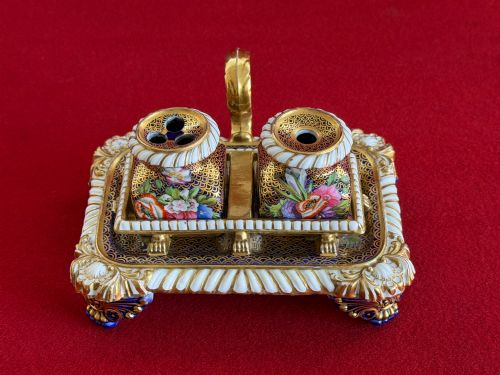
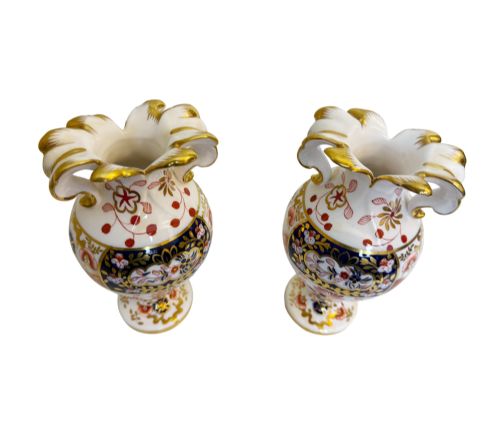
Georgian spode china encompasses tea wares, service vessels, and decorative pieces originating from the Regency and early nineteenth-century periods. Buyers seeking georgian spode china encounter items ranging from cabinet cups and saucers to spill vases, inkstands, and large serving platters.
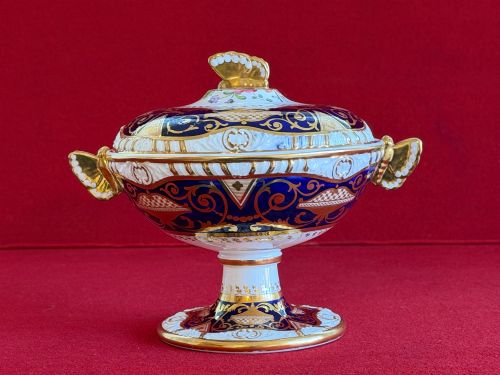
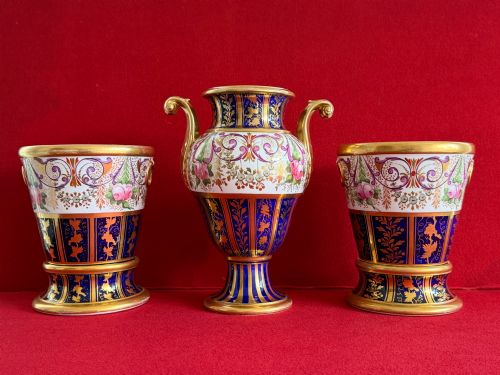
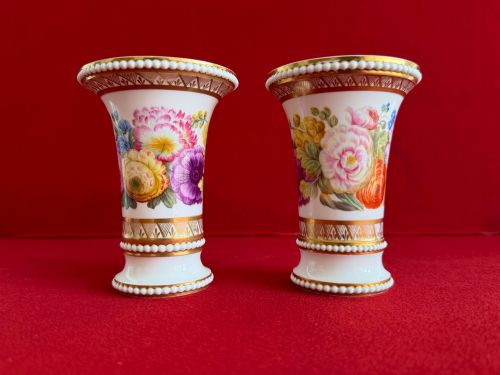
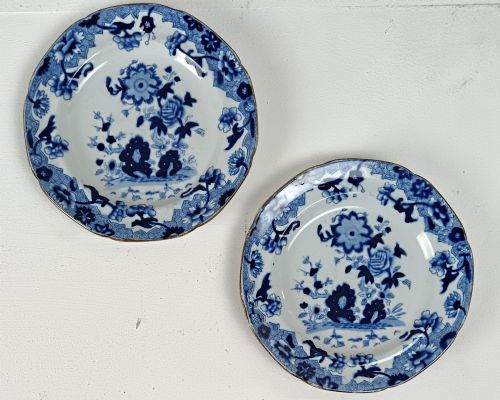
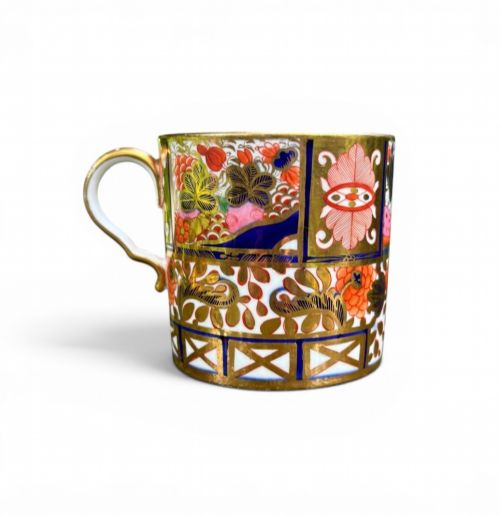
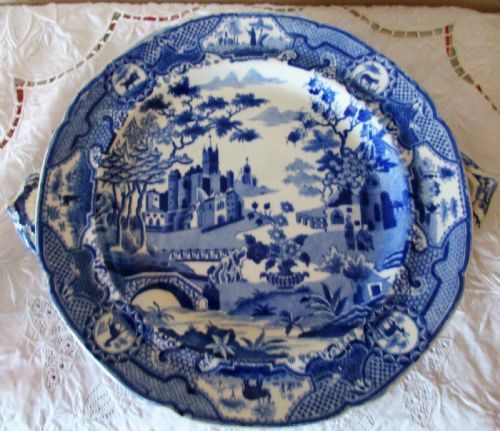
The objects most frequently met on this page include blue and white transfer-printed plates, Imari-decorated porcelain, and porcelain garnitures bearing specific pattern numbers. These pieces reflect the prominent manufacturing output of the era, spanning porcelain, bone china, earthenware, and new stone bodies.
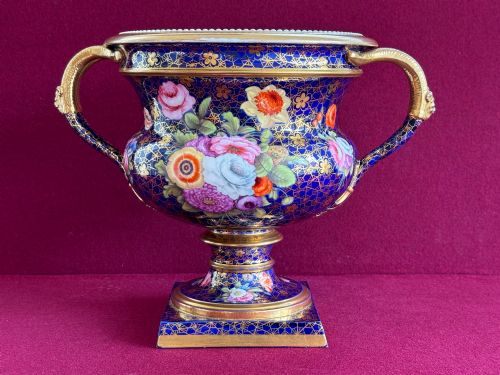
Forms vary from miniature teapots and toy teapots to twin-handled vases and dessert services. The dating spans the Georgian and Regency eras into the wider nineteenth century, capturing the stylistic shifts of the pottery.
Materials and Techniques
The manufacture of these ceramics relies upon distinct ceramic bodies including porcelain, bone china, earthenware, felspar porcelain, and new stone. Makers shaped these materials into intricate forms such as Warwick vases, cabinet trios, and inkstands.
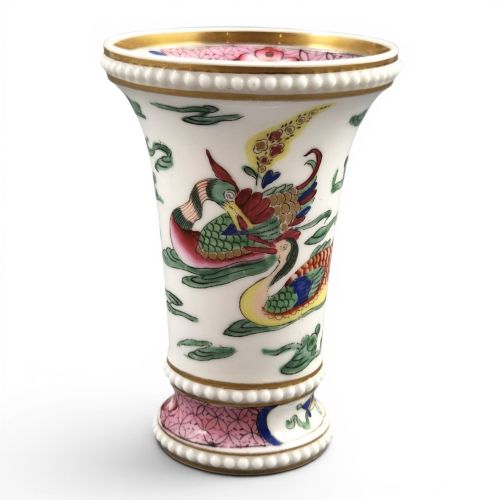
Decoration was achieved through blue and white transfer printing, hand-painted enamels, and the application of gold leaf, gilt, and gilding. Specific pattern numbers, such as pattern 1166 and pattern 2573, identify particular decorative schemes applied over the glaze.
Georgian Spode China Retail Price Guide 2026
Typical asking prices for georgian spode china among the pieces listed under this phrase on Sellingantiques today, from the lower quarter to the upper quarter. They describe what is for sale here now, not the wider market.
Ducks and lotus flowers occasionally paddle across Regency spill vases, proving that nineteenth-century Staffordshire birds enjoyed exotic botanical settings.
Assessing Quality and Execution
Quality in these ceramics rests upon the crispness of the transfer printing and the precision of the hand-painted enamel work. The application of gold leaf and gilding demonstrates the tier of the production, with finer pieces showing careful brushwork and adherence to registered pattern numbers.
The complexity of the ceramic form, such as image handles, pierced details, or twin-handled urn construction, distinguishes standard production items from ambitious cabinet pieces. The refinement of the underlying body, whether bone china, felspar porcelain, or new stone, further defines the standard of the manufacture.
Spode
The Georgian Spode China Glossary
- Bone china
- A type of soft-paste porcelain containing bone ash that creates a durable, milky white body suited for delicate tea wares.
- Pattern number
- A numeric code painted or printed on the base of a piece to identify its specific decorative scheme and colour palette.
- Imari
- A decorative style employing underglaze blue combined with iron red, gilt, and enamel highlights, inspired by Japanese exports.
- Transfer printing
- A method of applying intricate designs to ceramic surfaces by transferring a printed paper impression from an engraved copper plate.
- Felspar porcelain
- An innovative ceramic body introduced during the early nineteenth century that incorporated feldspar to increase translucency and strength.
- New Stone
- A dense, durable feldspathic earthenware developed to imitate oriental porcelain while offering robust utility for tableware.
Georgian Spode China: Frequently Asked Questions
How do I identify pattern numbers?
Pattern numbers are hand-painted or printed onto the base of the ceramic piece, usually in iron red, blue, or black. These numbers correspond to specific factory design recipes.
Matching a number, such as pattern 1166 or pattern 2573, helps date the manufacture and reveals the intended colour palette and decorative layout.
What is new stone ceramic?
New stone is a robust feldspathic earthenware body developed during the early nineteenth century to withstand daily dining use. It bridges the gap between refined porcelain and heavy utility pottery.
Items in this material, such as hot-water plates and service platters, often feature blue and white transfer prints designed for durability.
How should I care for antique porcelain?
Antique porcelain and bone china require gentle hand washing in lukewarm water with mild soap. Avoid soaking pieces with gilt decoration or hand-painted enamels to protect the surface.
Display items away from direct sunlight and extreme temperature fluctuations to preserve the glaze, gold leaf, and structural integrity of the ceramic body.