
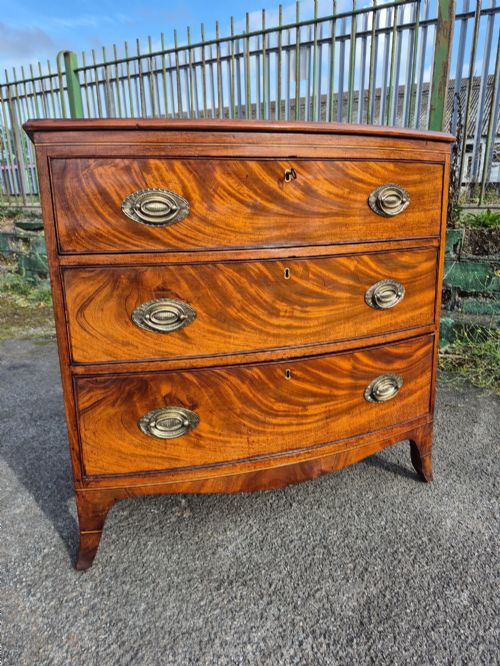
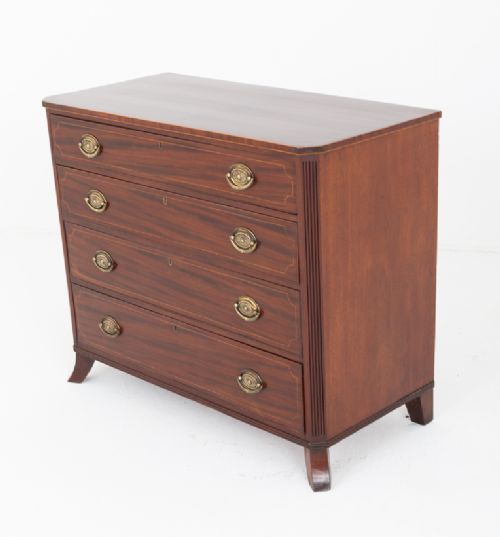
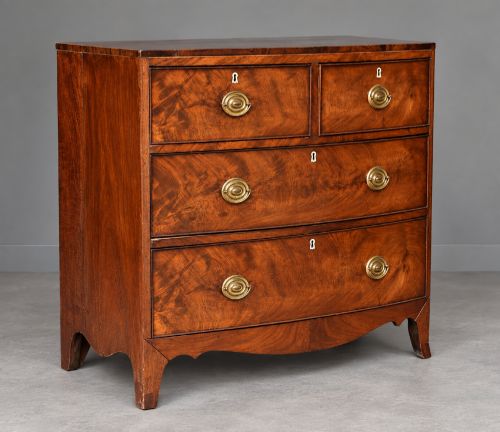
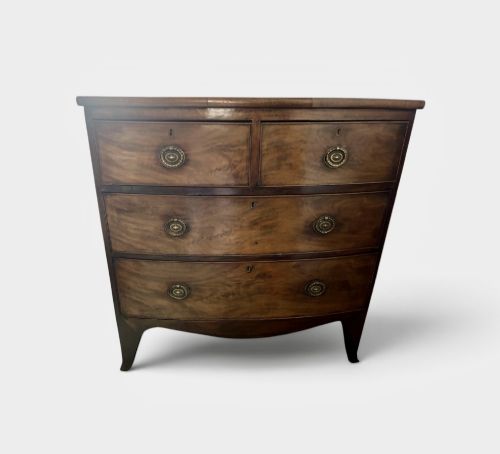
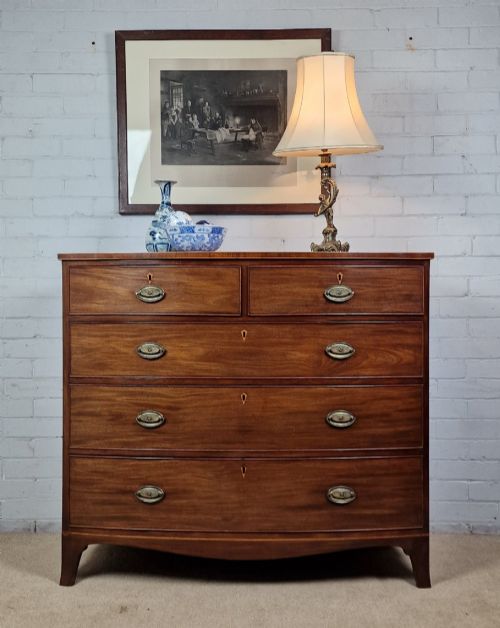
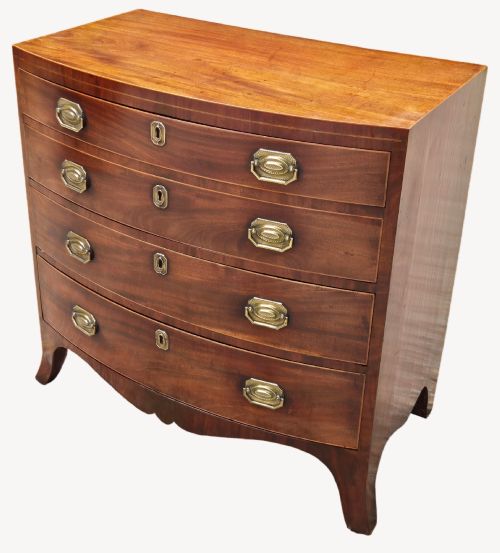
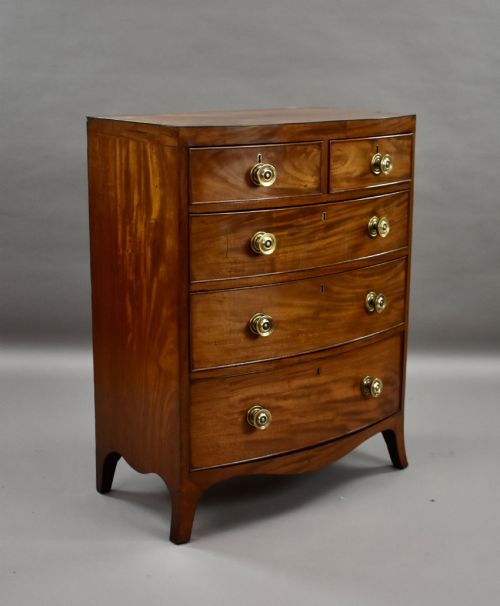
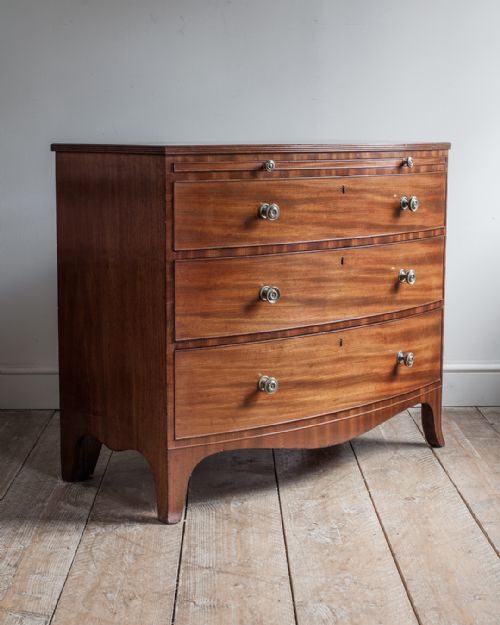
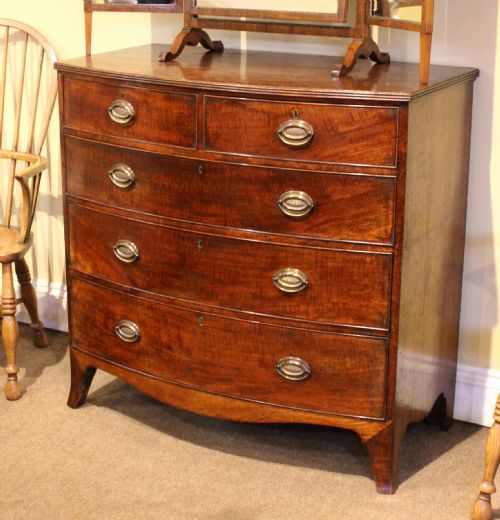


Georgian Splay Foot Chest
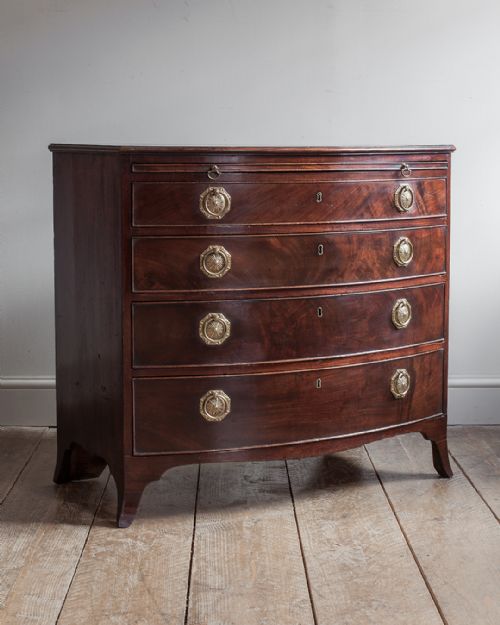
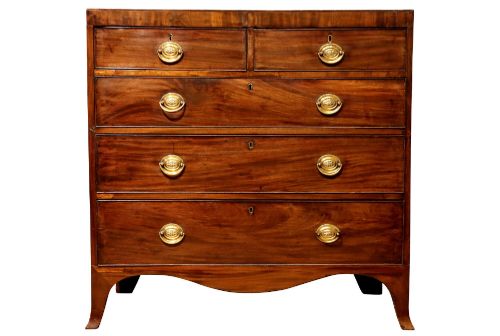
A georgian splay foot chest offers practical storage with distinct bracket or splayed supports.
Georgian Splay Foot Chest
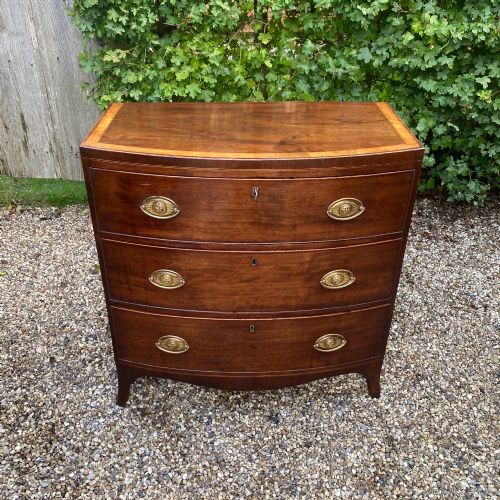
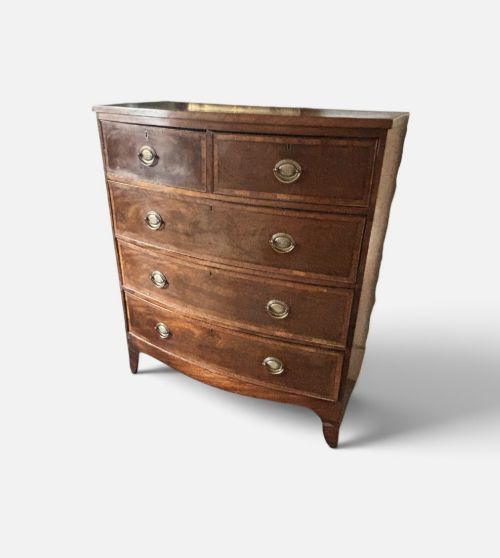
A georgian splay foot chest provides sturdy storage through multiple drawer tiers, frequently utilising a bowed front layout. The examples gathered here span periods from the eighteenth century through to later nineteenth century revivals, showing compact proportions alongside taller tallboy formats.
Most pieces encountered rely on mahogany construction, sometimes integrating oak internals or decorative satinwood crossbanding. These chests serve bedroom or hallway storage needs while displaying period specific craftsmanship through varied foot forms and edge details.
Construction and Materials
Cabinet makers relied heavily on solid mahogany and flame mahogany veneers, often applying boxwood inlay for contrasting linear borders. Structural elements like drawer linings and backs frequently incorporated oak to ensure durability during daily use.
Surfaces received careful polishing to highlight timber grain patterns, while hardware such as brass pulls accompanied specific stylistic eras like Sheraton or Hepplewhite designs.
Several chests feature secret compartments hidden behind seemingly stationary top mouldings for storing small valuables.
Assessing Quality and Execution
Superior execution shows in the selection of figured mahogany veneers that align cleanly across drawer fronts without disruption. Finer pieces maintain crisp inlay work and robust drawer construction using traditional dovetailing methods.
Lesser examples display mismatched timber grains, replacement hardware of incorrect period style, or clumsy repairs around the splayed foot junctions that alter the original stance.
The Georgian Splay Foot Chest Glossary
- Splay foot
- A support that angles outward slightly from the base of a cabinet to provide visual balance. This form appears on various Georgian and Regency storage pieces.
- Bow front
- A convex curved cabinet front that projects outward in the centre. This shape became popular during the late eighteenth and early nineteenth centuries.
- Crossbanding
- A strip of veneer applied to the borders of a drawer front or top with the grain running perpendicular to the surrounding wood. It frames the primary timber surface.
- Caddy top
- A raised or moulded tabletop style with a stepped profile resembling the lid of a tea caddy. Cabinet makers utilised this edge detail on smaller chests.
Georgian Splay Foot Chest: Frequently Asked Questions
Where should I place a georgian splay foot chest?
These chests fit well in bedrooms, hallways, or living spaces where surface area and drawer storage are both required.
Their compact proportions allow them to sit comfortably against walls without dominating smaller rooms.
How do I distinguish George III from Regency pieces?
George III pieces often lean towards classical proportions with understated bracket feet and restrained mahogany surfaces.
Regency examples frequently introduce bolder grain patterns like flame mahogany alongside more pronounced bow front shapes.
Are splayed feet original to these chests?
Original splayed feet form an integral part of the lower framing and base moulding structure.
Replacements or alterations usually show mismatched timber colour or awkward joinery where the foot meets the body.
What maintenance do these mahogany chests need?
Keep wooden surfaces away from direct heat sources and strong sunlight to prevent the mahogany finish from fading.
Applying occasional appropriate wax polish helps maintain the natural lustre of the timber.