



Georgian Silverware Pair
A georgian silverware pair brings centuries of dining history to the table, uniting matched craftsmanship in sterling silver or silver plate.
Georgian Silverware Pair
When you search for a georgian silverware pair, you are looking at matched sets of dining implements and serving vessels originating from the eighteenth and early nineteenth centuries. The pieces on this page span the eighteenth century, the Georgian era proper, the Regency period, and later revivals from eighteen ninety and nineteen twenty.
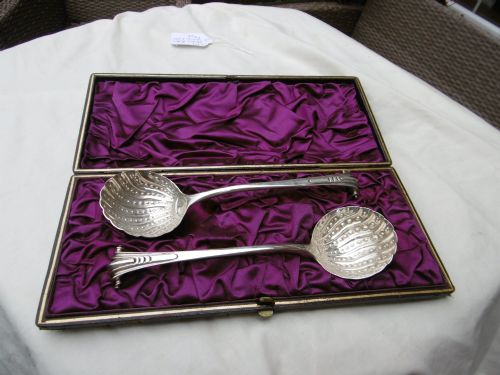
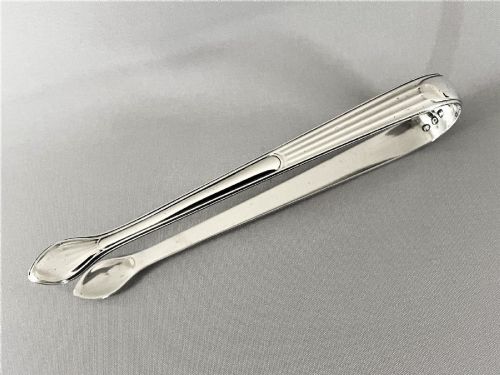
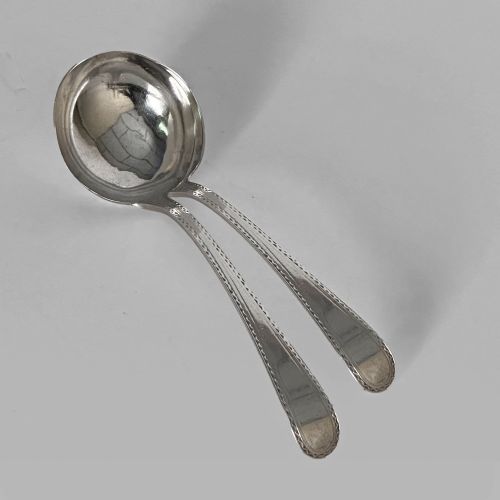
The forms vary widely across the inventory, ranging from serving spoons, ladles, sugar tongs, and sauce boats to candlesticks, salvers, cups, and dessert spoons. Many examples hail from specific regional workshops in Ireland, Scotland, and Edinburgh, alongside English pieces.
You are most likely to meet sterling silver items produced by prominent silversmithing families, though later silver plate and EPNS pieces also appear alongside fitted cases lined with fabric and leatherette.
How they were made
The primary material across these listings is sterling silver, shaped by hand in traditional workshops and finished with official hallmarking to certify purity and origin. Makers also utilised silver plate and electroplated nickel silver on later interpretations.
Cased sets include protective outer layers of leatherette housing soft fabric interiors to secure the delicate metalware. Sturdy construction techniques ensured that functional items like ladles, tongs, and sauce boats could withstand regular dining use.
Georgian Silverware Pair Retail Price Guide 2026
Typical asking prices for georgian silverware pair among the pieces listed under this phrase on Sellingantiques today, from the lower quarter to the upper quarter. They describe what is for sale here now, not the wider market.
Regional British and Irish origins are well represented, with specific pieces originating from workshops in Dublin, Edinburgh, and broader Scotland.
What varies in quality
Quality in a georgian silverware pair rests upon the reputation of the maker and the crispness of the original hallmarks stamped into the metal. Pieces bearing the marks of established silversmiths command higher regard among collectors.
The integrity of the form and the preservation of the matching pair determine the overall standard, as does the presence of original fitted presentation cases in fabric and leatherette.
William Fearn·Bateman Family·Hester Bateman·Alexander Henderson
The Georgian Silverware Pair Glossary
- Sterling silver
- A standard alloy consisting of ninety-two point five percent silver and seven point five percent other metals, usually copper. This composition provides the durability required for functional tableware.
- Hallmark
- An official stamp applied to precious metals to indicate the standard of purity, the assay office, and the year of manufacture. These marks allow collectors to date pieces accurately.
- Silver plate
- A base metal substrate coated with a thin layer of pure silver. This method offered a more affordable alternative to solid sterling silver during later periods.
- EPNS
- Electroplated nickel silver, a common base metal method utilised for nineteenth and twentieth century tableware. It provides a bright silver finish over a nickel brass core.
- Basting spoon
- A large specialised spoon designed for pouring juices over meat during roasting. They often form part of a matched pair for grand dining services.
- Toddy ladle
- A small ladle specifically shaped for serving warm alcoholic punches. These typically feature twisted whalebone or wooden handles attached to silver bowls.
Georgian Silverware Pair: Frequently Asked Questions
What counts as a georgian silverware pair?
A georgian silverware pair consists of two matched utensils, serving vessels, or decorative items made during the Georgian period or created in that distinct style later. The inventory includes matching ladles, spoons, tongs, and sauce boats.
Items may be matched by the original silversmith, the assay office, or the decorative pattern, and they are occasionally housed together in a fitted presentation case.
How do I identify a true Georgian piece?
True Georgian pieces bear period hallmarks that indicate the assay office, the maker's mark, and a date letter corresponding to the eighteenth or early nineteenth century. Style indicators like the Onslow pattern also point to this era.
Later nineteenth century pieces replicating the aesthetic are typically marked as Georgian Revival or Neo-Georgian rather than originating from the actual reigns of the Georges.
How should I care for silver items?
Solid sterling silver and silver plate require gentle cleaning with specialised silver polish to maintain their finish without wearing away thin plating or delicate hallmarks. Storing pieces in fabric-lined cases protects them from tarnish and physical damage.
Keeping items away from moisture and direct sunlight helps preserve the integrity of both the metal and any associated leatherette housing.