
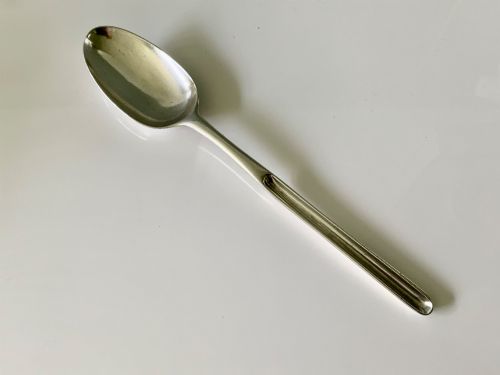




Georgian Silver Utensil
A georgian silver utensil brings functional elegance to the table, offering solid sterling construction designed for serving, slicing, and scooping.
Georgian Silver Utensil
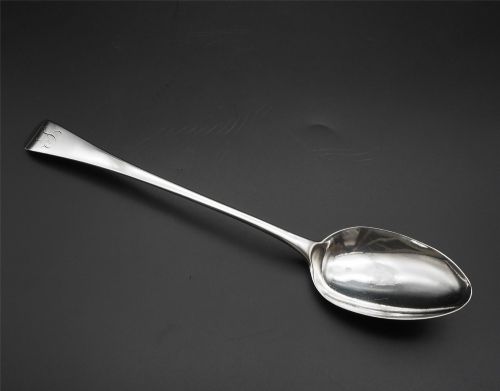
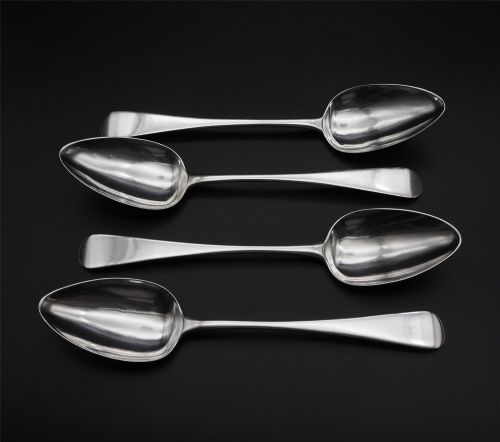
A georgian silver utensil encompasses serving spoons, fish slices, marrow scoops, caddy spoons, and specialised cutlery designed for dining and food preparation. The pieces appearing most frequently on this page date from the eighteenth and nineteenth centuries, spanning reigns from George I to William IV alongside related Victorian and Edwardian examples.
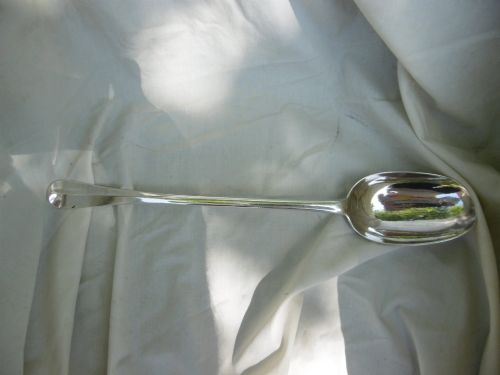
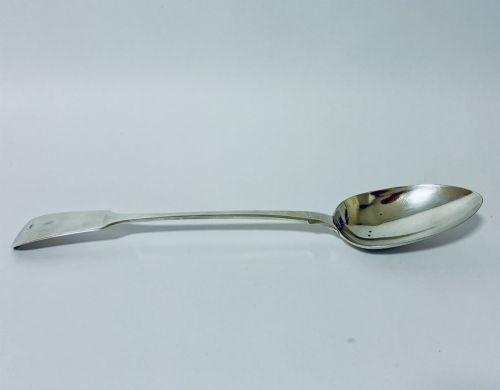
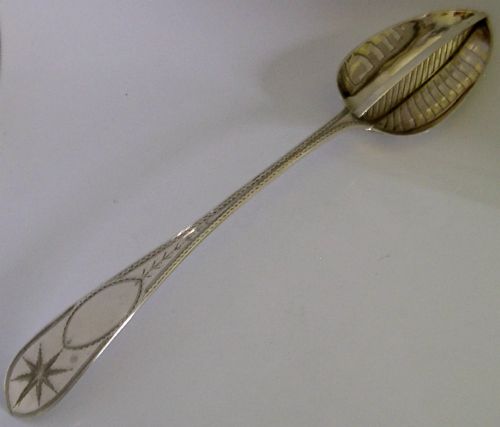
Buyers encounter larger serving implements such as basting spoons, soup ladles, and salad servers alongside smaller items like apple corers, folding fruit forks, and caddy spoons. Scottish and Irish regional variations also emerge among the tablespoons, fish slices, and strainer spoons recorded in the listings.
Judging Quality
Quality rests upon the crispness of maker marks, the retention of original engraved detail, and the retention of gauge and weight in the metal. Heavy basting spoons and large fish slices with deep bowls and strong handles indicate superior original utility and survival.
Matched sets and boxed pairs show greater desirability than single scattered items, while distinct regional engraving or documented maker attribution elevates individual pieces above standard factory output.
Listings feature sterling silver, steel, stained bone, and horn across periods from the eighteenth century to the Edwardian era.
Andrew Archer·Jonathan Hayne·Hester Bateman·Wilkes Booth
The Georgian Silver Utensil Glossary
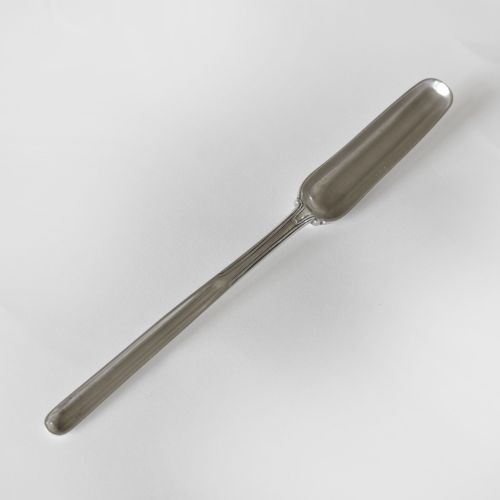
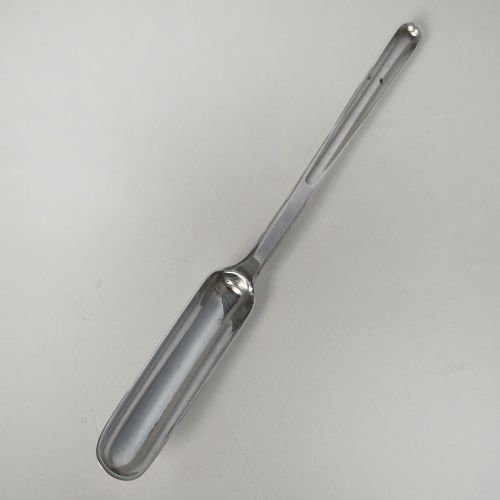
- Marrow scoop
- A double-ended silver implement featuring a narrow trough at each end designed for extracting bone marrow. Eighteenth-century examples often bear narrow, curved profiles.
- Caddy spoon
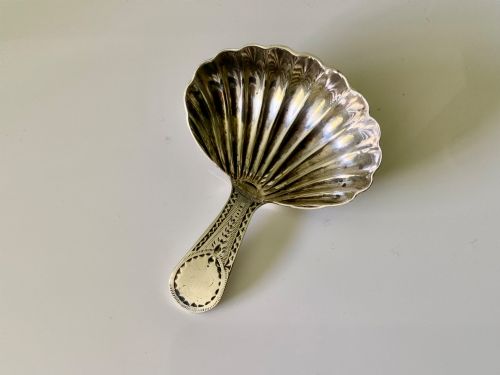
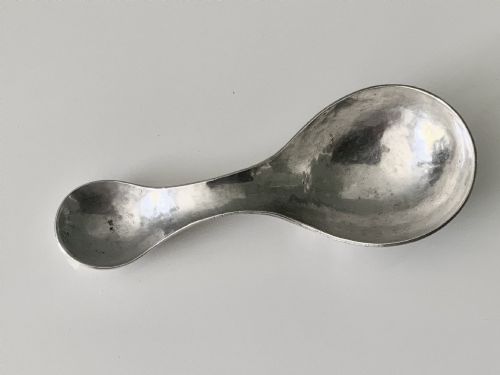
- A short-handled spoon specifically created for measuring tea leaves from a caddy into a teapot. These appear frequently in Georgian silver forms.
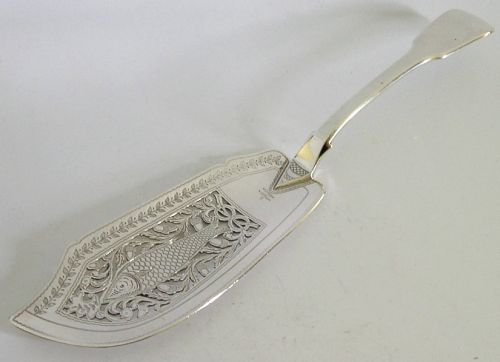
- Fish slice
- A broad, flat, often pierced utensil used for serving fish at the dining table. Many feature engraved blade decoration and sturdy silver handles.
- Berry spoon
- A tablespoon retrofitted during the Victorian era with embossed fruit and chased foliage across the bowl. The original plain bowl received a completely new decorative surface.
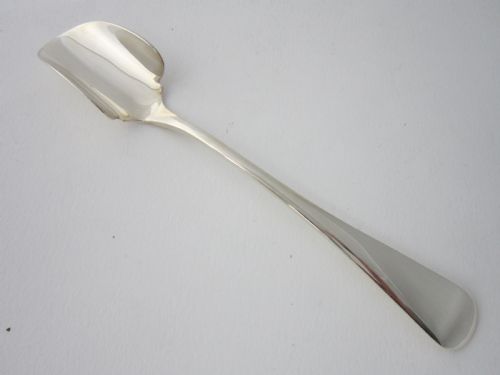
- Stilton scoop
- A long-handled utensil designed for digging into hard cheeses like Stilton. Examples from the early twentieth century follow earlier Georgian functional shapes.
Georgian Silver Utensil: Frequently Asked Questions
What is a georgian silver utensil used for?
These pieces served specific dining and kitchen tasks, from ladling soup and basting meat to scooping marrow, slicing fish, and portioning tea.
Many forms remain practical for modern dining and hospitality use, particularly serving spoons, cheese scoops, and fruit forks.
Are marrow scoops and caddy spoons rare?
Marrow scoops and caddy spoons appear regularly in antique silver inventories, representing specific domestic habits of the eighteenth and nineteenth centuries.
Their survival depends on how heavily they were used and whether their thin silver bowls escaped being bent or worn down over generations.
Why do some spoons have embossed fruit?
Many eighteenth-century spoons were decorated later in the Victorian period with chased fruit and foliage to suit changing tastes.
These modified items are known as berry spoons and represent a secondary phase of craftsmanship applied to older sterling silver.