






Georgian Silver Table Tray
A georgian silver table tray combines the refined display surface of an eighteenth-century serving stand with sturdy timber construction.
Georgian Silver Table Tray
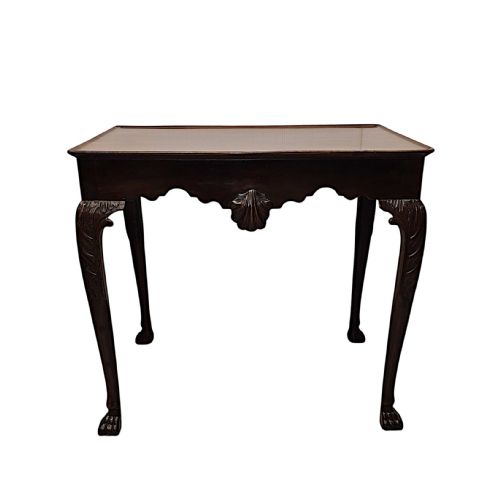
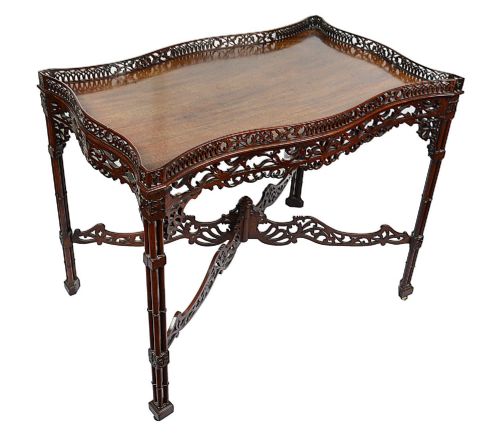
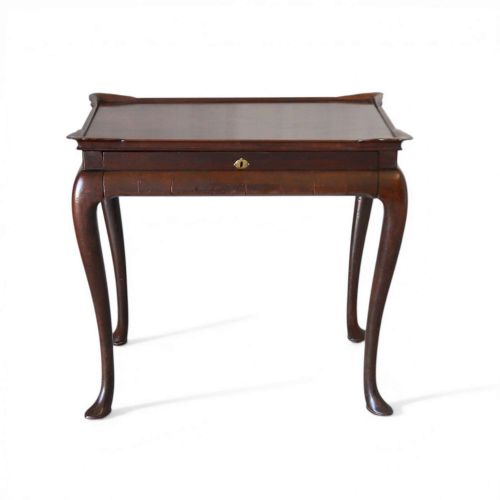
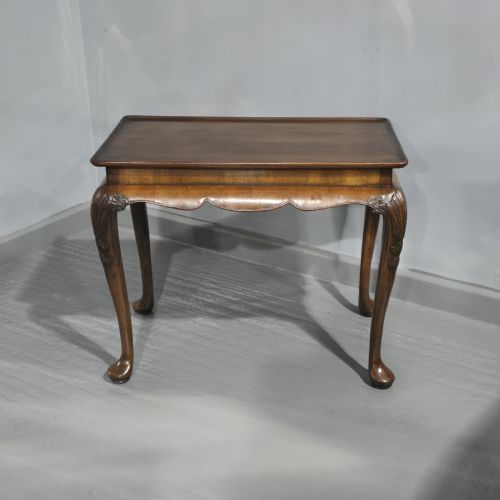
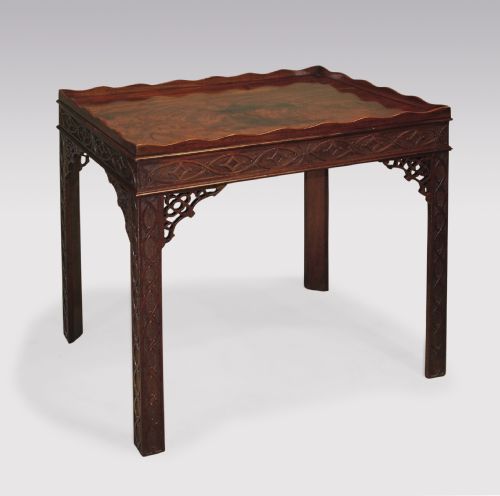
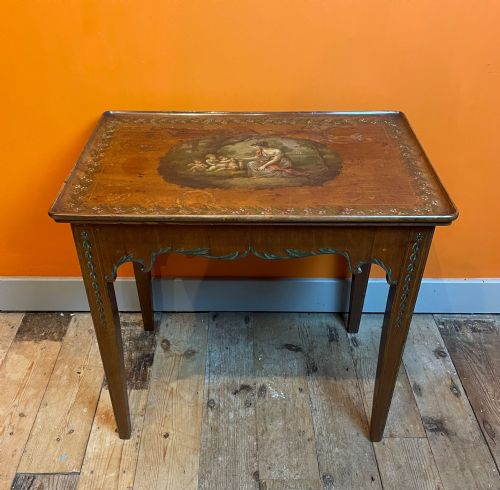
A georgian silver table tray typically presents as a raised gallery top resting on slender legs, built to display silver or serve drinks in formal reception rooms.
Buyers will encounter eighteenth-century origins alongside nineteenth-century interpretations and later revival pieces constructed from similar timber stocks.
The primary forms vary from side tables with detachable trays to dedicated display stands featuring cabriole legs or carved brackets.
Materials and Technique
Cabinetmakers utilised dense hardwoods such as mahogany, Cuban mahogany, and walnut, often selecting figured veneers for the main display surfaces.
Raised tray borders and gallery edges were fashioned from solid timber or brass, joined with traditional framing techniques to withstand regular use.
Secondary framing details include carved cabriole legs, brass carrying handles, and occasional silver plating on associated service items.
Georgian Silver Table Tray Retail Price Guide 2026
Typical asking prices for georgian silver table tray among the pieces listed under this phrase on Sellingantiques today, from the lower quarter to the upper quarter. They describe what is for sale here now, not the wider market.
Some tables double as sneaky display trays, letting you whisk away the tea service while leaving the legs behind.
Design and Execution
Quality rests in the crispness of timber carving, the selection of figured mahogany or burr walnut grain, and the harmony of proportions.
Superior examples exhibit fine joinery at the gallery corners and well-executed cabriole legs rather than heavier, plain secondary framing.
John Walton·Creswick
The Georgian Silver Table Tray Glossary
- Tray top
- A raised rim surrounding the perimeter of a table surface, designed to prevent items from sliding off.
- Silver table
- A specialised display or serving table developed in the eighteenth century to hold silver tea services and presentation pieces.
- Cabriole leg
- A furniture leg that curves outward in an arc and tapers inward toward a pad or claw foot, common in mid-eighteenth-century design.
- Cuban mahogany
- A dense, dark timber imported from the Caribbean, prized by cabinetmakers for its rich grain and stability.
- Silver plate
- A thin layer of silver fused or electroplated onto a base metal such as copper or brass.
Georgian Silver Table Tray: Frequently Asked Questions
What is a silver table?
A silver table is a raised-edge display or serving stand designed during the eighteenth century to hold silver tea services, baskets, and porcelain.
Over time, these versatile tables found use in halls and drawing rooms as decorative console and display surfaces.
How do I identify a Georgian silver table?
Authentic Georgian examples typically feature period timber varieties like Cuban mahogany or walnut, accompanied by period joinery methods and classical proportions.
Revival pieces from later centuries often copy these traditional forms but display different timber patination and secondary construction details.
Where should I place a tray top table?
These tables suit reception rooms, hallways, and living spaces where their raised edges and decorative surfaces can be appreciated.
They function well as display stands for collections of small silver items, porcelain bowls, or candlesticks.
Are tray top tables sturdy?
Built from dense hardwoods like mahogany and walnut, these tables provide a stable surface for everyday display and serving duties.
The sturdy leg frames and corner brackets support the weight of silver and ceramic pieces without flexing.