



Georgian Silver Dessert Cutlery
Georgian silver dessert cutlery brings the elegance of the eighteenth and nineteenth centuries straight to the table with matched or fitted spoons, forks, and knives.
Georgian Silver Dessert Cutlery
When searching for georgian silver dessert cutlery, collectors encounter specialised tools designed for the final course of a grand meal, including fruit knives, berry spoons, and three-pronged forks. These items span periods from the eighteenth century into the Victorian era, reflecting changing dining habits over generations.
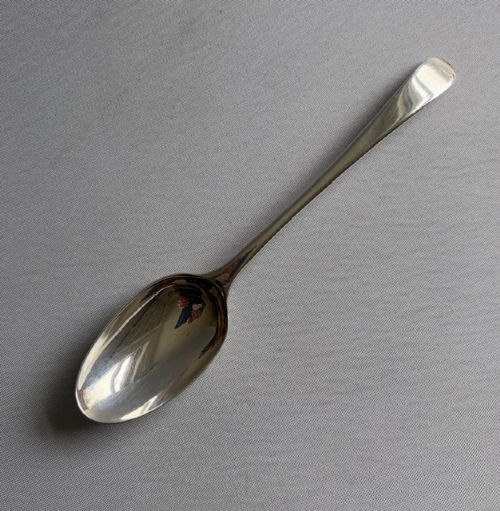
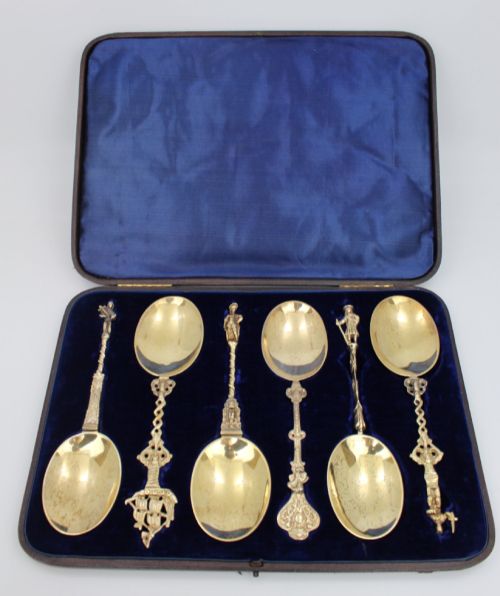
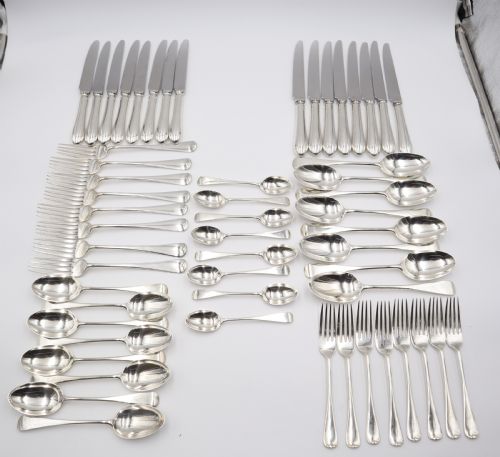
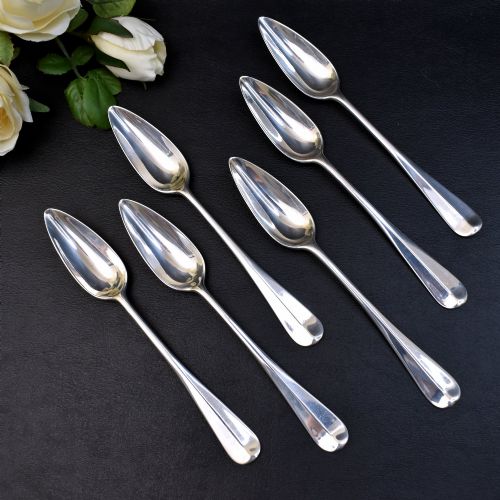
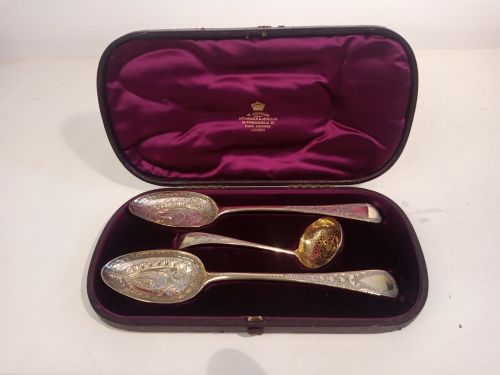
The pieces appearing on this page include individual serving utensils, pairs housed in fitted cases, and larger canteens for twelve persons. Forms range from fiddle pattern spoons and Coburg pattern services to specialised grapefruit and trifle spoons.
Makers from Dublin, Edinburgh, Exeter, and London produced these items using sterling silver, silver-gilt, and steel components. Some sets feature supplementary materials like velvet and silk within their presentation boxes.
Materials and manufacture
Silversmiths forged these utensils primarily from sterling silver or silver-gilt, utilising steel for the blades of specialised knives. Handle construction frequently incorporated mother-of-pearl alongside solid silver shaping.
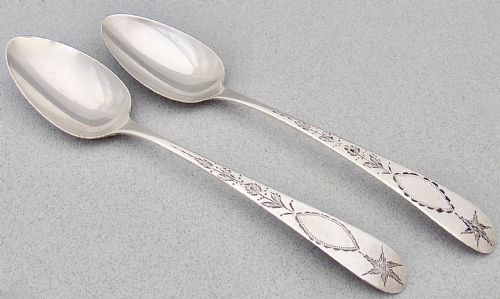
Individual items received hallmarks at assay offices in London, Dublin, and Edinburgh, recording the year of production and the maker's mark. Decorative techniques included bright-cut engraving, crests, and cast patterns such as the palm and Coburg designs.
Georgian Silver Dessert Cutlery Retail Price Guide 2026
Typical asking prices for georgian silver dessert cutlery among the pieces listed under this phrase on Sellingantiques today, from the lower quarter to the upper quarter. They describe what is for sale here now, not the wider market.
Listings feature periods spanning from the eighteenth century through the Georgian and Victorian eras up to the 1920s.
Assessing quality in silver services
The distinction between standard utensils and finer examples lies in the crispness of the chased decoration, such as fruit and leaf motifs on berry spoons. Engraved family crests and fully matched sets preserved within original silk-lined velvet cases command greater attention from collectors.
Weight and structural integrity also separate the items, visible in the gauge of the silver used for three-pronged forks and the preservation of original gilding on silver-gilt pieces.
John Pittar·Hamilton and Inches·E Coker·William Chawner II
The Georgian Silver Dessert Cutlery Glossary
- Berry spoon
- A large serving spoon, often originally made in the Georgian period and later chased with fruit and foliage designs during the Victorian era. These spoons were principally used for serving soft fruits.
- Hallmark
- An official stamp applied by an assay office to guarantee the fineness of the precious metal. These marks identify the city of testing, the maker, and the year of manufacture.
- Silver-gilt
- Sterling silver that has been coated with a thin layer of gold. This technique provides a rich golden finish to the interior of bowls or the entirety of specialised flatware.
- Fiddle pattern
- A popular nineteenth-century flatware handle design characterised by a narrow stem that broadens into a shoulder before spreading at the terminal into a flat, fiddle-like shape.
- Mother-of-pearl
- The iridescent internal layer of mollusc shells, utilised extensively for the handles of Georgian and Victorian dessert knives and forks.
Georgian Silver Dessert Cutlery: Frequently Asked Questions
What is georgian silver dessert cutlery used for?
These specialised utensils were created for the dessert course, which traditionally followed the main meal and included fruits, puddings, and sweet dishes.
Items such as berry spoons, fruit knives, and three-pronged forks were tailored specifically for handling these lighter foods at the dining table.
How do I care for antique silver cutlery?
Silver requires gentle cleaning with specialised polish and soft cloths to remove tarnish without wearing away the underlying engraving or hallmarks.
Storing pieces in lined boxes or anti-tarnish rolls protects them from humidity and prevents unnecessary scratching between uses.
Are cased sets original to the period?
Many presentation cases date from the nineteenth century when fitted boxes became popular for protecting delicate dessert services during storage and transport.
Cases lined in silk and velvet often house utensils assembled or housed together as matched pairs or larger sets.