




Georgian Sewing Basket
A georgian sewing basket represents a refined domestic accessory designed to keep needlework organised, bringing period elegance to any interior.
Georgian Sewing Basket
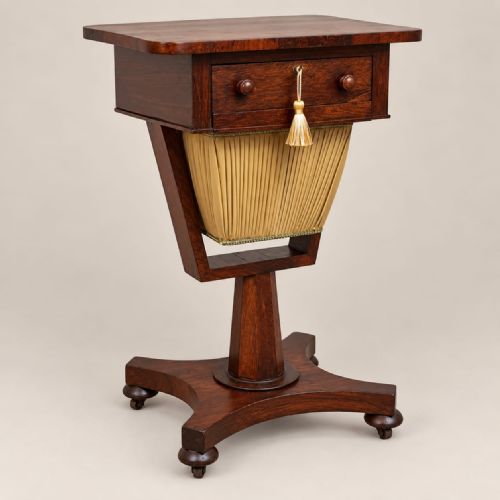
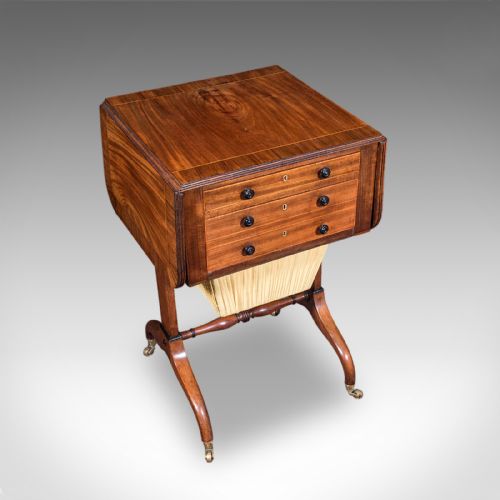
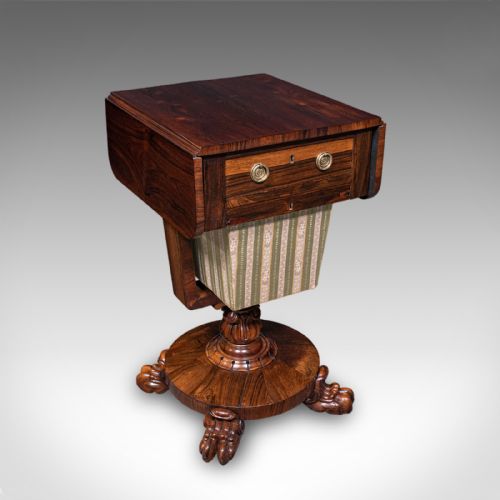
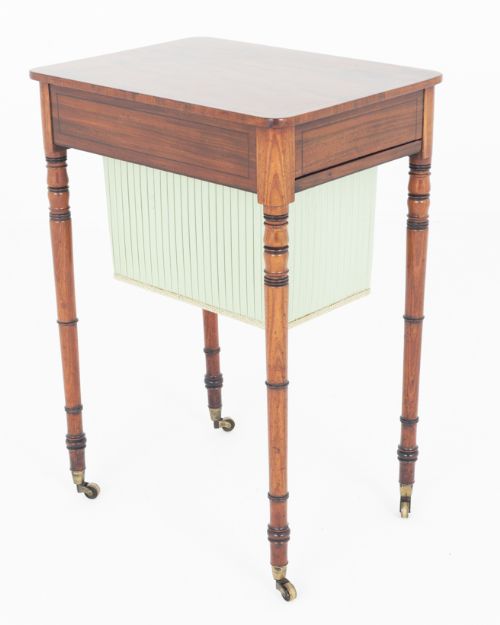
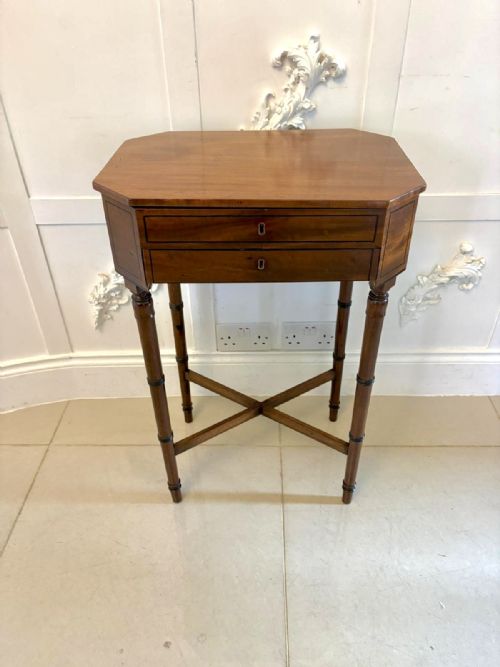
When you search for a georgian sewing basket, you encounter a specialised piece of antique furniture or decorative object created for domestic needlecraft. These objects encompass everything from fitted work tables and drop leaf stands to small silver pin cushions and portable baskets.
The pieces appearing on this page span the Georgian, Regency, William IV and Victorian eras. You will frequently find mahogany and rosewood work tables alongside smaller novelty items fashioned with silver, brass and fabric.
How they were made
Cabinetmakers utilised rich timber varieties such as figured mahogany, rosewood and pollard oak to construct the frames of work tables and boxes. Inlays of boxwood and delicate penwork decorate the surfaces of specific pieces.
Silk and other fabrics line the interior compartments and hanging bags, while brass hardware and silver provide functional and decorative accents across the various forms.
Georgian Sewing Basket Retail Price Guide 2026
Typical asking prices for georgian sewing basket among the pieces listed under this phrase on Sellingantiques today, from the lower quarter to the upper quarter. They describe what is for sale here now, not the wider market.
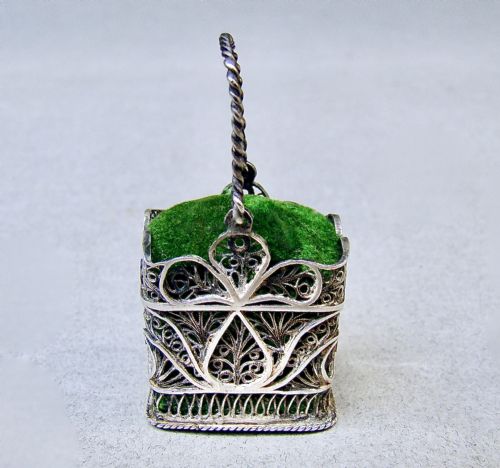
A tiny silver novelty basket pin cushion proves that Georgian craftspeople took needlework very seriously indeed.
What varies in quality
The distinction between standard examples and finer pieces lies in the choice of timber figure, such as highly figured mahogany or rosewood, and the precision of inlaid details. Cabinetmaking attributed to known workshops displays superior structural joinery and refined proportions.
The complexity of the internal arrangement, including fitted compartments for cotton spools and pins, influences the overall character of the piece. Intricate ornamentation like Tunbridge Ware banding elevates the sophistication of smaller baskets.
Gillows of Lancaster
The Georgian Sewing Basket Glossary
- Work table
- A small occasional table equipped with drawers or a fabric bag designed specifically for needlework and sewing implements. These items served both practical and decorative purposes in period parlours.
- Drop leaf
- A table top featuring hinged flaps that fold down to save space or lift up to extend the surface area. This mechanism appears frequently on nineteenth-century sewing stands.
- Tunbridge Ware
- Small wooden objects decorated with mosaic patterns created from thousands of tiny tinted wood splints. This technique produces intricate geometric and floral designs.
- Penwork
- A decorative surface treatment involving fine ink drawing on wood, often protected with a clear varnish. This meticulous method was popular for embellishing portable boxes.
- Pollard oak
- Timber taken from the trunk of an oak tree that has been pollarded, resulting in a dense and highly figured grain pattern. Cabinetmakers valued this wood for its distinctive appearance on furniture surfaces.
Georgian Sewing Basket: Frequently Asked Questions
What is a georgian sewing basket?
A georgian sewing basket refers to containers and specialised tables designed to hold needlework accessories during the late eighteenth and nineteenth centuries. These items combined practical storage with decorative craftsmanship.
They range from small tabletop pin cushions to substantial rosewood work tables equipped with silk bags and internal compartments.
How were sewing tables used?
These tables served as mobile workstations for ladies engaged in sewing, embroidery and writing within the parlour. The suspended fabric bags below held fabrics, threads and tools.
Many examples feature drop leaves that provided extra surface space when opened during crafting sessions.
Which woods are most common?
Mahogany and rosewood appear most frequently among the timber varieties used in these pieces. Craftsmen also employed pollard oak and boxwood for contrasting inlays.
These dense hardwoods allowed for durable construction and took a fine polish.
How do I spot a Regency piece?
Regency pieces often display classical architectural influences, such as lyre-shaped supports and precise brass inlay. The era spans the early nineteenth century and favours dark, rich timbers.
Refined proportions and restrained ornamentation distinguish these items from later Victorian examples.