



Georgian Serving Dresser
A georgian serving dresser brings substantial utility and rich cabinet timber to a room, offering deep drawers and broad top surfaces built for daily service.
Georgian Serving Dresser
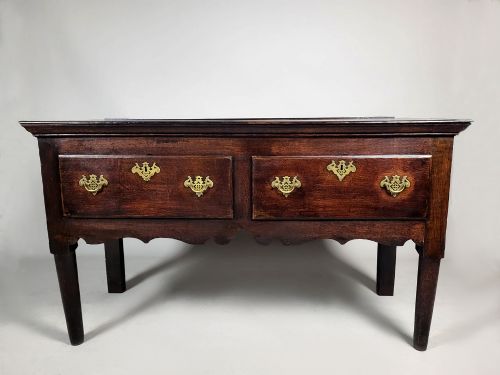
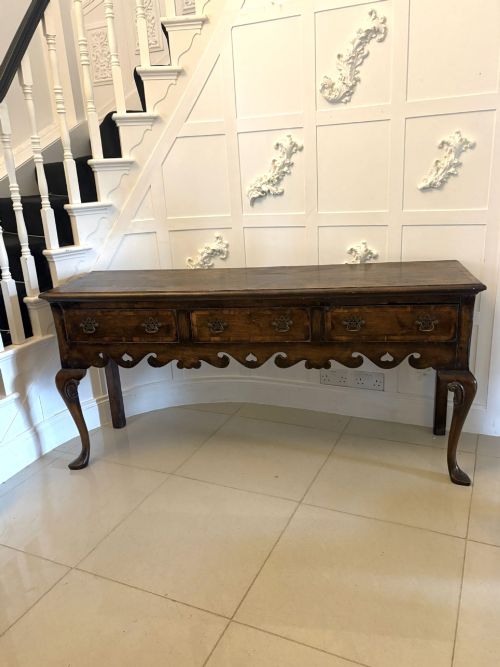
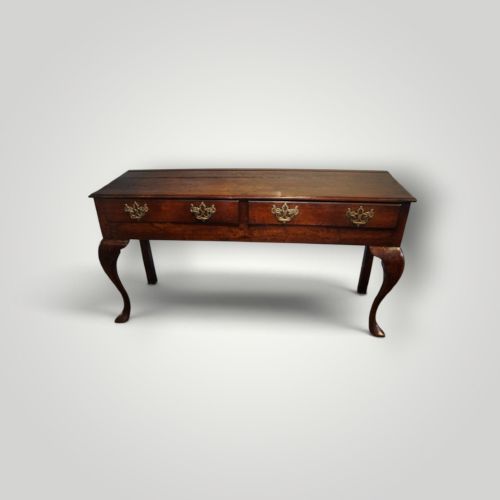
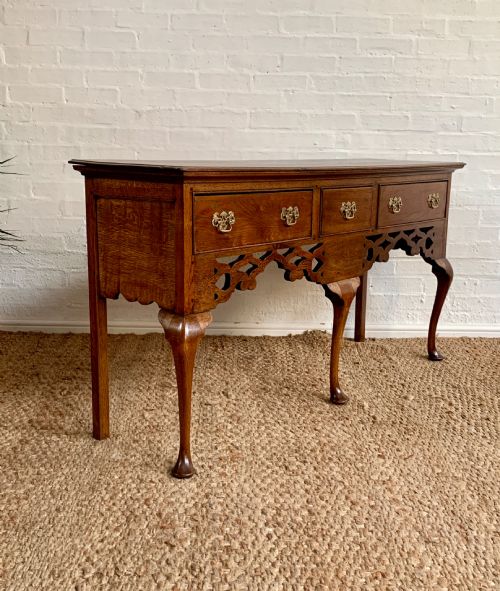
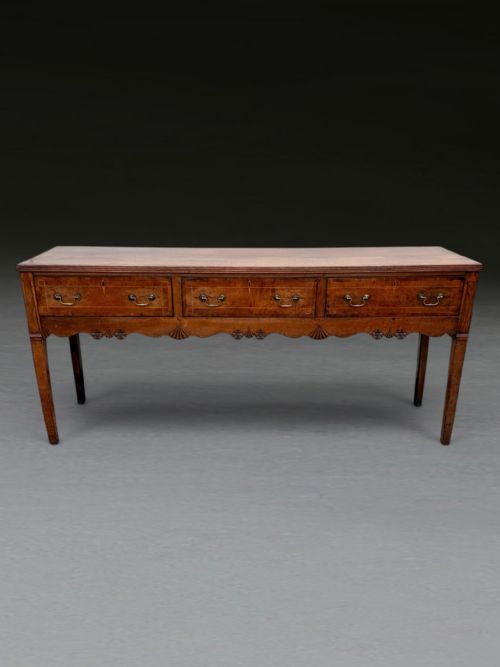
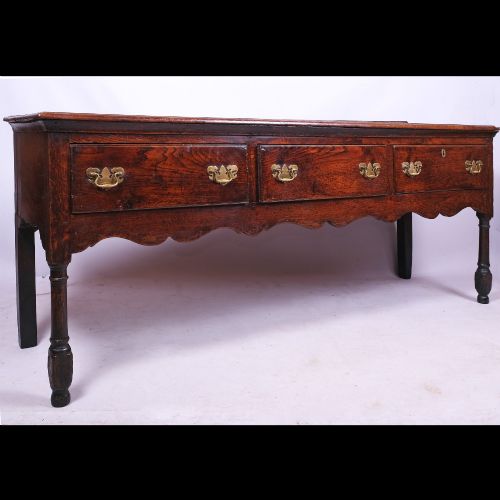
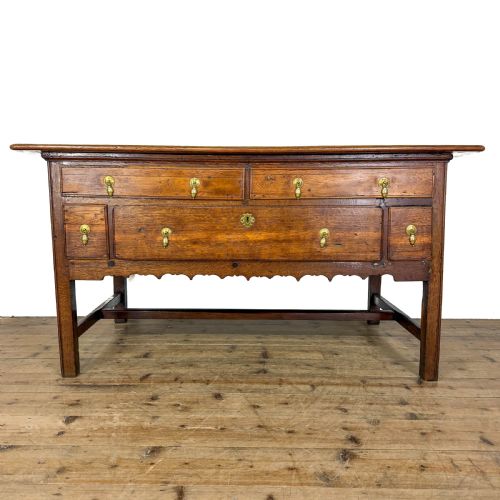
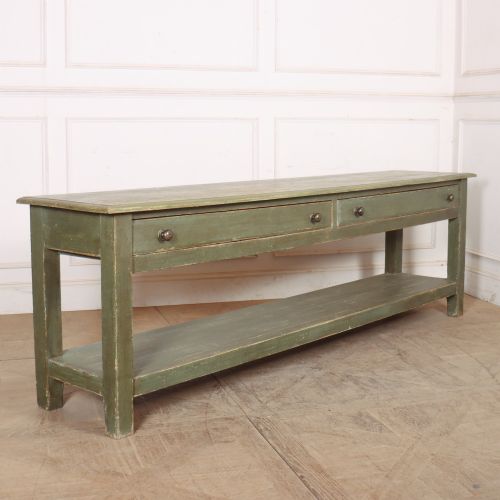
A georgian serving dresser stands as a functional centerpiece designed for storage and display, most frequently encountered in sturdy oak or mahogany across this selection. Pieces span the eighteenth century and the georgian era through to later nineteenth-century interpretations, showing forms like dresser bases, sideboards, and potboard serving tables.
The layout typically combines long drawers above cupboards or open potboard lower shelves, creating low horizontal proportions suited to dining rooms and hallways. Regional variations introducecabriole legs, turned supports, and occasionally painted timber finishes alongside standard rectilinear framing.
Makers and craftsmen of the period constructed these utilitarian boards to handle heavy domestic duties, leading to robust joinery and practical surfaces. Buyers searching for a georgian serving dresser will find examples featuring original brass hardware or inlaid detail that reflect their working origins.
Materials and construction methods
The primary timbers recorded in these listings are oak and mahogany, supplemented by pine for secondary framing and occasional painted timber surfaces. Carpenters relied on solid boards for tops and drawer fronts, employing traditional joints such as dovetails for drawer construction and mortise and tenon framing for the structural carcase.
Hardware consists principally of brass handles and escutcheons, often described as original to the piece, alongside turned wooden knobs or subtle inlay work. Surface finishes range from polished hardwood patination to painted timber treatments and carved oak detailing.
Georgian Serving Dresser Retail Price Guide 2026
Typical asking prices for georgian serving dresser among the pieces listed under this phrase on Sellingantiques today, from the lower quarter to the upper quarter. They describe what is for sale here now, not the wider market.
Open potboards beneath serving tables were originally swept daily by household staff who kept kitchen earthenware neatly aligned off the cold flagstone floors.
Evaluating construction and material quality
Quality in a georgian serving dresser rests on the selection of timber and the preservation of original structural elements such as brasses, timber tops, and support legs. Finer examples retain their original surface patination and uncompromised drawer linings, whereas lower tiers show extensive timber replacement or altered bases.
The crispness of carved details, the integrity of inlaid decoration, and the proportion of cabriole or turned legs distinguish superior cabinet work from more utilitarian workshop production.
The Georgian Serving Dresser Glossary
- Potboard
- An open lower shelf beneath a dresser base designed for storing pots and serving dishes. This open staging platform sits just above the floor on sturdy legs.
- Dresser base
- The lower section of a kitchen or dining dresser configured as a sideboard with drawers and cupboards. It functions independently as a serving surface.
- Cabriole leg
- A furniture leg that curves out at the knee and tapers inward to an ankle, found on certain eighteenth-century and revival pieces. This design draws inspiration from animal limbs.
- Bow front
- A convex curved cabinet front that projects outward in an arc. This shaping appears on later georgian and regency serving tables.
- Inlay
- The technique of inserting contrasting strips of wood or other materials into depressions carved into the primary timber base. It creates decorative geometric or floral patterns.
Georgian Serving Dresser: Frequently Asked Questions
How do I date a georgian dresser?
Dating relies on observing timber choices, construction techniques, and hardware styles such as brass drop handles or backplates. Eighteenth-century examples typically show hand-cut dovetails and pegged joints.
Later nineteenth-century and revivals often incorporate machine-cut elements or stylistic crossovers like edwardian inlay.
Where should I place a dresser base?
A dresser base fits well in a dining room against a long wall, functioning as a sideboard for serving dishes during meals.
These pieces also sit comfortably in entrance halls or living spaces where surface display and drawer storage are useful.
Are these pieces made of solid wood?
The listings consist primarily of solid timbers such as oak, mahogany, and walnut, built for heavy domestic use.
Secondary woods like pine appear in internal framing and drawer bottoms, which aligns with standard period workshop practice.