


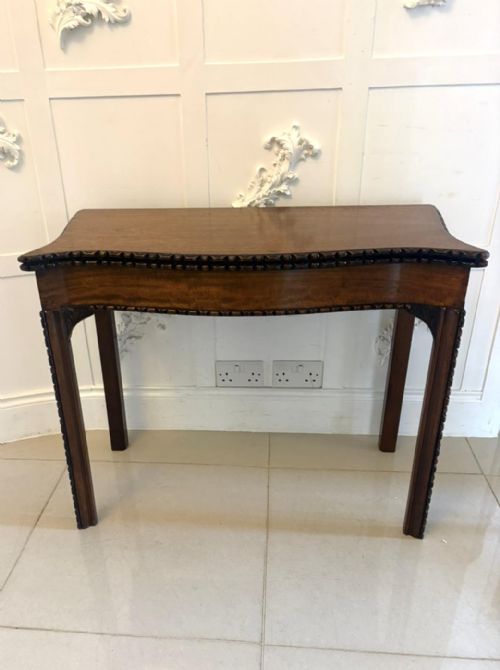
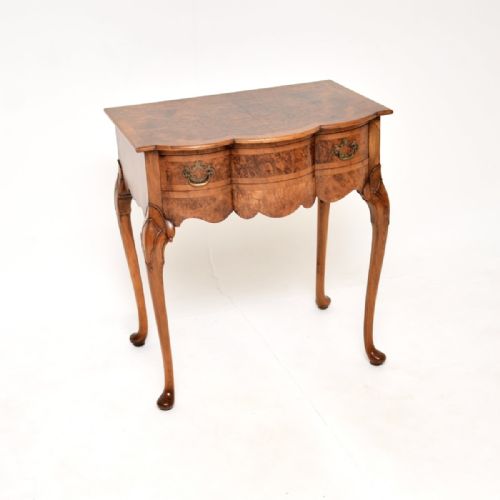
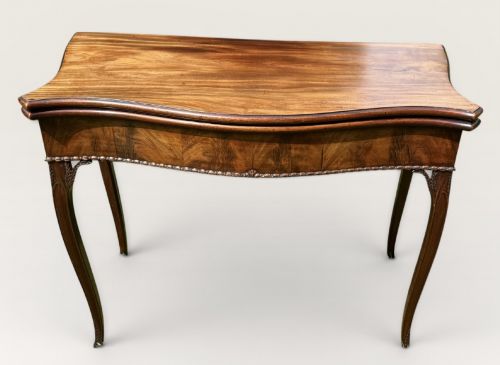
Georgian Serpentine Console
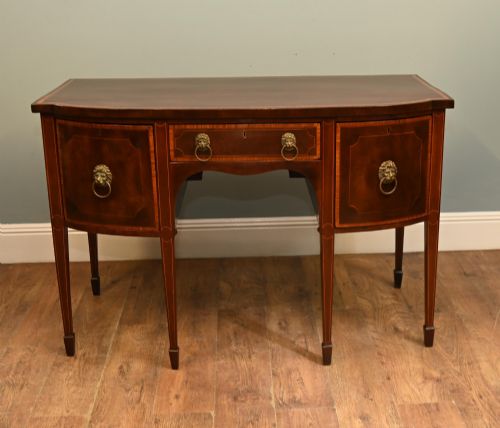
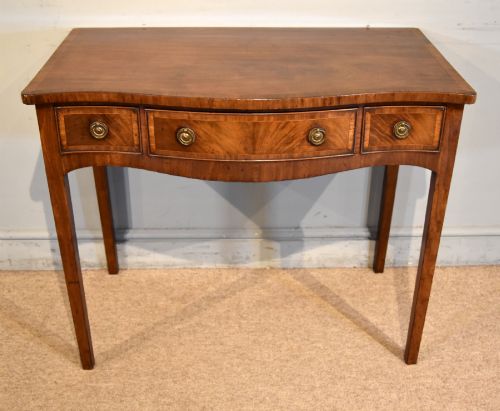
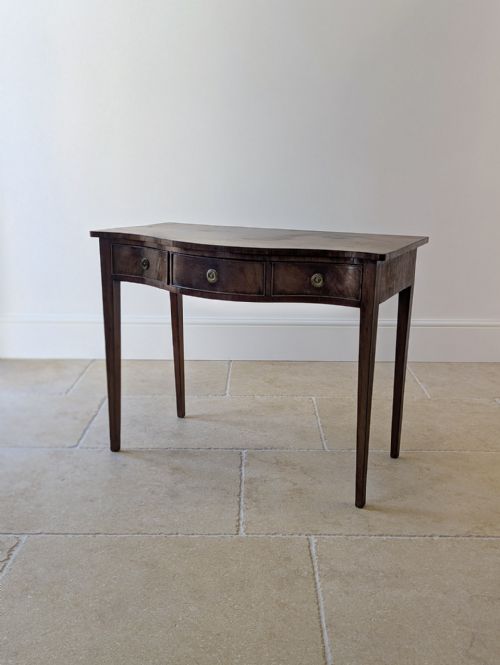
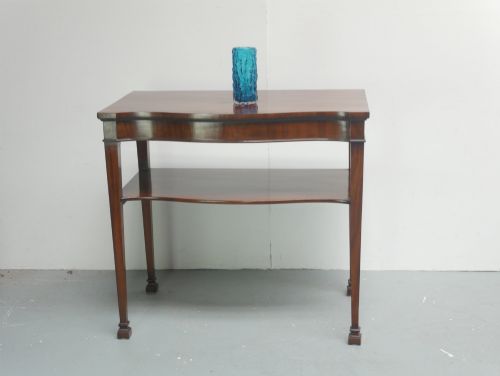
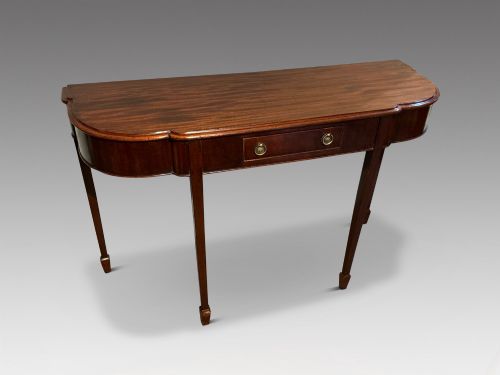
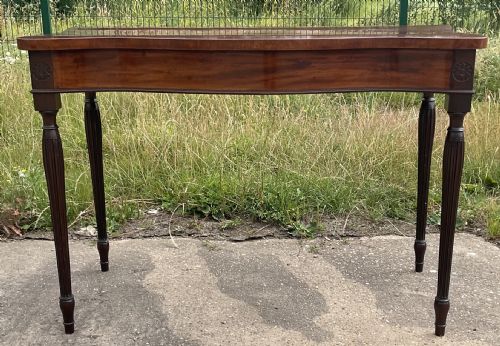
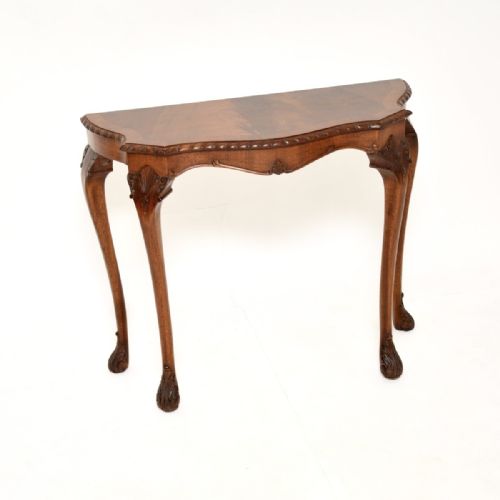
A georgian serpentine console brings rhythmic elegance to a hall or drawing room through its undulating front and rich timber construction.
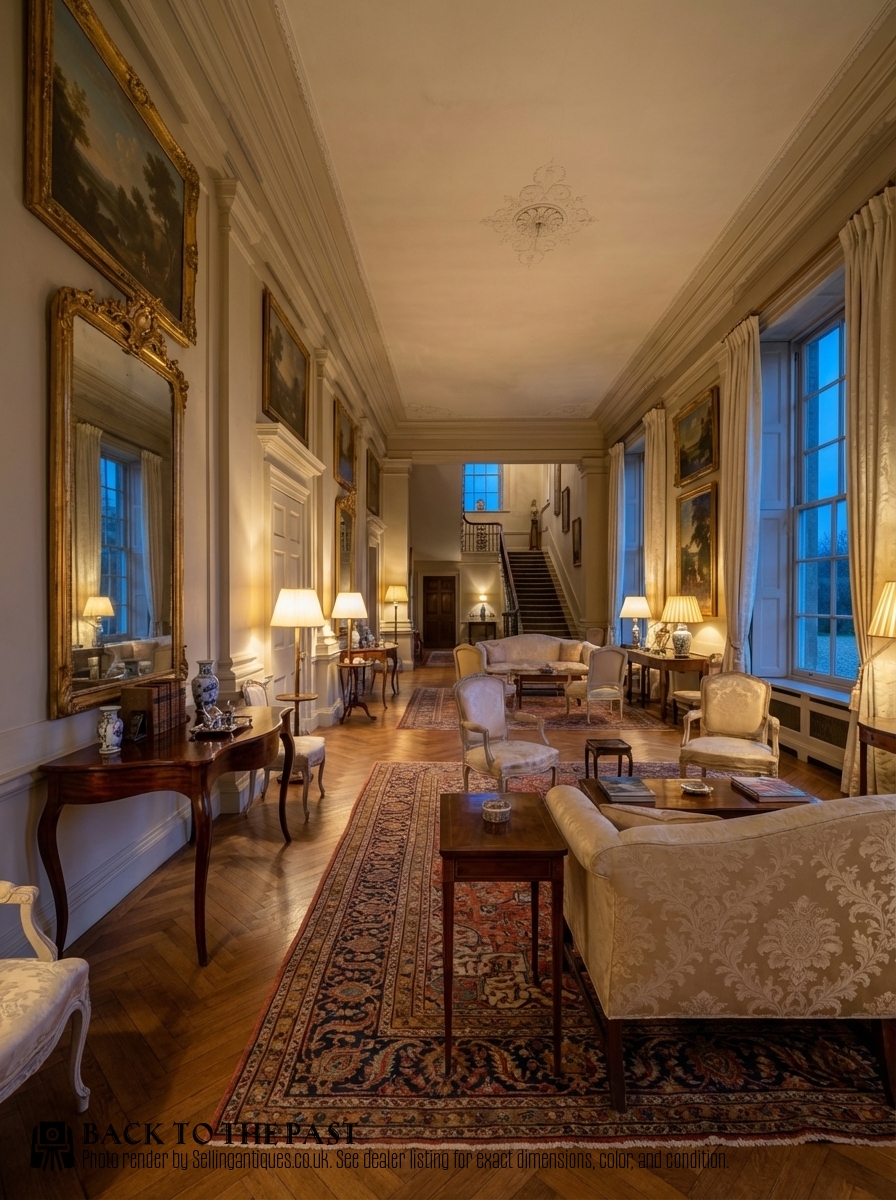
Georgian Serpentine Console
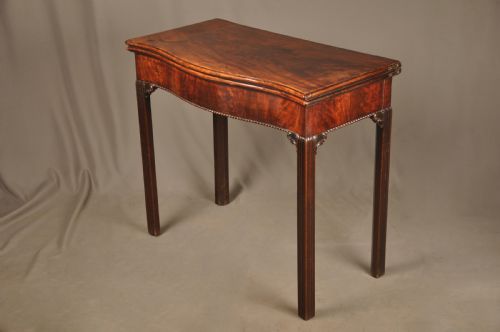
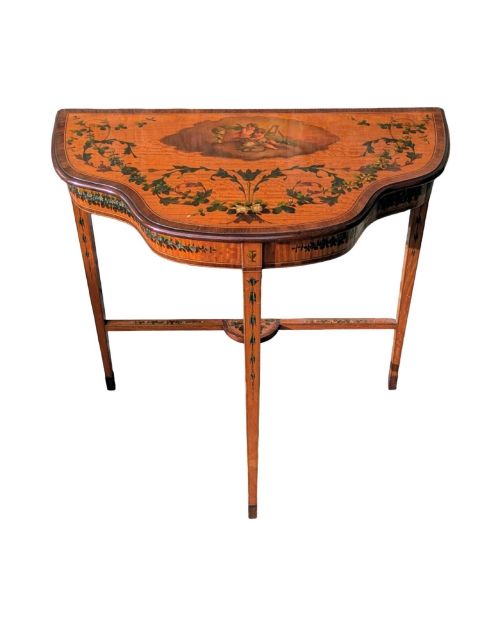
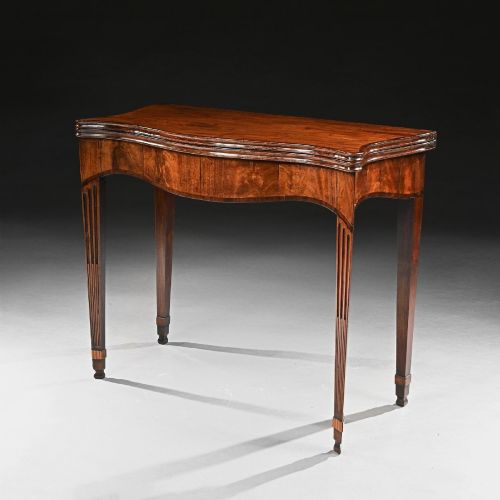
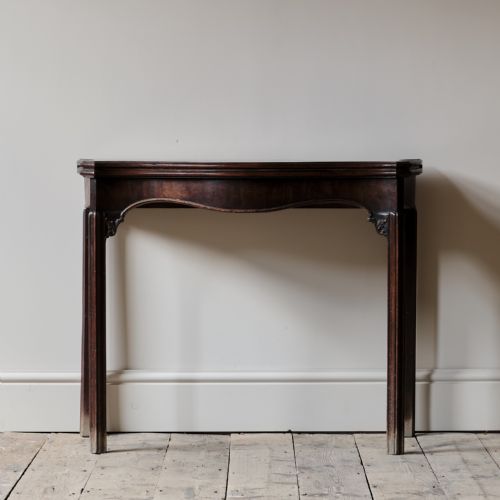
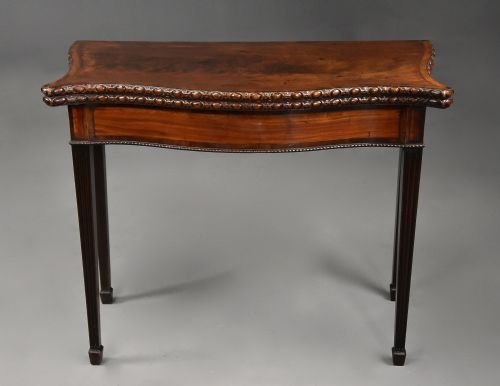
Buyers seeking a georgian serpentine console examine tables featuring a distinct convex centre flanked by concave curves, forming a gentle wave across the front edge. These pieces emerge predominantly from the eighteenth century, including George III examples alongside later revivals from the nineteenth and early twentieth centuries.
The form encompasses dedicated console tables, side tables, and versatile folding surfaces such as card tables and tea tables. Mahogany dominates the selection, frequently paired with burr walnut or satinwood details, appearing across formal serving tables and compact hall furniture.
How they were made
Cabinet makers constructed these tables using solid timber frames overlaid with flame mahogany veneer or burr walnut, applying boxwood stringing and inlay for decorative contrast. Secondary framing timbers support the complex curved outlines that define the serpentine profile.
Brass fittings appear on functional elements such as folding card table hinges and swing-leg mechanisms. Traditional hand-polishing builds the surface sheen, highlighting the natural grain patterns of the wood.
Georgian Serpentine Console Retail Price Guide 2026
Typical asking prices for georgian serpentine console among the pieces listed under this phrase on Sellingantiques today, from the lower quarter to the upper quarter. They describe what is for sale here now, not the wider market.
Listings feature mahogany, burr walnut, and satinwood, spanning the eighteenth century through to 1930s revival furniture.
What varies in quality
The refinement of the serpentine curve dictates visual success, where subtle, sweeping undulations separate superior cabinet work from rigid or heavy execution. Crispness in carved details, such as bracket feet or edge mouldings, marks the distinction between standard production and master craftsmanship.
Original surface patination and timber selection define the upper tier, with figured flame mahogany and burr walnut displaying depth through age. The integrity of the folding mechanisms and the alignment of veneered grain across the serpentine sweep further distinguish finer examples.
Gillow
The Georgian Serpentine Console Glossary
- Serpentine
- A furniture front shaped with a convex centre flanked by two concave curves. This contour requires precise joinery to follow the undulating line.
- Console table
- A table designed to stand against a wall, traditionally supported by legs at the front and fixed brackets at the back. These pieces often serve entryways or principal reception rooms.
- Flame mahogany veneer
- A sliced timber sheet exhibiting a flickering, flame-like grain pattern. Cabinet makers applied these veneers to prominent surfaces for visual impact.
- Card table
- A folding table with a hinged top that opens to reveal a baize-lined playing surface. Eighteenth-century examples frequently incorporate serpentine fronts to accommodate evening entertainment.
- Patina
- The surface sheen and mellow tone developed by wood through age and use. A deep original patina signals undisturbed historical surfaces.
Georgian Serpentine Console: Frequently Asked Questions
How were card tables used?
Card tables functioned as social hubs during evening assemblies, opening up to provide a stable surface for games like whist or quadrille. When closed, they stood flat against a drawing room wall as side tables.
Many incorporate folding leaves supported by a swing leg, concealing small wells for counters and cards beneath the top.
Where should I place a console table?
Console tables suit narrow entrance halls, reception rooms, and spaces beneath large wall mirrors where floor depth is restricted. Their decorative fronts provide an immediate focal point upon entering a room.
Because many sit flush against walls, pairing them with appropriate lighting or ceramics completes the arrangement without blocking walkways.
How do I distinguish eighteenth century from revival pieces?
Eighteenth century examples display construction methods appropriate to their period, including hand-cut dovetails, timber shrinkage patterns, and period-specific secondary woods. Revival pieces from the Victorian and Edwardian eras often show uniform machining and later secondary timbers.
Examining the underside and hinge fittings reveals the age of the construction and any subsequent structural alterations.