





Georgian Scrollwork Wall Mirror
A georgian scrollwork wall mirror brings warmth and reflective depth to a room through carved timber and fluid scroll outlines.
Georgian Scrollwork Wall Mirror
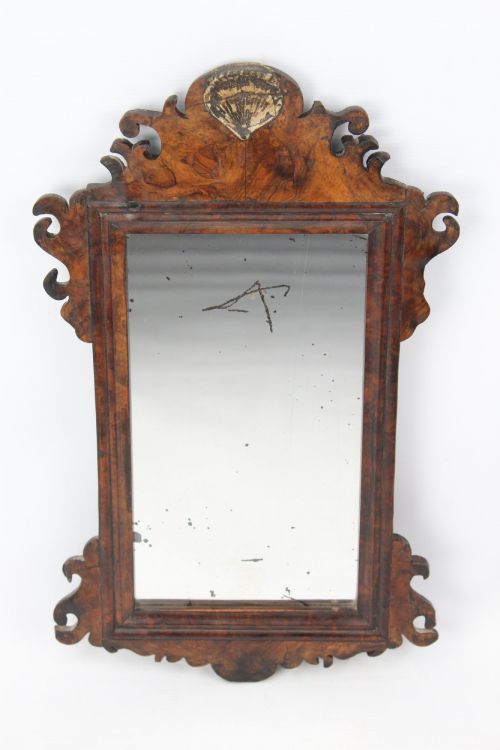
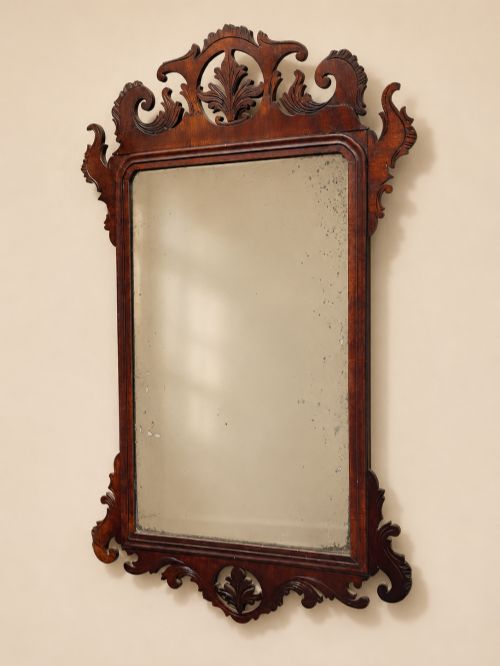
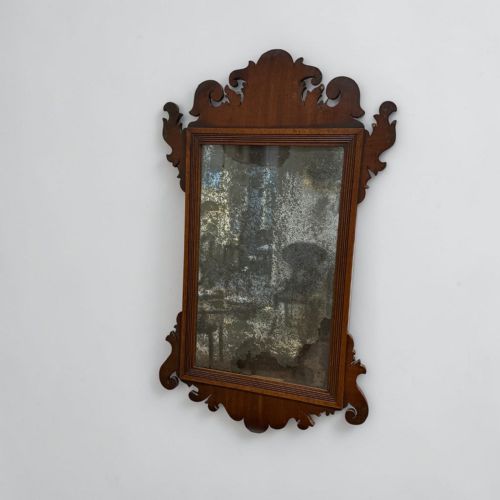
A georgian scrollwork wall mirror takes the form of a vertical hanging glass framed in timber or gilded wood, often featuring pierced fretwork silhouettes at the crest and apron. These pieces emerge in various periods, appearing in original 18th Century examples as well as later revivals from the Edwardian era and around nineteen hundred.
The materials span rich dark timbers alongside lighter tones, incorporating walnut, mahogany, bleached wood, and boxwood alongside giltwood, gesso, and glass. Walnut and mahogany versions dominate the earlier eighteenth-century offerings, while revival interpretations utilise various woods and gilded finishes.
Most examples function as wall mirrors designed to hang in principal reception rooms, hallways, or parlours. The proportions range from compact panels to large fret mirrors intended to command a specific wall.
How they were made
Cabinetmakers constructed these frames using dense hardwoods like mahogany and walnut, frequently applying fine veneer or inlay work to the primary surfaces. Fretwork panels were precisely pierced from thin timber boards using specialised saws to create intricate scrolling silhouettes.
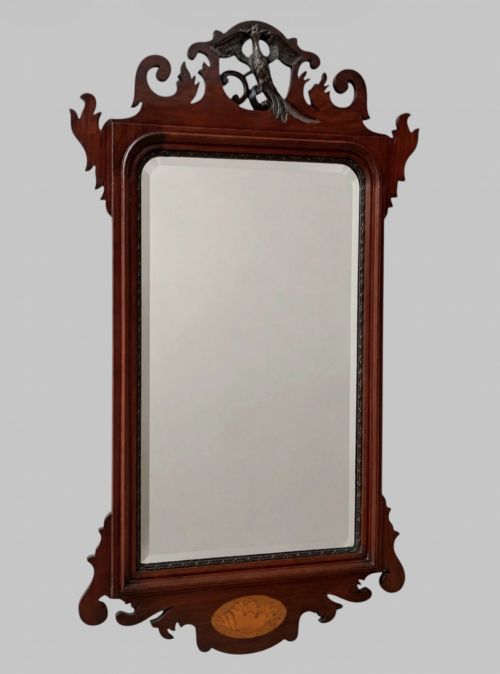
Giltwood and gesso pieces relied on skilled carving beneath layers of gesso and gold leaf, producing reflective surfaces with high definition. Bevelled glass plates were carefully inserted into the rebate behind the wooden borders.
Boxwood and other contrasting timbers provided delicate stringing or inlay details, setting off the main grain of the mahogany or walnut structure.
Georgian Scrollwork Wall Mirror Retail Price Guide 2026
Typical asking prices for georgian scrollwork wall mirror among the pieces listed under this phrase on Sellingantiques today, from the lower quarter to the upper quarter. They describe what is for sale here now, not the wider market.
Listings feature pieces spanning the 18th Century, 19th Century, Edwardian period, and specific dates including 1800, 1880, 1900, and 1920.
What varies in quality
The crispness of the fretwork carving and the depth of the scroll relief define the visual success of the frame. Superior examples show confident, fluid lines with sharp interior corners rather than sluggish or rounded handwork.
The choice and figuring of the timber veneers heavily influence the desirability of wood-framed pieces. Rich, well-matched walnut or finely grained mahogany elevates the object well beyond plain, unfigured alternatives.
The integrity of the original gilding or the preservation of the antique glass plate adds significant character. Pieces retaining their early mercury plates or undisturbed original gilt surfaces hold a distinct visual advantage.
The Georgian Scrollwork Wall Mirror Glossary
- Fretwork
- Ornamental openwork formed by cutting patterns through thin wood with a saw. This technique creates the signature pierced borders seen on many mirror frames.
- Giltwood
- Timber that has been coated with thin layers of gold leaf over a prepared gesso base. It catches ambient light and brings brightness to dark interiors.
- Gesso
- A plaster-like mixture applied to wooden frames as a smooth base for subsequent gilding. It allows carvers to achieve sharp decorative details before applying gold leaf.
- Bevelled glass
- Glass whose edges are cut and polished at an angle thinner than the rest of the plate. This creates a decorative refractive border around the edge of the reflection.
Georgian Scrollwork Wall Mirror: Frequently Asked Questions
Where should I hang a georgian scrollwork wall mirror?
These mirrors suit principal reception rooms, above a fireplace mantel, or along a hallway where they reflect natural light and open up the space.
Ensure the wall fixings match the weight of the timber and glass frame to secure the piece safely.
How do I date a georgian scrollwork wall mirror?
Examine the timber species, the construction methods of the backboards, and the style of the carving. Eighteenth-century versions typically use dense native hardwoods and hand-cut joinery.
Revival pieces from the Edwardian period or around nineteen hundred often display machine-cut precision or different secondary woods upon closer inspection.
What is the difference between walnut and mahogany frames?
Walnut frames generally date towards the earlier part of the eighteenth century, showing rich figuring and warm, mellow tones. Mahogany gained popularity slightly later and offers a deeper, reddish-brown colour.
Both timbers were prized by cabinetmakers for their stability when forming intricate pierced fretwork.
Are these mirrors fragile?
The delicate fretwork scrolls and projecting carved crests require careful handling during movement or cleaning. The wooden frames themselves are robust, but the thin silhouette edges need protection from knocks.
Using appropriate hanging wire and wall hooks ensures the mirror stays secure over time.