




Georgian Scientific Glass
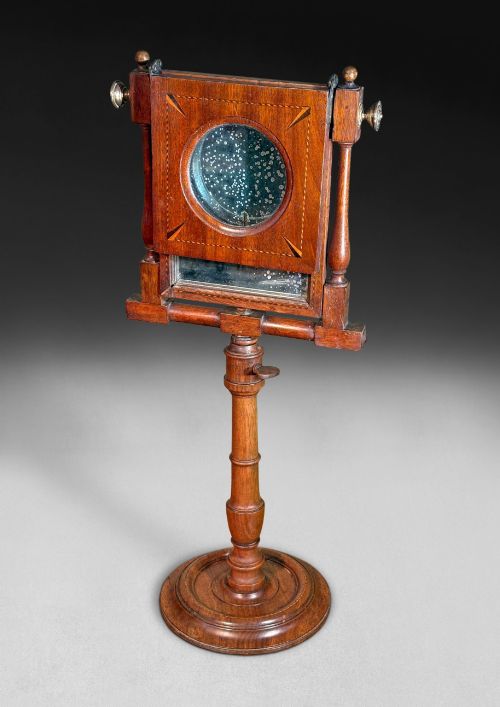
Georgian scientific glass encompasses mercurial barometers, thermometers, and optical instruments that record atmospheric pressure and temperature with remarkable precision.
Georgian Scientific Glass
When you search for georgian scientific glass, you encounter functional instruments designed to measure atmospheric changes and temperature. The selection centres on stick barometers, wheel barometers, wall thermometers, and optical instruments originating from the eighteenth and nineteenth centuries.
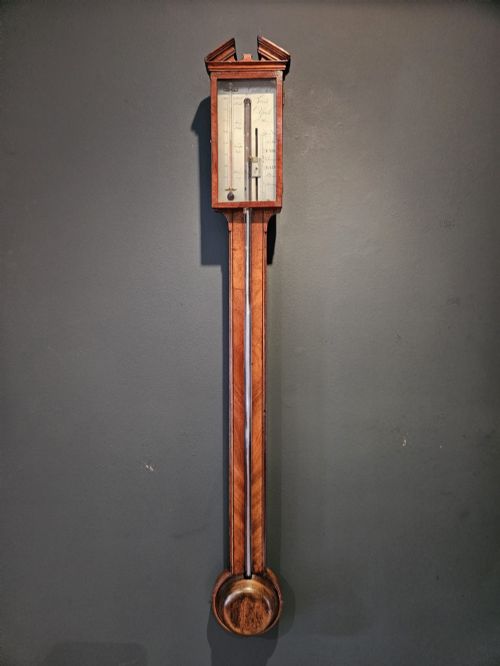
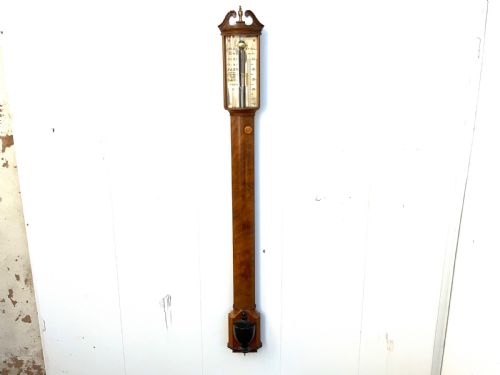
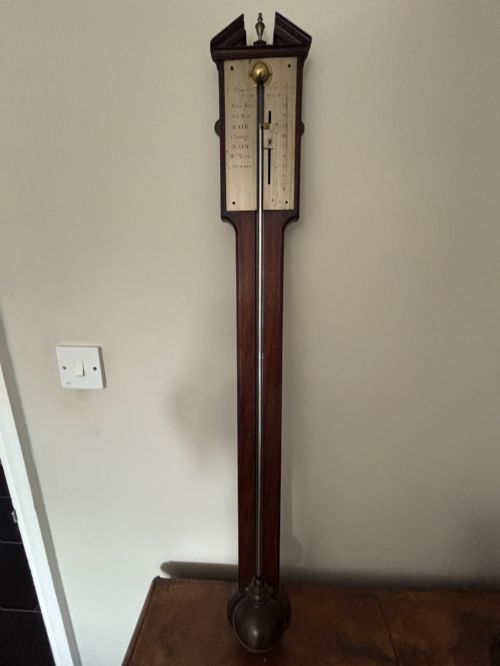
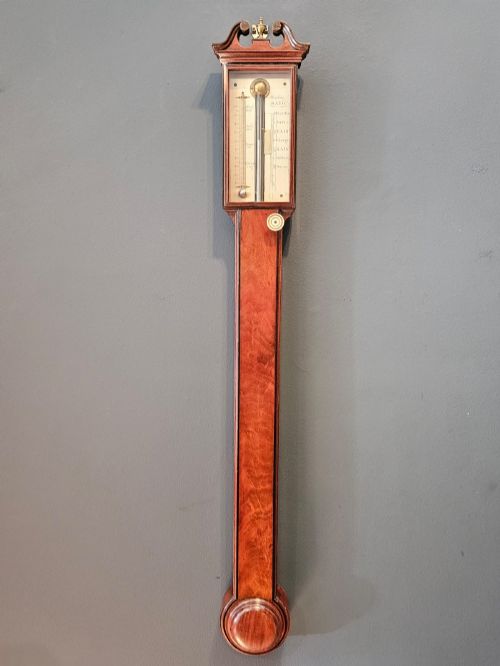
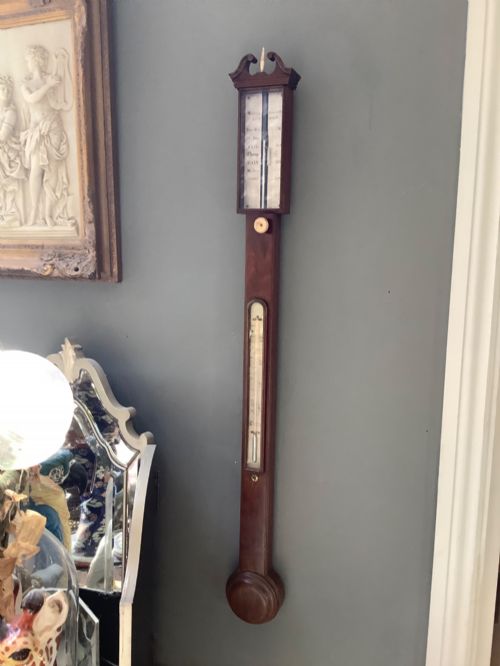
The stick barometer is the most frequent form on this page, housed in mahogany, rosewood, or satinwood cases. These instruments often display architecturally inspired tops or delicate inlay work alongside silvered brass scales.
Makers housed these sensitive mechanisms in compact wall-hanging enclosures rather than freestanding furniture. Domestic interiors of the period utilised these devices both for practical weather observation and as expressions of scientific curiosity.
What varies in quality
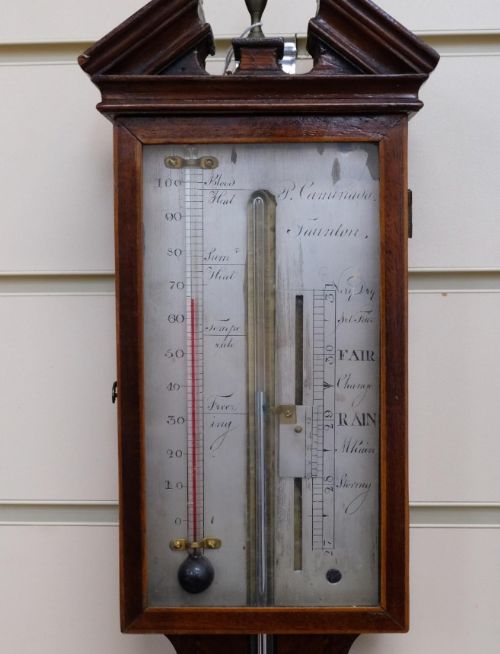
Quality rests in the crispness of the engraved silvered scale and the fidelity of the cabinetwork. Cases featuring marquetry inlay, bow fronts, or architecturally inspired pediments elevate an instrument above plain utility.
Signatures of established makers on the dial plate distinguish workshop output. The clarity of the mercurial tube and the preservation of the original wooden case determine the standing of each piece.
Georgian Scientific Glass Retail Price Guide 2026
Typical asking prices for georgian scientific glass among the pieces listed under this phrase on Sellingantiques today, from the lower quarter to the upper quarter. They describe what is for sale here now, not the wider market.
The selection includes stick barometers, wheel barometers, and wall thermometers.
George Adams London·P Caminada Taunton·Francis West·James Gatty·Watkins and Hill
The Georgian Scientific Glass Glossary
- Stick barometer
- An instrument that measures atmospheric pressure using a vertical glass tube filled with mercury mounted on a wooden backplate. These pieces rely on a exposed or glass-covered tube to show barometric shifts.
- Wheel barometer
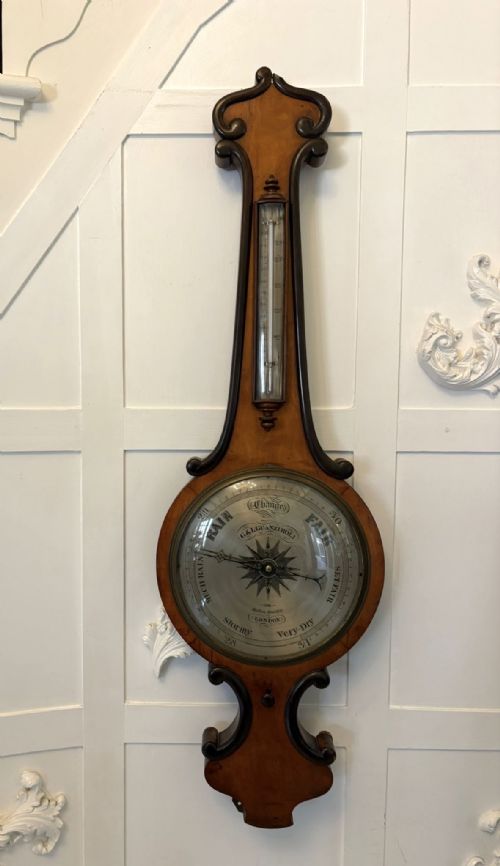
- A dial instrument that translates vertical mercury movement into circular pointer rotation via a pulley and counterweight system. These larger banjo-shaped cases often incorporate hygrometers or thermometers.
- Silvered scale
- A brass plate treated with silver to create a matte white surface for engraved measurement graduations. Artisans filled the engraved lines with dark wax to ensure legibility.
- Thermoscope
- An early form of thermometer that indicates relative temperature changes without standardised numerical calibration. These boxwood or wooden instruments record thermal expansion before fixed scales became standard.
- Mercurial tube
- The sealed glass vessel containing liquid mercury that responds to atmospheric pressure variations. The integrity of this column dictates the functional operation of the barometer.
Georgian Scientific Glass: Frequently Asked Questions
How do stick barometers work?
A vertical glass tube filled with mercury sits within the wooden case, responding directly to changes in atmospheric pressure. The mercury column rises or falls against an engraved scale to indicate weather patterns.
Changes in air pressure push the liquid up or down the sealed tube. Observers read these shifts using the adjacent silvered metal scale.
Where were these instruments placed?
Makers designed these barometers and thermometers to hang securely on interior walls in principal rooms. Hallways and libraries provided stable temperatures away from direct heat sources.
Domestic spaces utilised these devices for daily weather forecasting. The upright wooden cases suited narrow wall spaces between doorways or windows.
How do I date a barometer?
Cabinet styles, timber choices, and maker signatures indicate the period of manufacture. Earlier pieces favour simple mahogany stick cases, whilst later nineteenth-century examples introduce rosewood or marquetry.
Inscribed signatures on the brass scale connect the instrument to recorded maker working dates. Architectural pediments and edge stringing also point to specific stylistic decades.
Can these barometers be repaired?
Specialist conservators can restore damaged wooden cases and re-secure loose decorative veneers. Glass tubes containing mercury require expert handling by professionals familiar with historic instruments.
Internal mechanisms need careful calibration to ensure accurate readings. Professional intervention preserves the original components without altering the historic character.