





Georgian Schoolgirl Sampler
A georgian schoolgirl sampler brings the meticulous needlework of young girls into your home through framed textiles and embroidered panels.
Georgian Schoolgirl Sampler
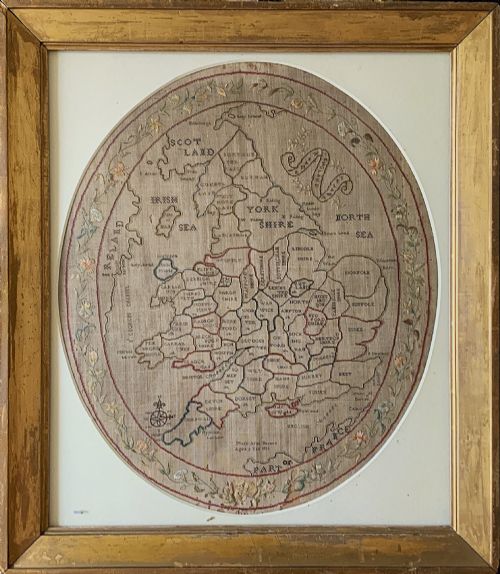
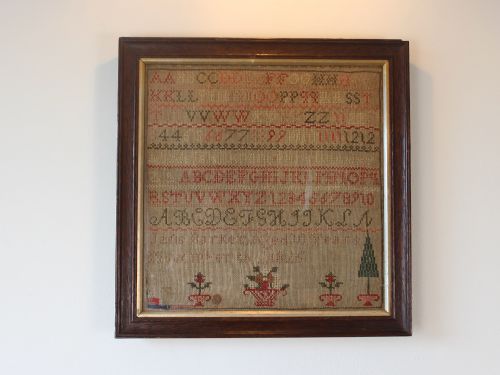
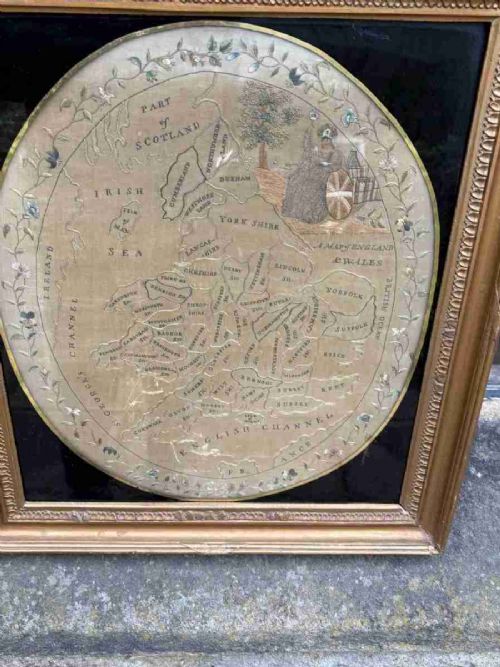
A georgian schoolgirl sampler consists of textile art and needlework samplers created during the Georgian, Regency, William IV, and Victorian periods. These pieces include map samplers and alphabet samplers that record the domestic education of young makers.
You are most likely to meet framed embroidery and needlepoint panels attributed by age and maker name, such as works by Mary Banion aged nine or Louiss Elkins aged twelve. These wall art pieces capture educational achievements from schoolrooms and establishments like the Oswestry National School.
The materials span linen grounds worked with silk thread, silk, and wool, housed behind glass in wood or gilt wood frames. Each piece of textile wall art preserves historic stitching techniques handed down through generations of schoolgirls.
Materials and construction
Makers stitched silk thread, silk, and wool onto a woven linen ground using needlepoint and embroidery techniques. The resulting panels display alphabets, maps, and pictorial scenes executed by hand.
Frames fashioned from wood and gilt wood enclose the textile art, often protected beneath glass. These contemporary or later mountings secure the fragile silk thread and linen fabrics for display on walls.
Georgian Schoolgirl Sampler Retail Price Guide 2026
Typical asking prices for georgian schoolgirl sampler among the pieces listed under this phrase on Sellingantiques today, from the lower quarter to the upper quarter. They describe what is for sale here now, not the wider market.
Mary Banion recorded her age as nine years old in 1800 while stitching a map of England and Wales.
What separates examples
The complexity of the needlework dictates the visual impact of the piece, moving from simple alphabet grids to detailed cartographic maps of England and Wales. Works incorporating specific geographical data or named institutions display higher levels of structured execution.
The preservation of the linen ground and the vibrancy of the silk thread determine the condition hierarchy. Pieces retaining legible signatures, dates, and maker ages present clearer historical context than anonymous fragments.
Mary Banion·Sarah Baker·Mary Mason·Rachel·Susan Mary Williams
The Georgian Schoolgirl Sampler Glossary
- Alphabet sampler
- A piece of textile art featuring rows of letters and numerals used to demonstrate mastery of basic stitches. These formed the foundational exercise for young needleworkers.
- Map sampler
- An embroidered representation of a country or region, frequently England and Wales, combining geography lessons with needlework skill. They often include county boundaries and cartouches.
- Linen
- A durable vegetable fabric woven from flax fibres that served as the primary foundation ground for the embroidery. Its uniform weave allowed for precise counting of threads.
- Needlepoint
- A style of embroidery where yarn or thread is stitched through a canvas or linen mesh to cover the ground entirely. It creates a dense, durable surface suitable for wall art.
- Gilt wood
- Timber framing treated with gold leaf or a gold-coloured finish to adorn and protect the framed textile. This material provides an ornate border suited to domestic display.
Georgian Schoolgirl Sampler: Frequently Asked Questions
What is a georgian schoolgirl sampler?
A georgian schoolgirl sampler is a piece of historical textile art stitched by a young girl during her education, typically featuring alphabets, numbers, or maps.
These framed embroideries serve as records of domestic skill and schooling from the eighteenth and nineteenth centuries.
How were these samplers displayed?
Makers and later owners mounted these embroidered panels behind glass within wood or gilt wood frames for wall display.
This framing protected the delicate silk thread and linen grounds from dust and handling.
How do I date a sampler?
Many samplers include embroidered dates, maker names, and ages that establish a direct timeline for the piece.
Stylistic shifts between Georgian alphabets and later Victorian pictorial compositions also help determine the period.
What materials make up these textiles?
The primary structure relies on a woven linen ground worked with silk thread, silk, or wool yarns.
These materials are held within protective wooden frames under glass to preserve the historic fibres.