





Georgian Revival Writing Desk
A georgian revival writing desk channels eighteenth-century proportions into Edwardian and later timber frames, offering domestic workspace with period polish.
Georgian Revival Writing Desk
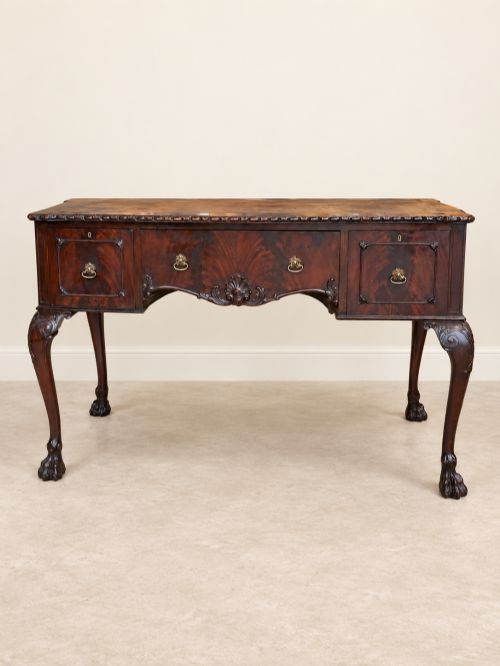
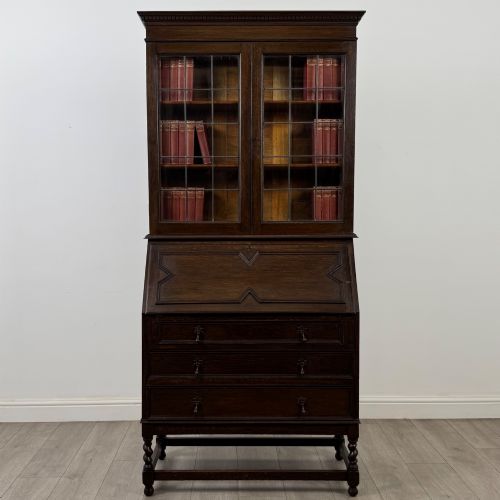
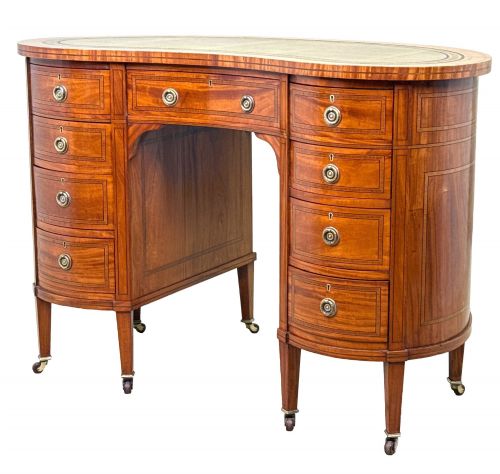
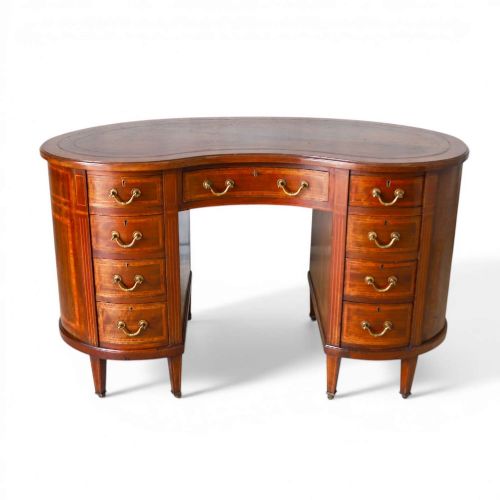
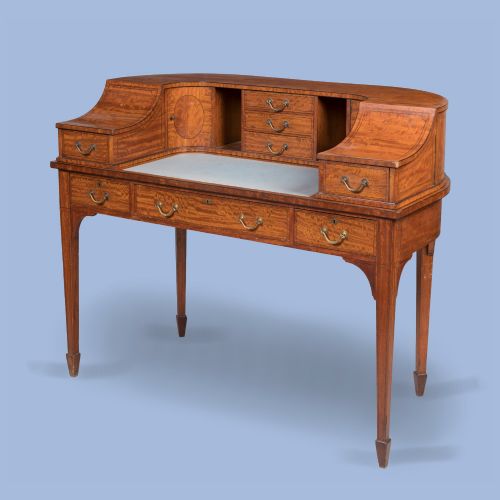
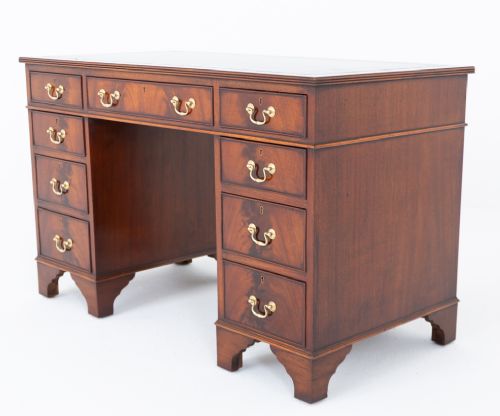
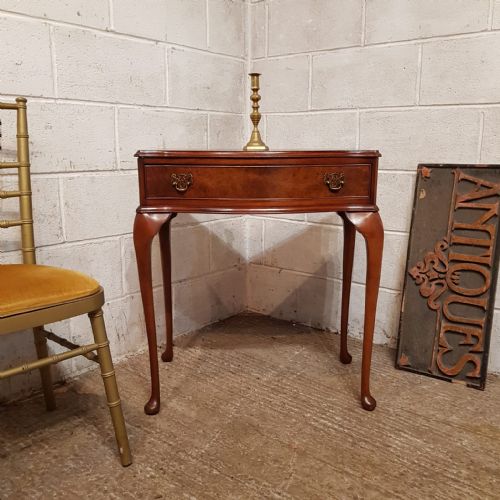
A georgian revival writing desk brings together a range of compact and pedestal writing furniture rooted in Edwardian and early twentieth-century cabinetmaking. Pieces span standard writing tables, bureau bookcases, and delicate bonheur du jour forms designed for domestic studies and drawing rooms.
Makers of this period frequently drew upon Sheraton, Chippendale, and Queen Anne design vocabularies. The resulting works translate earlier mahogany and satinwood archetypes into practical writing surfaces for homes that favoured historical revivals.
Judging the execution
Quality rests upon the selection of timber figures and the crispness of the carving or inlay work. Desks featuring figured mahogany, burr walnut, or finely detailed satinwood marquetry stand apart from plainer commercial iterations.
The integration of secondary timbers, drawer linings, and original brasses further distinguishes superior workshops from standard production. A well-executed piece demonstrates careful grain matching across large surfaces and tightly fitted joinery throughout.
Some diminutive writing tables appear small enough to suggest correspondence was kept strictly brief.
Edwards & Roberts·Maples of London·Shoolbred of London·Waring and Gillows
The Georgian Revival Writing Desk Glossary
- Bonheur du jour
- A light ladies writing desk featuring a small cabinet, shelves, or drawers fitted to the top of the writing surface. This form gained popularity during the revival periods for use in private chambers.
- Bureau bookcase
- A dual-purpose piece combining a sloping writing flap that drops down to reveal pigeonholes with enclosed shelving above. These structures offer substantial storage within a relatively compact footprint.
- Marquetry
- The art of applying decorative veneer pieces to a structural surface to form pictures or geometric patterns. Artisans used contrasting timbers such as satinwood and mahogany to create pictorial motifs.
- Lowboy
- A small table with one or more rows of drawers, commonly used as a writing or dressing surface during the eighteenth century and recreated in later revival periods.
- Partners desk
- A large freestanding pedestal desk designed with drawers and cupboards on both sides to accommodate two users facing one another.
Georgian Revival Writing Desk: Frequently Asked Questions
What is a georgian revival writing desk?
These pieces are twentieth-century interpretations of eighteenth-century writing furniture, built using Edwardian and later timber techniques. They replicate earlier styles like Sheraton and Chippendale while serving modern domestic needs.
Buyers encounter various forms, from simple writing tables to complex bureau bookcases, constructed primarily in mahogany, walnut, and satinwood.
How do I date a revival desk?
Dating relies on secondary timbers, construction methods, and hardware styles found inside the piece. Edwardian and 1920s workshops often combined machine-cut components with hand-finishing.
Examining drawer linings and backboards helps distinguish genuine Edwardian revival pieces from later mid-century reproductions.
Where should I place a writing desk?
These desks suit studies, living rooms, and bedrooms, functioning as both workspace and decorative focal points. Freestanding pedestal and kidney-shaped models work well placed away from walls.
Compact bonheur du jour and side table formats fit comfortably into smaller residential spaces without overwhelming the room.
How do I care for leather inserts?
Leather writing surfaces require gentle cleaning with a damp cloth and occasional treatment with appropriate leather dressings to prevent cracking. Avoiding direct sunlight preserves both the leather and the surrounding timber.
Careful maintenance of the writing surface protects the original tooling and gold leaf work often found on period-style desks.