

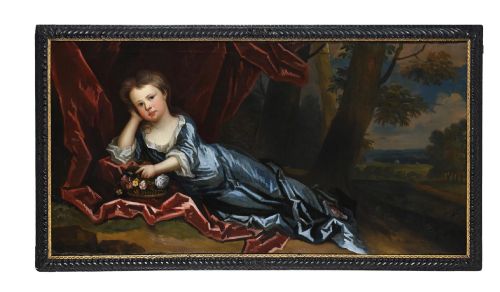

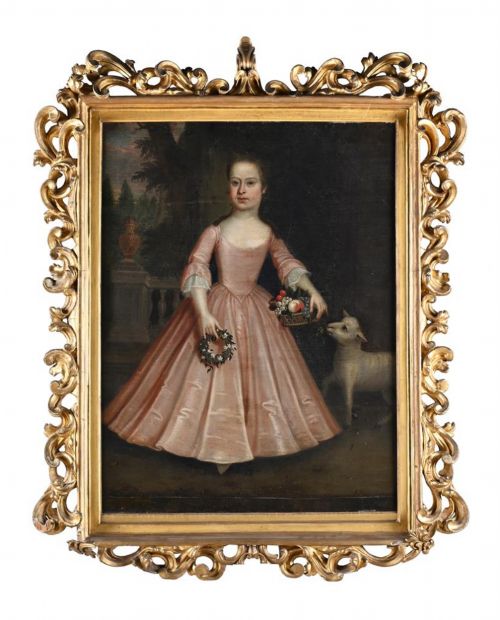


Georgian Portrait of Girl
A georgian portrait of girl captures youthful character through oils and silhouettes spanning the eighteenth and nineteenth centuries.
Georgian Portrait of Girl
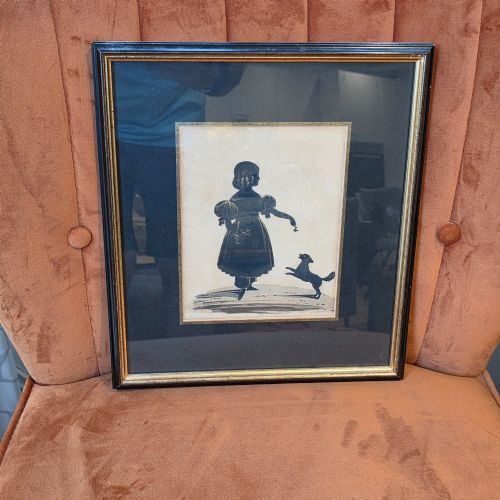
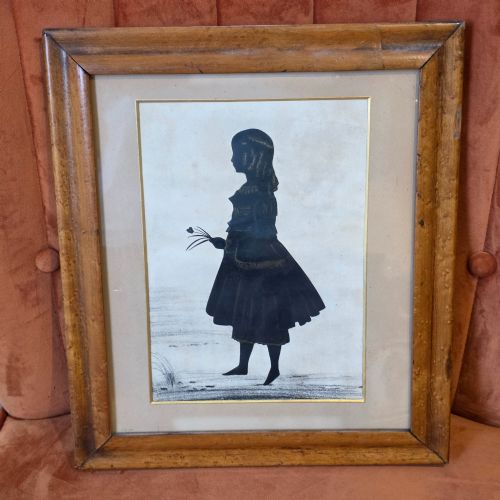
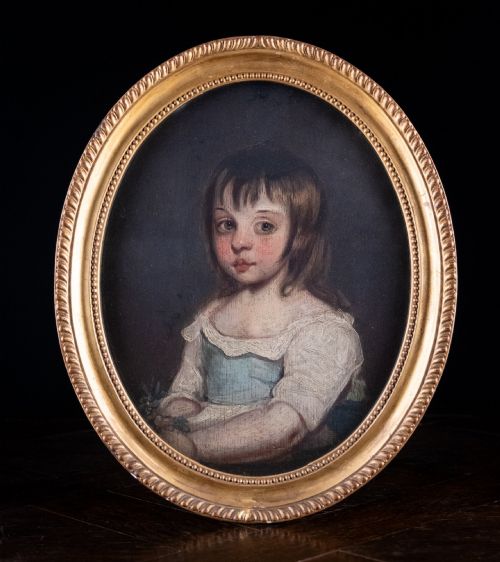
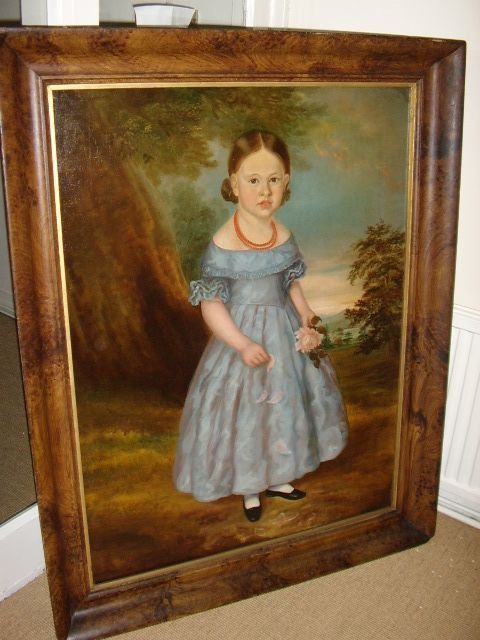
A georgian portrait of girl encompasses oil paintings, miniatures, and cut-paper silhouettes depicting female youths across the eighteenth and nineteenth centuries. These works range from large canvas oils showing country subjects and named sitters to intimate watercolour miniatures framed in ebonised wood or giltwood.
Buyers encountering this selection will frequently find nineteenth-century interpretations alongside eighteenth-century originals attributed to established British and European schools. The subjects appear variously in architectural settings, holding items such as posies, fruit, or animals, or rendered through delicate paper profiles.
Materials and methods
Artists utilised traditional layering for oils to achieve depth in garments and facial expressions, whilst silhouette artists combined precise paper cutting with watercolour highlights and ink detailing.
Several young sitters share the canvas with unexpected companions, including a tiger cowrie shell, a posy, and a pet dog named Mr Quiz.
Assessing the execution
The sophistication of the secondary materials, such as the fineness of a cut-paper silhouette or the crispness of a period ebonised frame, contributes substantially to the overall standing of the piece.
William James Hubard·Charles D'Agar·Arthur William Devis·Pierre Gobert·Robert Byng·George Knapton·Philip Mercier·John Russell·Thomas Gibson
The Georgian Portrait of Girl Glossary
- Miniature painting
- A small-scale portrait executed with fine detail, often intended for personal adornment or intimate display. These portable works require meticulous brushwork on surfaces such as vellum, card, or ivory.
- Silhouette
- A portrait profile filled in with a solid dark colour, usually cut from paper or painted. The form gained popularity in the eighteenth and nineteenth centuries as an accessible medium for likenesses.
- Naive art
- Visual art produced by a person lacking formal training, often characterised by a rejection of standard perspective and proportion. These works possess a direct and charming visual honesty.
- Giltwood
- Wood that has been coated with a thin layer of gold leaf or gilt powder. It is frequently utilised on ornate picture frames from the Georgian and Regency periods.
- Ebonised
- Wood finished to resemble ebony through staining or painting. This dark treatment provides a sharp contrast against gilt liners and watercolour miniatures.
Georgian Portrait of Girl: Frequently Asked Questions
How do I date a silhouette portrait?
Dating relies heavily on the clothing style of the sitter, the shape of the frame, and the specific mounting techniques used by the artist. Hairdos and collar shapes offer precise clues for distinguishing eighteenth-century examples from Regency work.
Paper quality and backing materials also assist in establishing the correct chronological window when makers' signatures are absent.
Where were miniature portraits displayed?
Miniatures were created to be held in the hand, worn as pendants, or kept within small fitted travel cases. Their intimate scale suited private spaces rather than grand public reception rooms.
Owners often stored them in specialised pocket cases or mounted them on study walls alongside larger family oils.
What is naive art in portraits?
Naive art refers to paintings created outside the academic tradition, often by provincial artists without formal studio training. These pieces exhibit flattened perspectives and simplified anatomical details.
Despite lacking academic polish, they offer candid documentation of period costume and domestic life.
How should I care for oil paintings?
Oil paintings require stable indoor humidity and protection from direct sunlight to prevent canvas degradation and pigment fading. Gentle dusting with a soft, dry brush keeps the surface clear of particles.
Avoid hanging pieces near active heat sources or in damp environments to protect the structural integrity of the canvas and frame.