

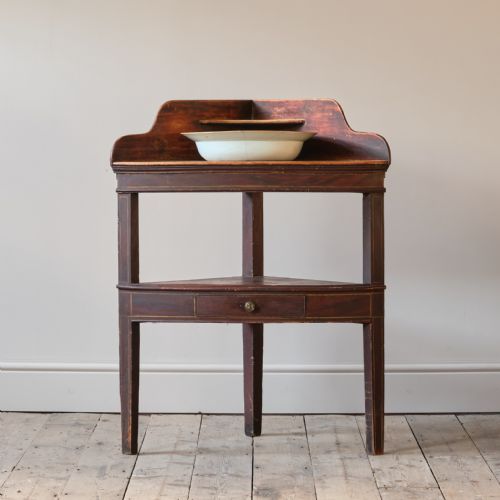
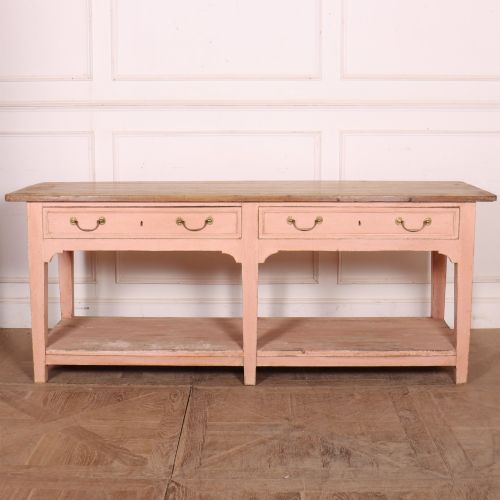
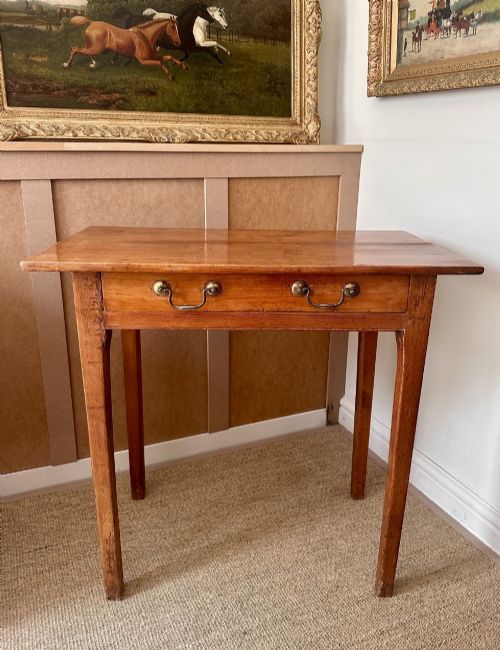
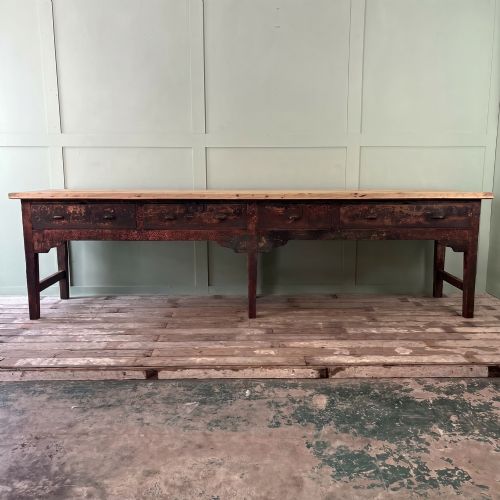




Georgian Pine Table
A georgian pine table brings honest utility and vernacular character into a modern room, offering working surfaces shaped by centuries of domestic use.
Georgian Pine Table
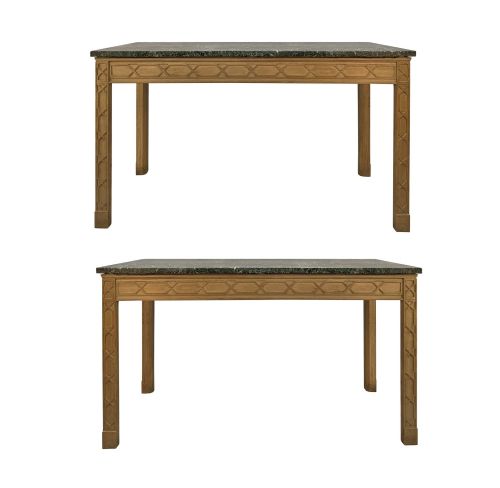
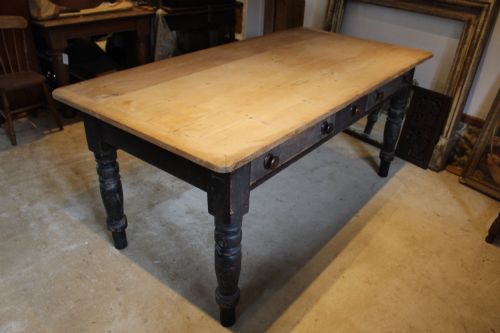
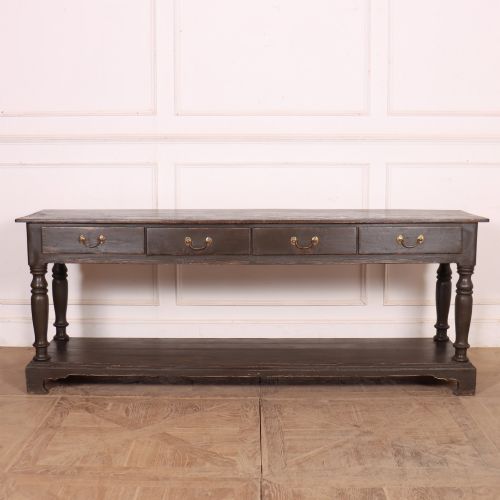
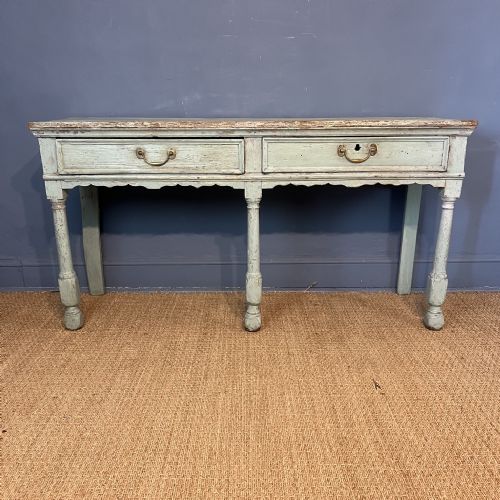
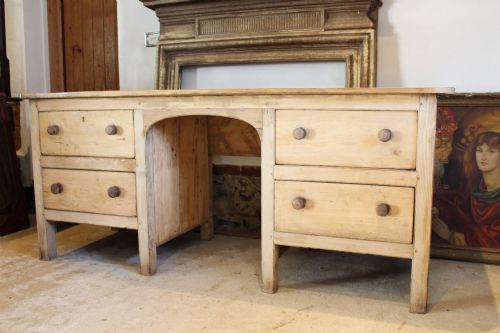
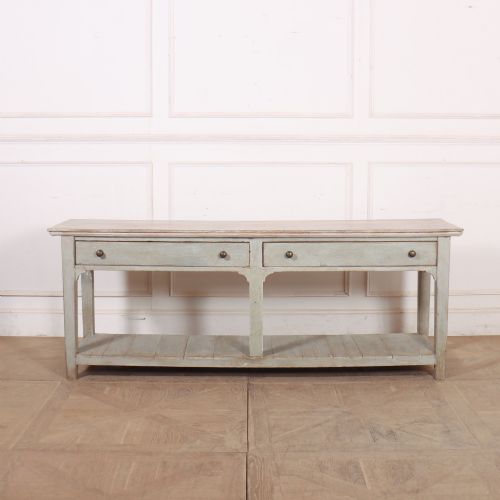
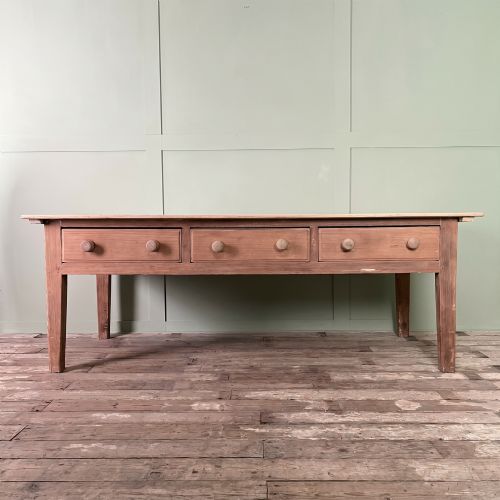
A georgian pine table encompasses functional forms built for practical tasks, ranging from side tables and lowboys to larger dairy prep tables and dresser bases. These pieces reflect regional English and Welsh vernacular traditions rather than formal court aesthetics.
The version most commonly met on this page is the side table or serving table, often fitted with drawers and finished in original paint or wax. They served in sculleries, dairies and country kitchens where durable softwood was preferred for daily labour.
The evidence shows periods spanning the eighteenth and nineteenth centuries, including George II and George III eras, alongside Regency updates. Their forms remain unpretentious, designed for utility rather than display.
How they were made
Construction relied primarily on solid pine, occasionally paired with oak plank tops, sycamore prep surfaces, or iron and brass hardware. Cabinetmakers utilised simple pegging and dovetailing to join the timbers, prioritising structural resilience.
Many surfaces retain original paintwork, simulated finishes, or traditional wax coatings applied over decades of use. These finishes protect the soft wood while accumulating a distinct patina from everyday wear.
Georgian Pine Table Retail Price Guide 2026
Typical asking prices for georgian pine table among the pieces listed under this phrase on Sellingantiques today, from the lower quarter to the upper quarter. They describe what is for sale here now, not the wider market.
Listings feature eighteenth and nineteenth-century forms including cricket tables, potboard dresser bases, and dairy prep tables in pine, paint, and oak.
What varies in quality
Quality rests upon the integrity of the original surface and the survival of untouched structural timbers. Pieces retaining their early paint skin or authentic regional proportions stand distinctly apart from heavily restored examples.
The refinement of the joinery and the balance of the proportions indicate the maker's hand, distinguishing simple utilitarian benches from finer country house side tables and lowboys.
The Georgian Pine Table Glossary
- Potboard dresser base
- A heavy kitchen base featuring a low lower shelf for storing pots and domestic utensils.
- Cricket table
- A small three-legged round table designed to stand steady on uneven flagstone floors.
- Lowboy
- A small side table or dressing table fitted with one or more rows of drawers beneath the top.
- Vernacular
- Architecture or furniture built by local craftsmen to traditional designs rather than high-style pattern books.
- Skin
- The surface texture and accumulated patina left on wood and paintwork by age and long use.
Georgian Pine Table: Frequently Asked Questions
What is a georgian pine table used for?
These tables served practical domestic functions in country houses, dairies and sculleries for food preparation, writing and general household tasks.
Today, they adapt easily to modern interiors as side tables, desks or kitchen prep surfaces that bring warmth and history to a room.
How do I care for original paint?
Original paint surfaces require gentle dusting with a dry cloth and protection from direct sunlight and excessive moisture.
Avoid chemical cleaners or abrasive polishes that might strip the historic finish or soften the underlying softwood.
Are these tables solid pine?
Most examples utilise solid pine throughout the top, frame and drawer construction, though some pieces incorporate oak plank tops or sycamore preparation boards.
Secondary woods like beech occasionally appear in structural supports or legs depending on the regional workshop.
How do I identify a cricket table?
A cricket table is defined by its three splayed legs and a circular top, a design that ensured stability on uneven stone floors.
They frequently appear in eighteenth and nineteenth-century country settings as light, movable stands.