




Georgian Pine Base
A georgian pine base brings robust vernacular character to a room, offering sturdy utility shaped by centuries of everyday use.
Georgian Pine Base
When you search for a georgian pine base, you encounter substantial working furniture from the eighteenth and nineteenth centuries, spanning sideboards, dressers, and serving tables. These pieces originated in kitchens, dairies, and country houses, built for hard work rather than formal display.
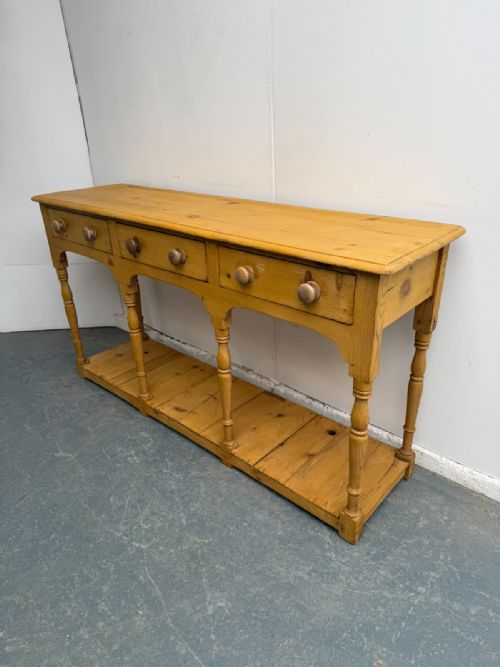
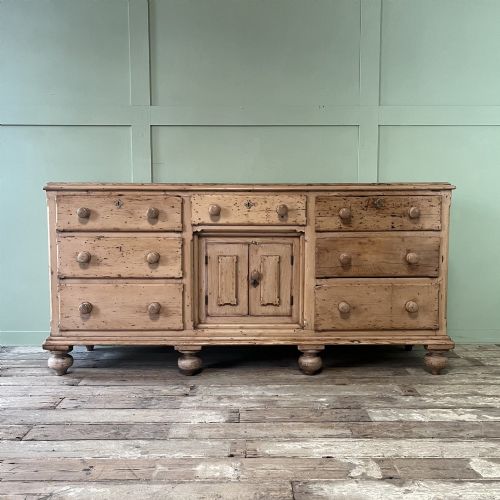
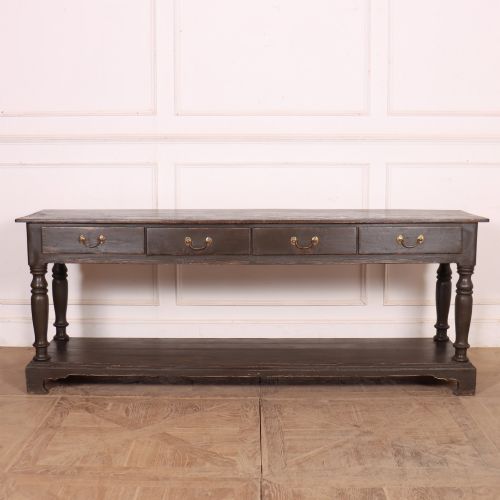
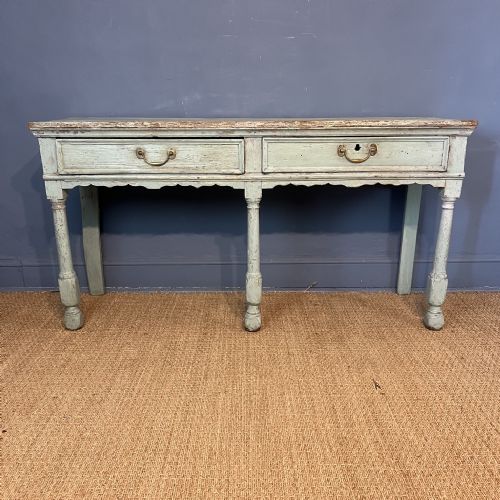
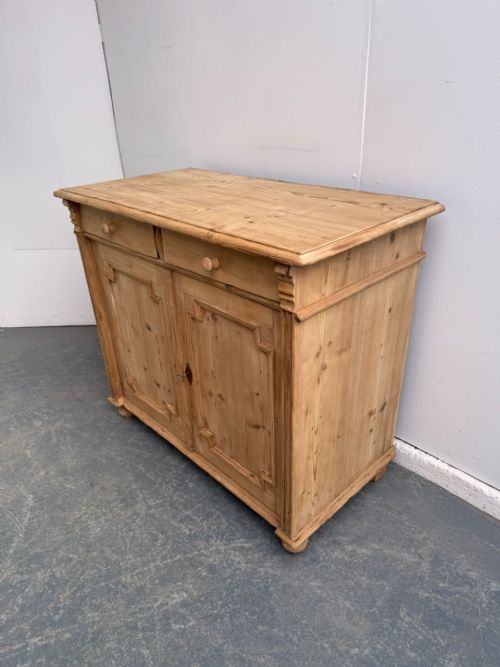
The most common form on this page is the dresser base or potboard dresser, often featuring multiple drawers above an open lower shelf. Alongside these sit side tables, cupboards, and chiffoniers, predominantly rendered in English and Scottish provincial styles.
The construction reflects a utilitarian origin, employing simple lines and sturdy proportions suited to domestic service. They survive from periods including the Georgian era and the wider nineteenth century, carrying the marks of regional workshop traditions.
How they were made
Makers relied principally on pine, frequently combined with oak for structural strength or sycamore for specific surfaces, shaping solid timber boards with hand tools. Plank tops and robust frames were joined using traditional pegged mortise and tenon construction to withstand heavy daily use.
Surfaces were frequently finished with paint, historic layers of wax, or left as bare scrubbed wood, while hardware often included brass handles or hinges. Paint finishes range from early schemes to later decorative coats, applied directly to the timber base.
Georgian Pine Base Retail Price Guide 2026
Typical asking prices for georgian pine base among the pieces listed under this phrase on Sellingantiques today, from the lower quarter to the upper quarter. They describe what is for sale here now, not the wider market.
Dresser bases often retain flour dust wedged deep inside eighteenth-century drawer joints from forgotten kitchen battles.
What varies in quality
Quality rests upon the integrity of the original construction and the proportion of untouched timber retained over generations of service. Pieces that keep their original layout of drawers, backboards, and lower potboards command greater appreciation among collectors.
The character of the surface finish separates examples, as untouched historic paintwork or well-worn scrubbed timber displays a more honest relationship with age than later alterations. Structural honesty, such as uncompromised legs and sturdy framing, dictates the enduring utility of the piece.
The Georgian Pine Base Glossary
- Potboard dresser
- A dresser featuring an open lower shelf near the floor, originally designed to hold pots and heavy kitchen utensils. This lower board sits upon low feet or directly on the frame base.
- Plank top
- A surface constructed from wide boards of solid timber joined edge to edge. These boards often show considerable grain movement and historic wear.
- Chiffonier
- A compact sideboard or low cupboard developed during the Regency period. It typically combines enclosed lower storage with a useful upper surface.
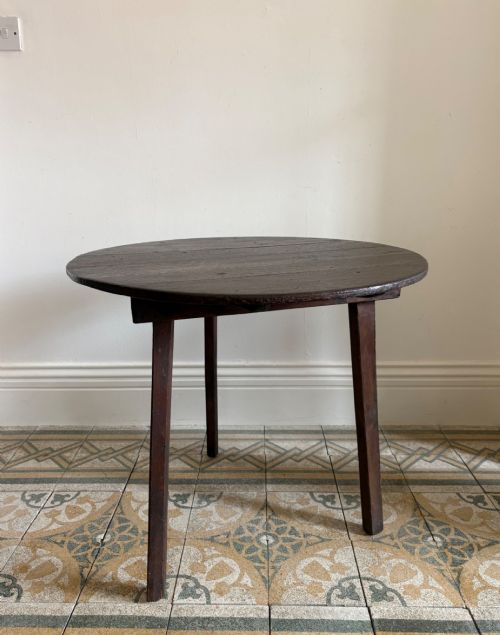
- Cricket table
- A small, light table with three splayed legs and a circular top. This form allowed steady placement on uneven stone or flagged floors.
Georgian Pine Base: Frequently Asked Questions
What is a potboard base?
A potboard base refers to the lower section of a kitchen dresser featuring an open shelf at the bottom. This space held heavy pots and pans in daily domestic service.
Over time, these sturdy open shelves became a defining characteristic of country furniture, prized for displaying earthenware and large kitchen items.
How do I care for old pine?
Maintain old pine furniture by applying a natural beeswax polish sparingly and buffing it gently with a soft cloth. Avoid placing these pieces near direct heat sources or in fluctuating humidity.
Protect the timber from harsh sunlight to preserve historic painted surfaces and the natural patina developed over centuries of use.
Where were these pieces used?
These pieces originated in farmhouse kitchens, sculleries, dairies, and country house utility rooms. They served as primary work surfaces for food preparation and storage.
Their practical design allowed them to transition from working domestic environments into modern living spaces as functional sideboards or display tables.
How do I date a pine base?
Dating relies on examining construction methods, tool marks, timber selection, and hardware types. Hand-cut dovetails and pegged joints generally indicate earlier Georgian periods.
Changes in proportion, secondary woods like oak, and the character of historic paint layers also help establish the approximate era of manufacture.