




Georgian Pearlware Transferware
Georgian pearlware transferware brings together refined earthenware bodies and intricate printed scenes that capture the visual character of the period.
Georgian Pearlware Transferware
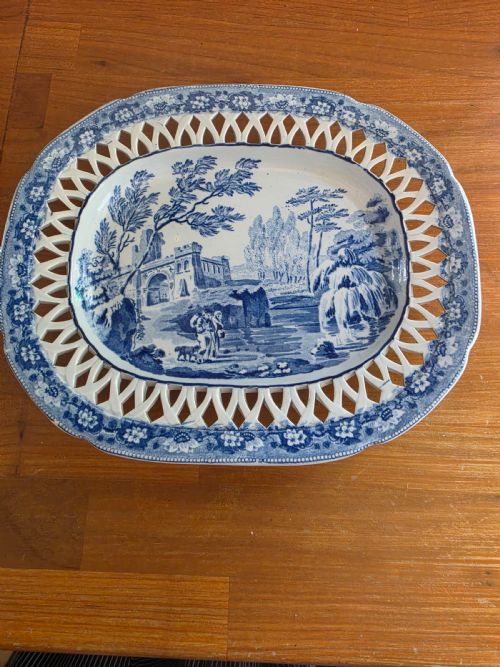
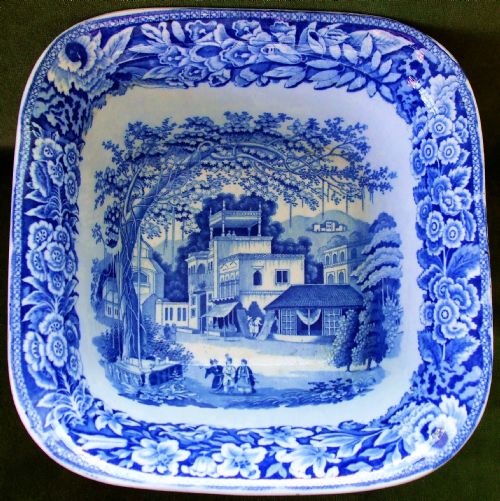
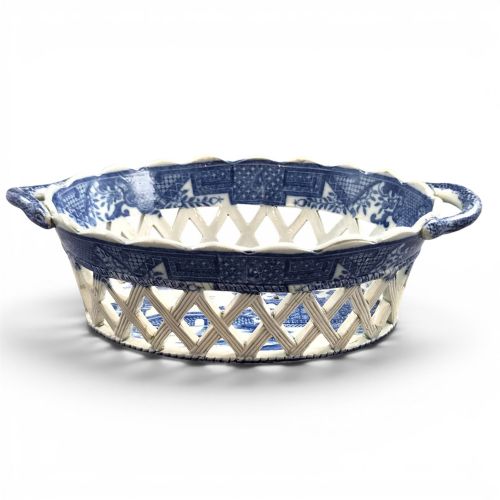
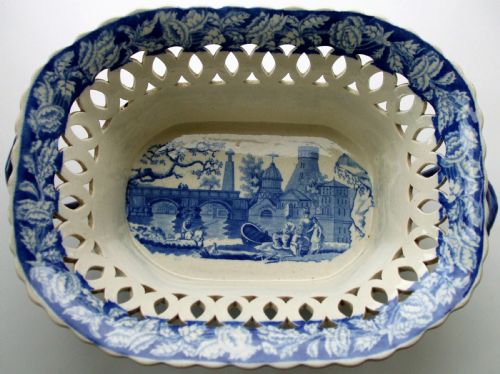
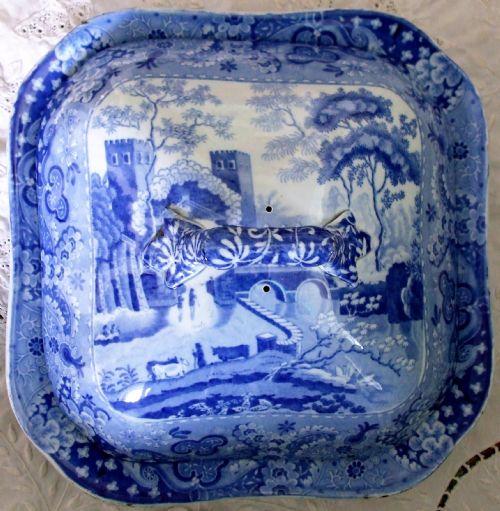
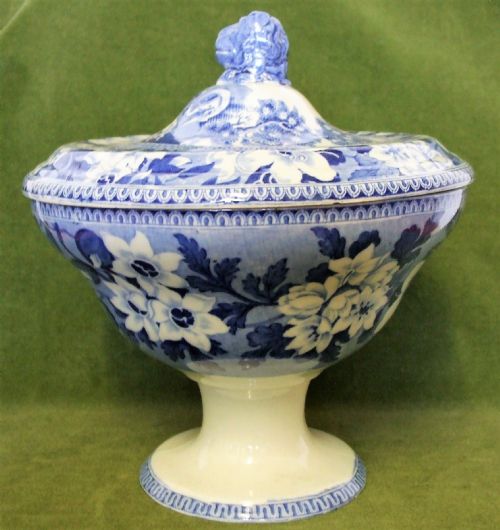
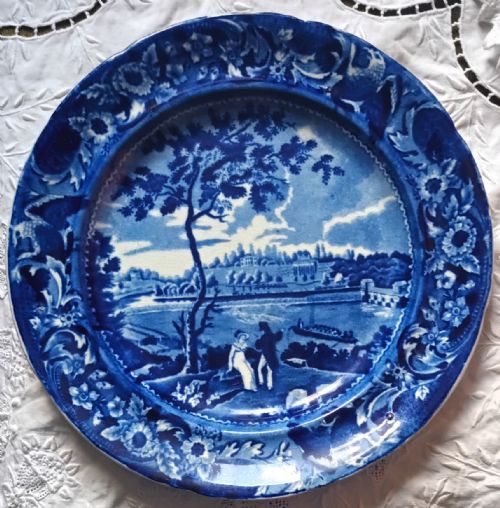
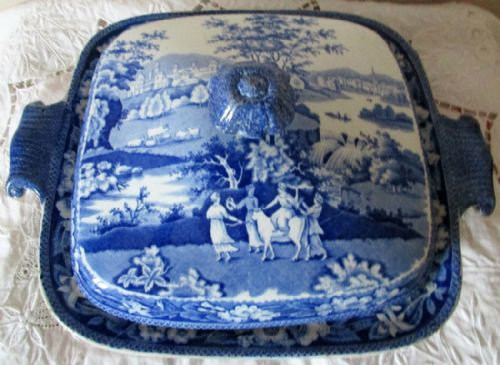
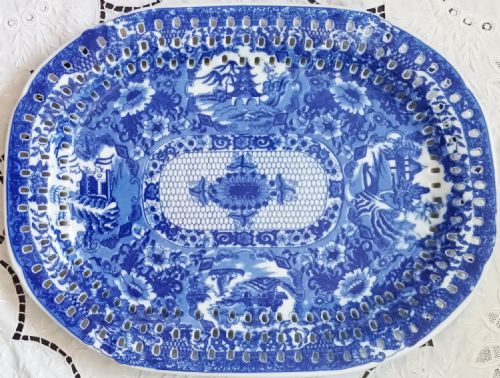
Georgian pearlware transferware comprises ceramic tableware and serving pieces produced across the late eighteenth and early nineteenth centuries. When searching for this category, buyers encounter items ranging from standard plates and dishes to large platters, tureens, and decorative chestnut baskets.
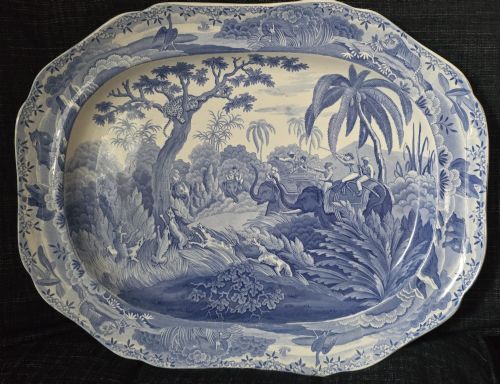
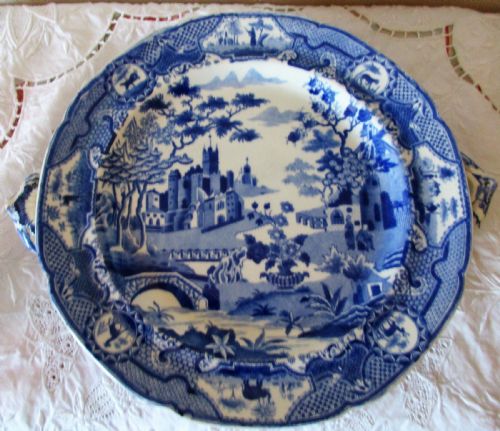
The objects commonly display pictorial scenes transferred from engraved copper plates onto the ceramic surface. These designs often depict landscapes, historical buildings, classical ruins, or traditional patterns such as the Long Bridge and Willow motifs.
Most examples originate from English potteries operating during the Georgian and Regency eras, utilising earthenware bodies finished with pale glazes. Tableware from this selection serves both decorative display and practical antique dining collections.
Materials and Technique
Potters constructed these items using refined earthenware bodies known as pearlware, which incorporated a subtle bluish tint in the glaze to mimic the appearance of Chinese porcelain. Artisans applied designs by transferring ink from engraved copper plates onto tissue paper and pressing it onto the unfired or bisque ceramic surface.
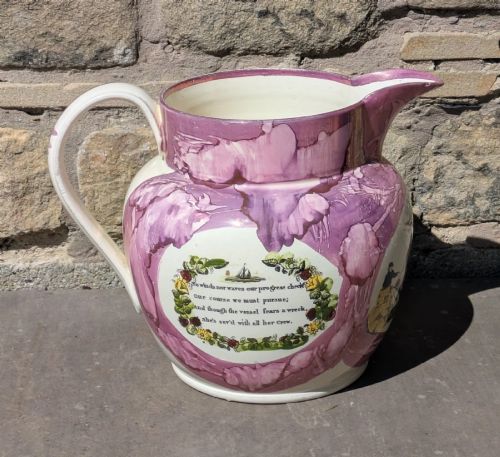
Cobalt pigment served as the primary colouring agent for the transfer printing, producing the characteristic deep blue tones seen on the majority of pieces. Certain items incorporated additional decorative layers, such as metallic lustre applications or purple transfer decoration over the earthenware base.
Georgian Pearlware Transferware Retail Price Guide 2026
Typical asking prices for georgian pearlware transferware among the pieces listed under this phrase on Sellingantiques today, from the lower quarter to the upper quarter. They describe what is for sale here now, not the wider market.
Listings feature pearlware and earthenware items spanning the Georgian, Regency, and nineteenth-century periods, utilising cobalt pigment on plates, tureens, and platters.
Factors of Quality
Quality in these ceramics depends significantly on the crispness and clarity of the printed transfer design. Finer pieces maintain sharp lines and well-defined details across complex pictorial scenes without smudging or fading from the firing process.
The complexity of the ceramic form also influences the overall standard of the piece. Pierced work, reticulated borders, moulded basketweave textures, and matched covers on tureens demonstrate higher levels of technical skill from the potteries.
Davenport·Spode·J. & R. Clews·J. & R. Riley·Stubbs·John Rogers & Son·William Adams·Thomas Lakin·Brameld & Co.
The Georgian Pearlware Transferware Glossary
- Transferware
- Pottery decorated by transferring a printed design from an engraved copper plate onto the ceramic surface using paper. This technique allowed for consistent and intricate pictorial decoration.
- Tureen
- A deep covered vessel used for serving soups, sauces, or vegetables at the dining table. These often include matching stands or platters.
- Chestnut Basket
- A pierced or reticulated ceramic basket designed for serving fruit or chestnuts at the table. These frequently come with matching undertrays.
- Comport
- A raised decorative dish or bowl used for serving fruit or sweetmeats. They stand upon a pedestal foot above the surface of the table.
Georgian Pearlware Transferware: Frequently Asked Questions
What is pearlware?
Pearlware is a refined type of earthenware developed by English potters to bridge the gap between creamware and true porcelain. It contains a small amount of cobalt in the glaze to create a pale bluish tint.
This specific glaze formulation helped the white ceramic body appear brighter and closer in aesthetic to imported Chinese porcelain of the period.
How do I date these pieces?
Dating typically relies on stylistic evidence, potter marks impressed into the ceramic body, and the specific composition of the pearlware glaze. Pieces produced around the turn of the nineteenth century often feature lighter blue pigments and distinct early border motifs.
Later Regency and nineteenth-century examples frequently incorporate darker cobalt tones and more varied topographical or narrative subject matter within the transfer print.
How were transferware patterns applied?
Artisans engraved designs onto copper plates, inked them with cobalt pigment, and pressed thin tissue paper against the plate to pick up the image. This printed paper was then smoothed onto the damp or bisque ceramic body to transfer the design before glazing and firing.
This mechanical process allowed potteries to produce uniform patterns across entire sets of tableware with remarkable consistency and detail.
Can I use these antiques daily?
Most buyers choose to display these historical ceramics rather than use them for everyday dining. Due to their age, the earthenware bodies and glazes are susceptible to staining, crazing, and thermal shock.
Gentle hand washing in lukewarm water without harsh detergents helps preserve the delicate transfer printed surfaces and original glazes over time.