

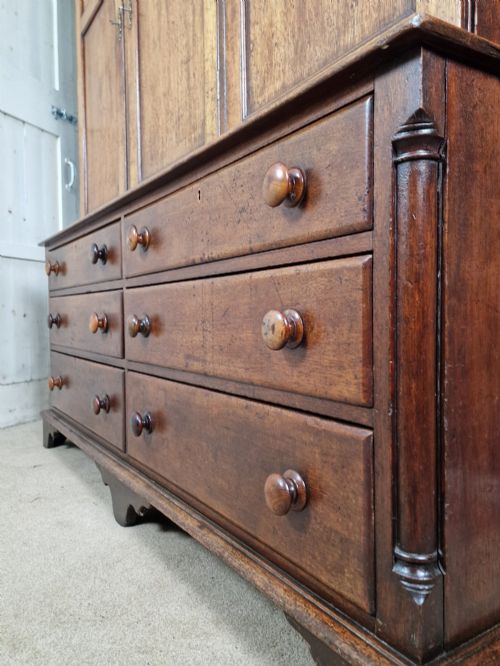
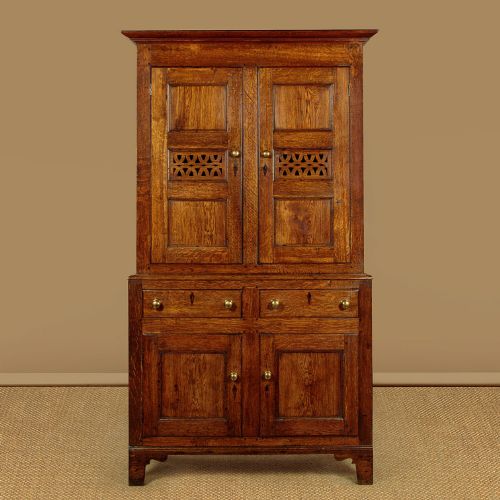
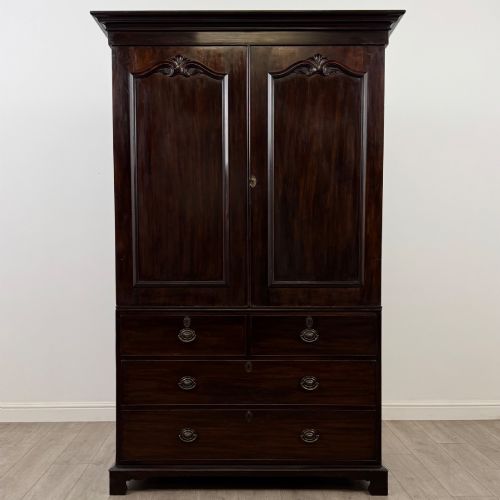
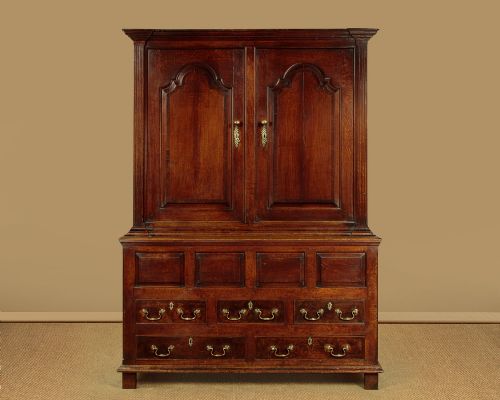

Georgian Panelled Press
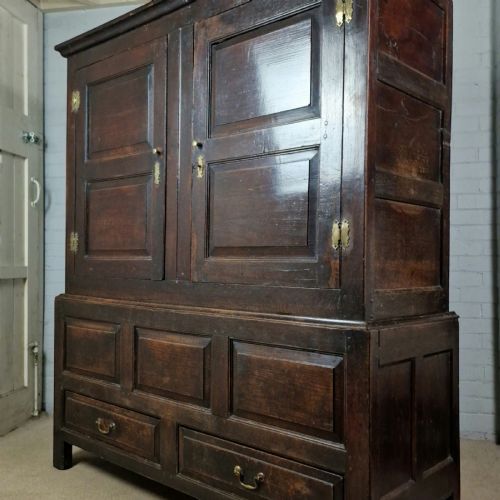
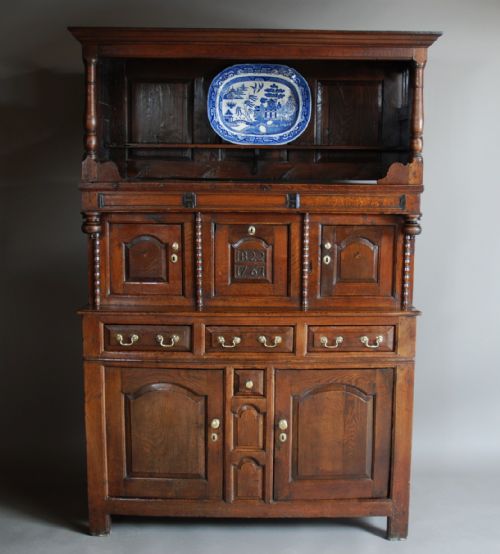
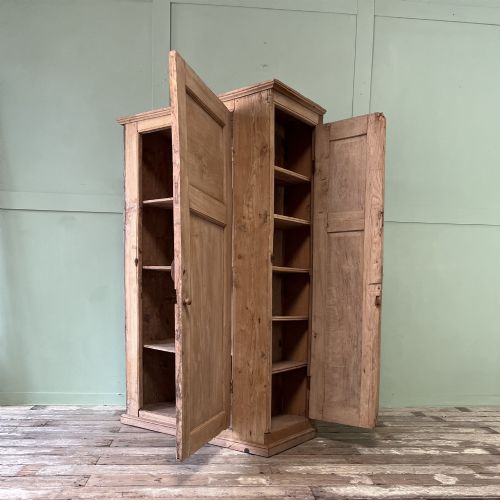
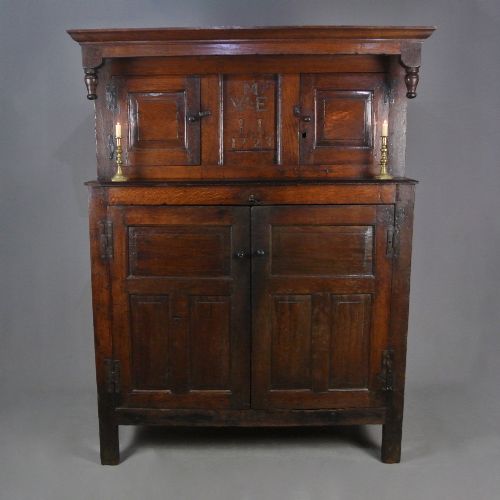
A georgian panelled press brings substantial timber storage into a room, offering deep proportions and traditional joinery for serious household storage.
Georgian Panelled Press
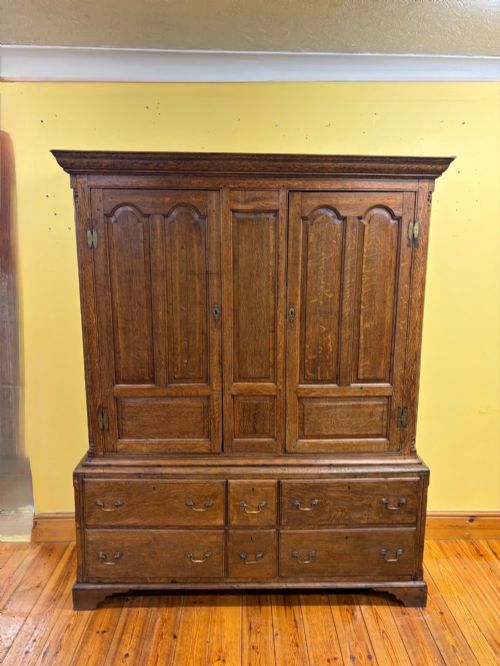
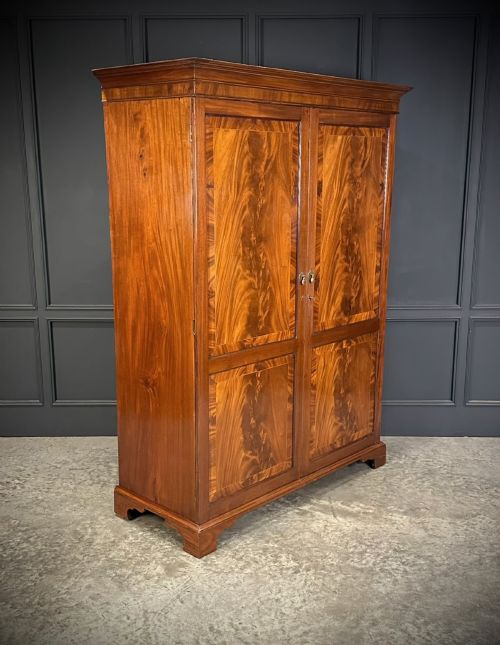
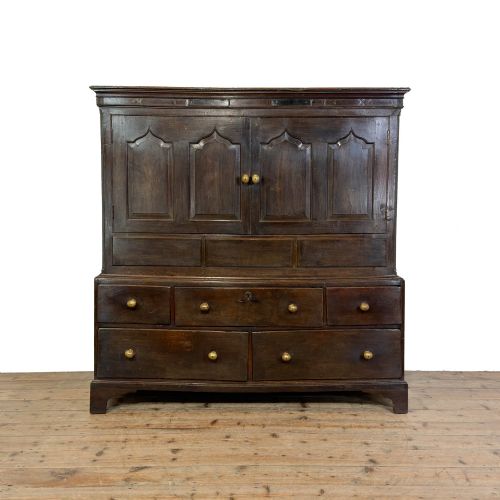
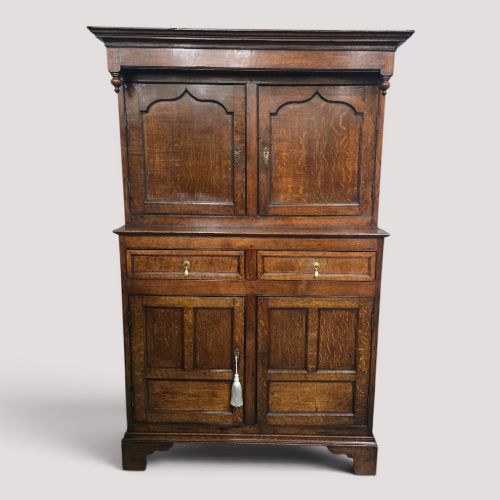
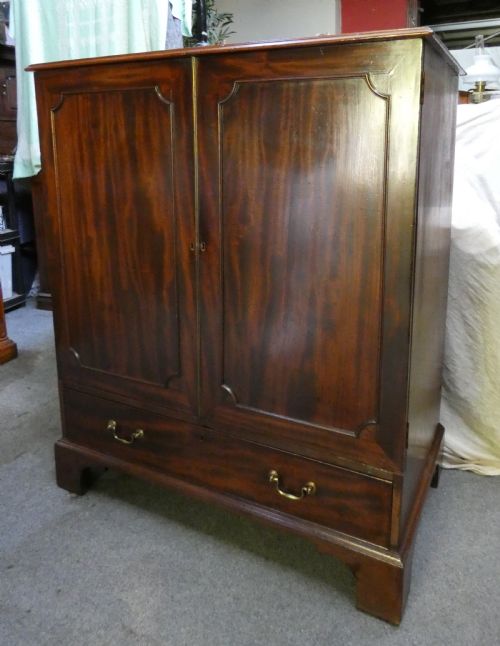
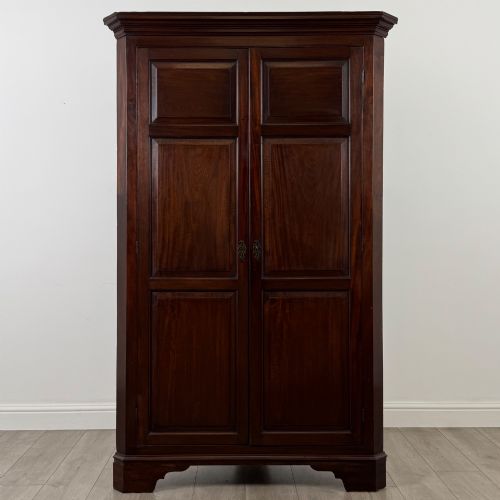
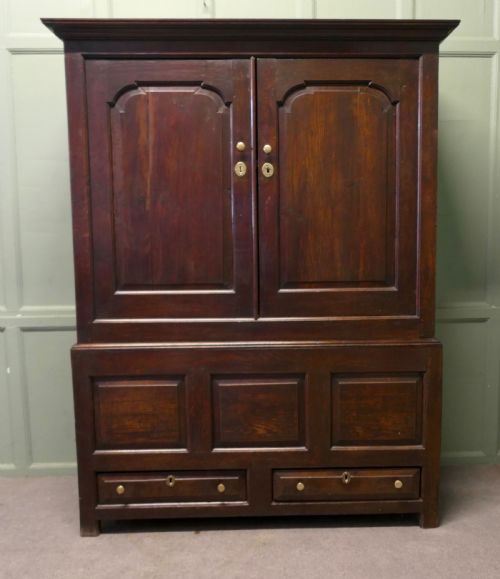
A georgian panelled press is a robust timber storage piece designed to keep household linen, clothing, and textiles clean and ordered. Buyers searching for a georgian panelled press will encounter substantial architectural cupboards, tall wardrobes, and lower press variations spanning the eighteenth and nineteenth centuries.
The prevailing examples on this page are constructed from native oak and rich mahogany, often displaying regional vernacular characteristics from Wales and English provincial workshops. These larger storage items range from towering housekeeper cupboards to compact dwarf presses and specialised tack or linen cupboards.
Materials and construction methods
Cabinet makers relied heavily on solid oak and mahogany, occasionally employing elm, pine, and decorative flame mahogany veneers to face the larger doors and drawer fronts. Iron and brass hardware, including heavy hinges and working locks, secured the deep compartments and heavy panelled doors.
Joinery techniques focused on pegged mortise and tenon frames surrounding inset wooden panels, ensuring the dense timber remained stable through seasonal humidity changes. The structural carcasses were built to bear considerable weight, utilising sturdy internal shelving and heavy hanging spaces.
Georgian Panelled Press Retail Price Guide 2026
Typical asking prices for georgian panelled press among the pieces listed under this phrase on Sellingantiques today, from the lower quarter to the upper quarter. They describe what is for sale here now, not the wider market.
Listings feature oak, mahogany, elm, and pine, demonstrating both formal metropolitan cabinet work and vernacular country traditions.
Judging timber quality and proportion
Quality rests in the selection of the timber grain, the crispness of the fielded panels, and the survival of original surface finishes like patinated wax or polish. Superior examples maintain balanced proportions, tight joints, and minimal timber replacement across their heavy panelled facades.
Lesser or heavily altered pieces often show mismatched timber patches, replaced cornices, or stripped surfaces that have lost their historic depth. The distinction between an everyday utility cupboard and a master-carved press lies entirely in the refinement of the mouldings and the honesty of the wood.
The Georgian Panelled Press Glossary
- Linen press
- A tall storage cabinet historically designed for flattening and storing household linens on internal sliding trays.
- Fielded panel
- A wooden panel with bevelled edges that sits recessed within a structural frame, allowing the timber to expand and contract naturally.
- Cornice
- The decorative moulded projection that sits along the top edge of the upper cabinet structure.
- Crossbanding
- A decorative border of veneer laid with the grain running perpendicular to the surrounding surface, common on finer mahogany pieces.
- Vernacular
- Regional furniture built by local country joiners using accessible native timbers rather than following strict metropolitan designs.
Georgian Panelled Press: Frequently Asked Questions
How do I use a press in a modern bedroom?
These deep cupboards adapt well to modern spaces by serving as primary wardrobes or linen storage units. Their internal shelves and hanging rails swallow bulky items while adding architectural weight to a bedroom.
Ensure you measure your ceiling height and stair clearance before delivery, as these heavy timber carcasses rarely dismantle easily.
What is the difference between an oak and a mahogany press?
Oak presses generally date from the earlier eighteenth or seventeenth centuries, displaying a heavy country aesthetic with visible grain and pegged joints. Mahogany versions often emerge later in the Georgian period, bringing a smoother, more formal finish with reddish tones.
Both timbers offer immense durability, but oak suits rustic or traditional interiors while mahogany leans toward formal rooms.
How do I care for antique timber panels?
Keep these large wooden pieces away from direct heat sources and drastic temperature shifts to prevent the dry panels from splitting. Feed the dry grain periodically with a traditional beeswax polish to maintain the historic sheen.
Avoid synthetic sprays that can build up a sticky residue over the original surface finish.
How can I tell a genuine eighteenth century piece apart?
Look closely at the construction of the interior drawer linings, the tooling marks on the backboards, and the hand-cut joinery around the door frames. Genuine period examples show natural timber movement, tool variation, and consistent wear patterns around the handles and keyholes.
Compare the timber colour inside the cupboard with the exterior to ensure the patina matches across the entire carcass.