


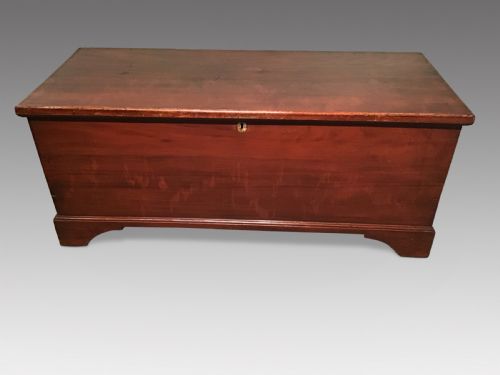

Georgian Painted Trunk
A georgian painted trunk brings colour and history into a room, offering practical storage wrapped in centuries of decorative charm.
Georgian Painted Trunk
When you search for a georgian painted trunk, you encounter robust domestic storage pieces finished in decorative coatings rather than polished wood. These items served essential household duties, holding blankets, linens, and personal belongings in bedrooms and halls.
The versions most commonly found here date from the georgian period and the early nineteenth century, constructed primarily in pine, elm, and oak. They often display regional character, ranging from simple country workshop pieces to more elaborate folk art schemes.
How they were made
Makers constructed these trunks using sturdy native timbers like pine and elm, joining panels with traditional methods suited to heavy daily use. Iron and brass hardware, including strap hinges and carrying handles, reinforced the corners and lids.
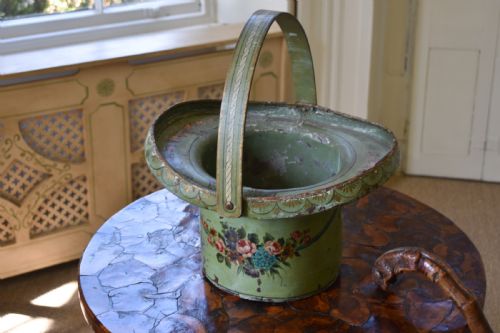
Surfaces were prepared and coated with oil or water-based paint, sometimes featuring brushwork, stencilling, or layered schemes in green, teal, or neutral tones. Over generations, this paint layer developed a distinctive craquelure and patina.
Seaman's chests occasionally carry jaunty patriotic slogans like "Emblem of Liberty" painted across the lid to cheer up long voyages.
What varies in quality
Quality rests primarily in the survival and integrity of the original paint surface, which separates factory-refreshed items from those retaining genuine historic pigment. Pieces with untouched folk art decoration or original decorative schemes command greater appreciation.
Structural honesty and timber selection also dictate worth, as chests retaining their original ironwork, hinges, and interior tills offer a more complete historical record than heavily repaired examples.
The Georgian Painted Trunk Glossary
- Mule chest
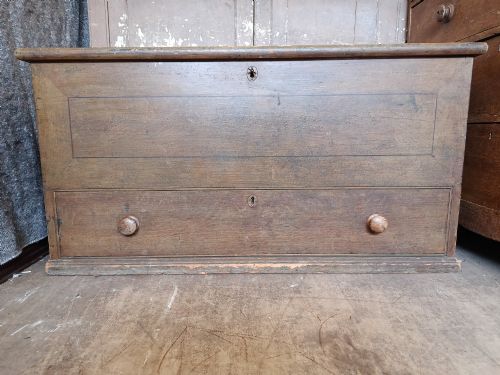
- A storage chest featuring one or more drawers beneath the main lifting lid compartment. This hybrid form gained popularity during the eighteenth century for better access to linens.
- Folk art
- Decorative work produced by self-taught or regional craftspeople rather than urban academic artists. It often incorporates naive motifs and vibrant local colour palettes.
- Coaching trunk
- A robust travel chest designed to be strapped to the roof or boot of a carriage. These examples usually feature durable leather or heavy metal reinforcement.
- Patina
- The surface sheen and softening of colour developed through decades of handling, polishing, and natural ageing. This quality cannot be readily faked by modern finishers.
Georgian Painted Trunk: Frequently Asked Questions
How were these trunks used originally?
These trunks functioned as primary storage for clothing, blankets, and valuables in homes before fitted wardrobes became common. Their sturdy construction also made them suitable for transporting possessions during travel.
Over time, they transitioned from utilitarian furniture to decorative focal points within the domestic interior, holding household textiles out of sight.
How do I care for painted wood surfaces?
Protect the painted surface by keeping the trunk away from direct sunlight and maintaining stable room humidity. Avoid harsh chemical cleaners that can strip historic pigments.
Dust gently with a dry, soft cloth to preserve the fragile top layers without disturbing the underlying craquelure and patina.
Can I use a trunk as a coffee table?
Many people utilise these trunks as coffee tables because their flat lids and substantial proportions suit modern living spaces. They provide hidden storage for books and throws while anchoring a room's seating area.
Ensure the antique hinges and lid structure remain stable enough to support everyday items placed upon them.
How do I distinguish regional styles?
Regional styles often reveal themselves through the choice of timber, such as elm in rural workshops or pine in coastal areas, alongside local painting traditions. Welsh and Hungarian pieces, for instance, display distinct motifs and colour choices unique to their makers.
Examining the construction joints and hardware provides further clues about the geographic origin of the workshop.