



Georgian Oval Tray Stand
A georgian oval tray stand brings genuine heritage into a room, offering a versatile surface for daily use and traditional entertaining.
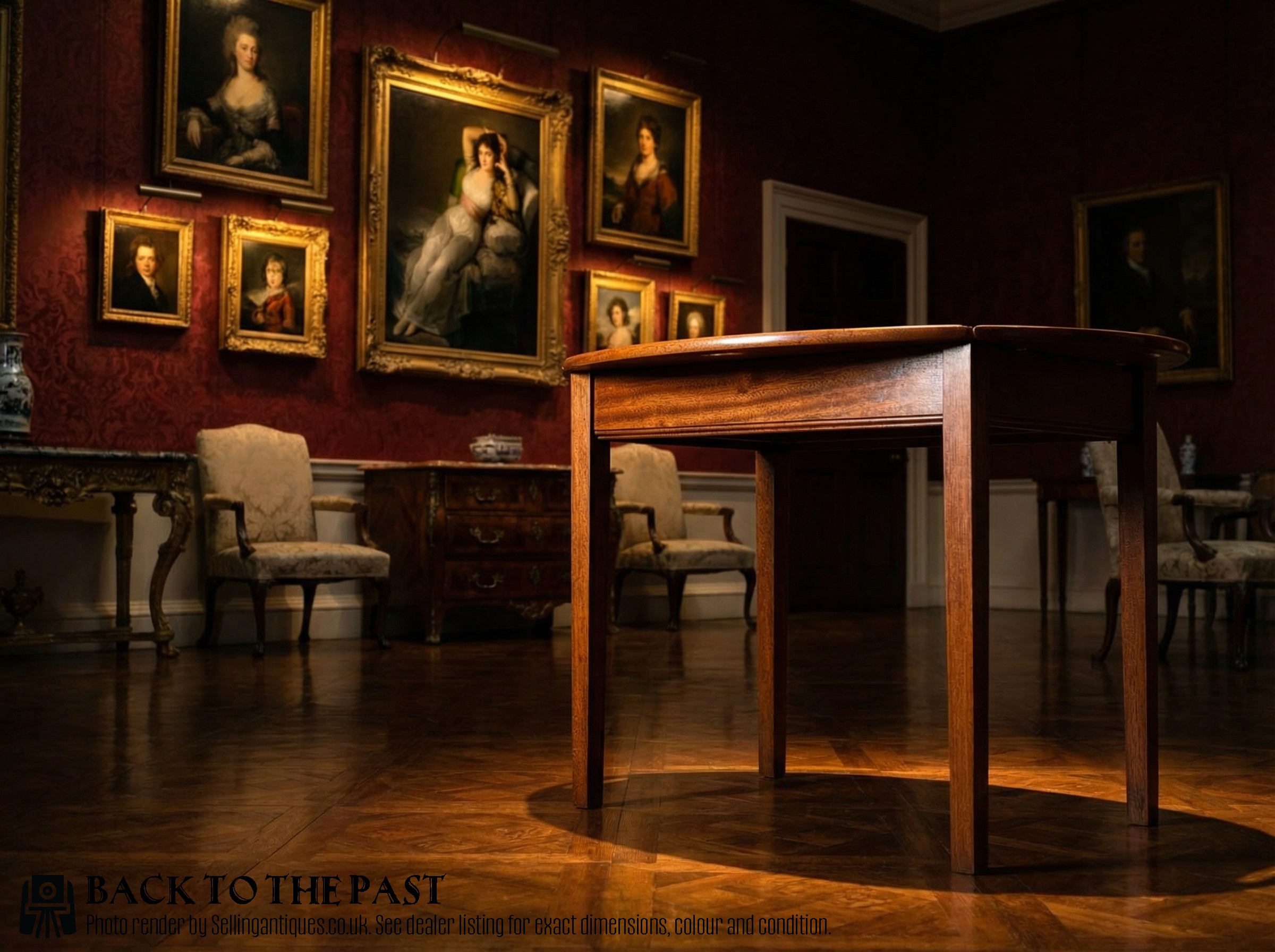
Georgian Oval Tray Stand
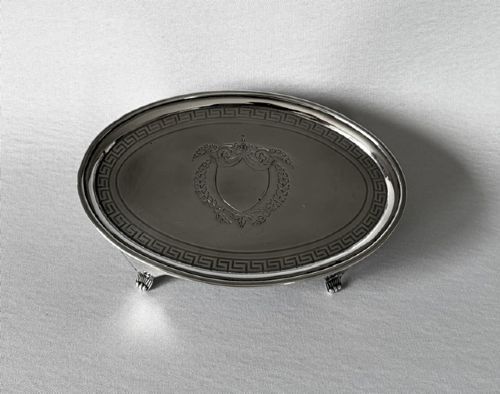
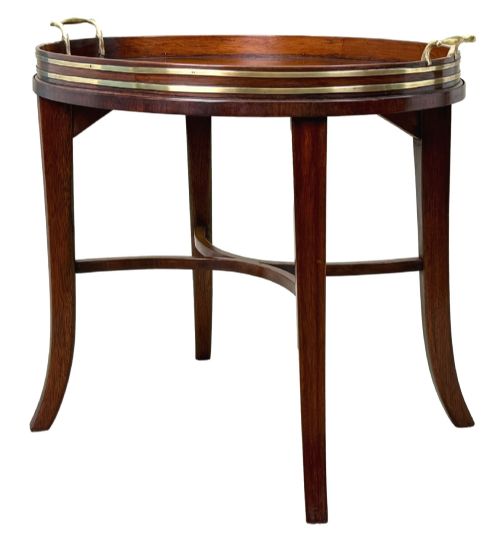
A georgian oval tray stand combines a deep-rimmed serving tray with a folding or fixed wooden base, designed for portability and serving in period interiors. The form bridges formal dining and relaxed hospitality, functioning as an occasional table or coffee table in modern settings.
Materials and construction
Cabinet makers utilised dense timbers such as mahogany and Cuban mahogany to construct the trays and folding stands, often incorporating brass bound decoration for added strength at the joints. Selected pieces feature marquetry satinwood inlay or delicate papier-mache treated with gold leaf.
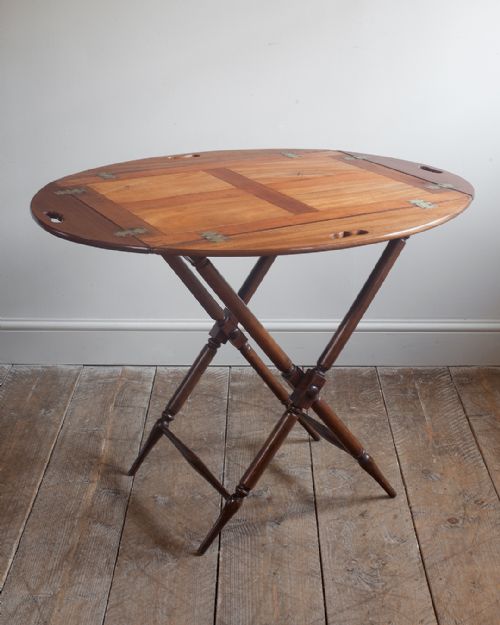
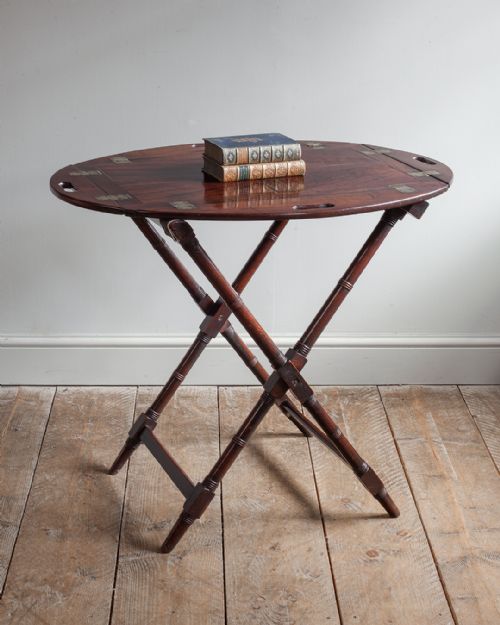
The trays rely on raised, shaped rims with hand-cut handgrips for secure lifting, while the accompanying stands are engineered to collapse flat when not in use. Joinery employs traditional techniques suited to portable furniture that required both durability and lightness.
Judging quality in construction and material
Quality rests upon the selection of timber figures, particularly the grain depth visible in Cuban mahogany and the precision of the brass bound decoration. Superior examples display crisp hand-cut handgrips and harmonious proportions between the tray depth and the height of the stand.
The relationship between the tray and the base also dictates the standard of the piece, as original matches exhibit consistent wear and matching patination. Alterations or later stands show in the timber colour and the fit of the jointing pegs.
Peter and Anne Bateman·Henry Clay
The Georgian Oval Tray Stand Glossary
- Butler's tray
- A portable wooden tray with hinged or fixed raised sides, originally used by servants to carry silver and glassware. These trays lift off their supporting frames entirely.
- Tray stand
- A folding or rigid wooden base designed specifically to elevate a serving tray to table height. They allow the surface to function as an occasional table.
- Brass bound
- Edged or reinforced with strips of brass fixed by small pins. This technique protected vulnerable timber rims from knocks during transport.
- Papier-mache
- A composite material made from paper pulp mixed with glue and oil, pressed in moulds and hardened. It provided a smooth base for painted decoration and gold leaf.
- Cuban mahogany
- A dense, dark hardwood harvested in the Caribbean and prized for cabinet making. It resists warping and takes a fine polish.
Georgian Oval Tray Stand: Frequently Asked Questions
What is a georgian oval tray stand?
A georgian oval tray stand is a piece of portable furniture consisting of a detachable wooden tray placed upon a folding or fixed wooden base. These items were originally utilised in large houses for serving meals or drinks before being cleared away.
Today, they function well as compact coffee tables or side tables in sitting rooms. Their dual nature makes them practical for modern living spaces where flexibility is needed.
Were these stands made to fold?
Many traditional stands were built with folding X-frame legs so the entire assembly could be stored flat when not in use. This portability was essential for servants who moved furniture between rooms during the georgian period.
Some surviving pieces feature rigid stands rather than folding ones, which provided greater stability when used permanently as tables. Both formats appear in period collections.
How do I care for mahogany trays?
Maintenance requires simple dusting with a dry cloth and occasional application of appropriate beeswax to nourish the timber. Avoid placing hot cups or damp items directly on the antique polish to prevent surface marking.
Because the wood responds to humidity changes, keeping the tray away from direct heat sources and radiators ensures the timber remains stable.
How do I date a tray stand?
Dating relies upon examining the timber species, hand-cut joinery details, and the style of the edge mouldings. Earlier pieces often display rich Cuban mahogany and hand-cut handgrips rather than machine-toothed edges.
Hardware such as brass hinges or reinforcement brackets also offers clues to the manufacturing period, though some stands are later replacements paired with antique trays.