
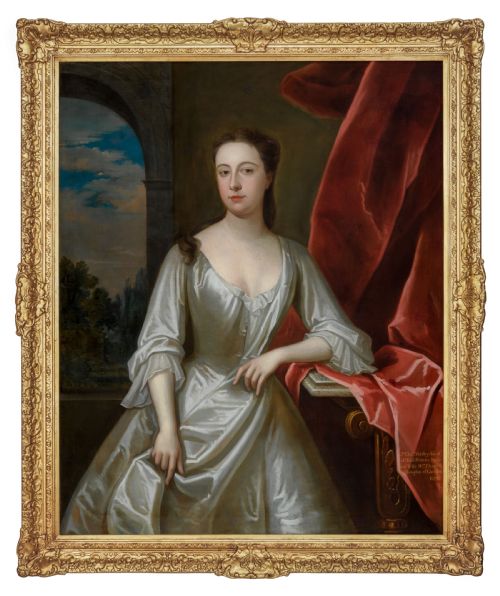
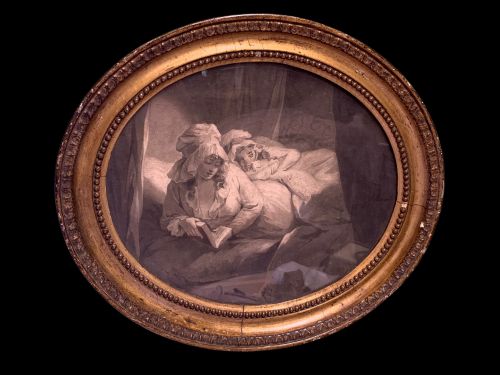
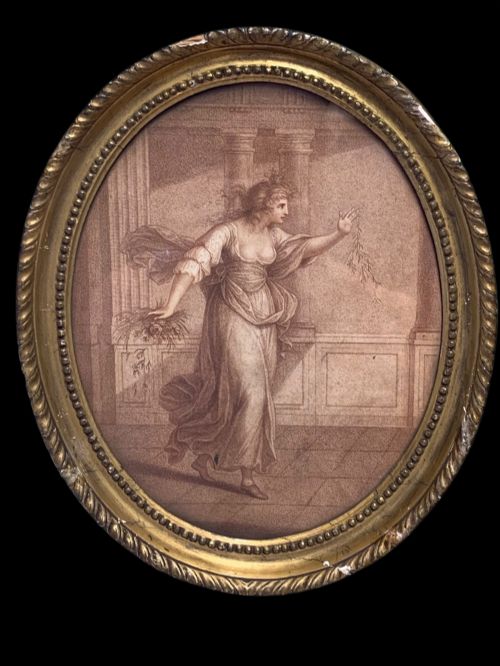
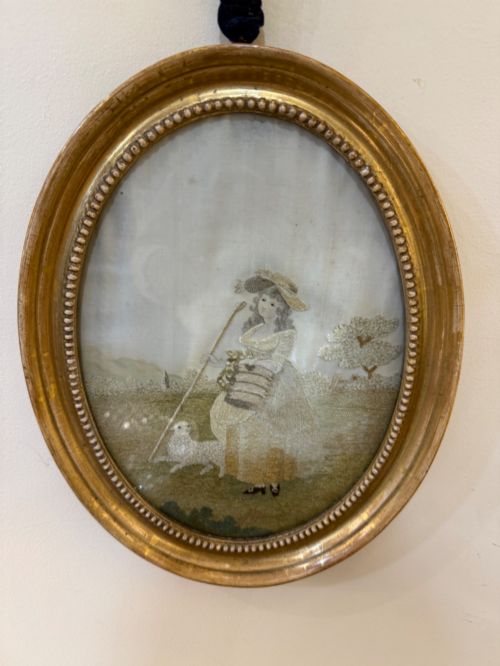


Georgian Oval Picture Frame
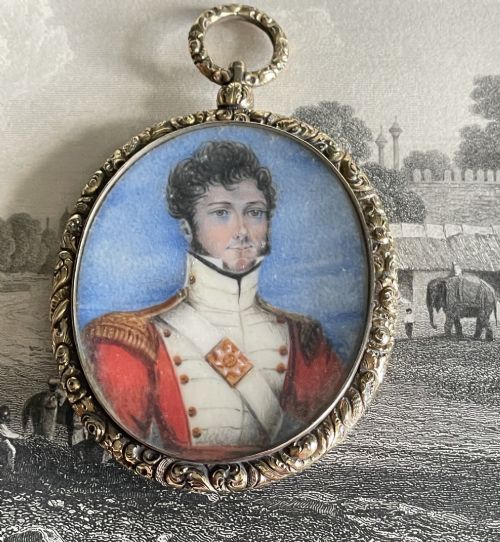
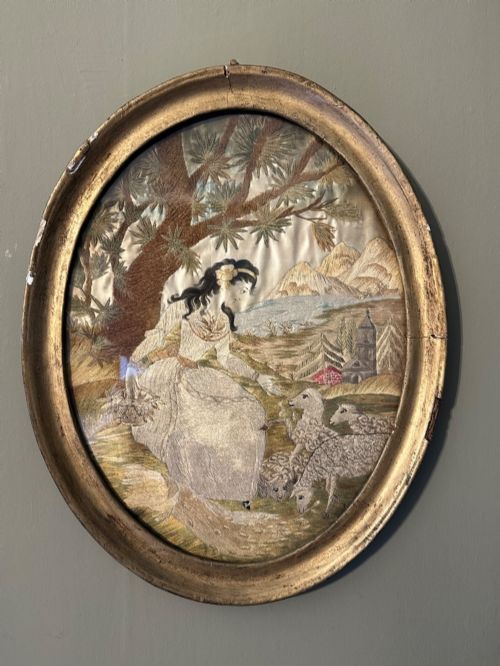
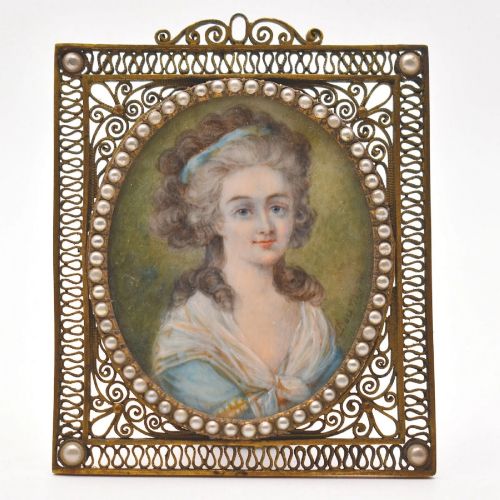
A georgian oval picture frame holds portrait miniatures, silk works and engravings securely beneath glass.
Georgian Oval Picture Frame
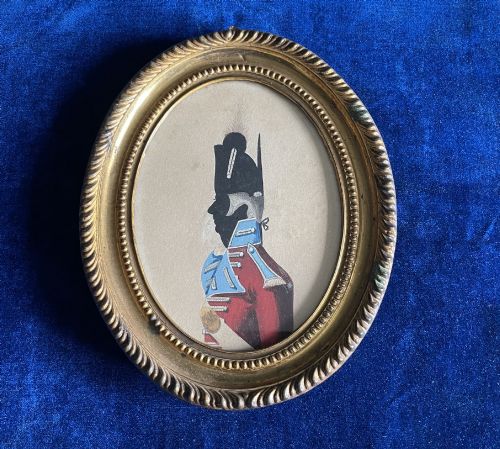
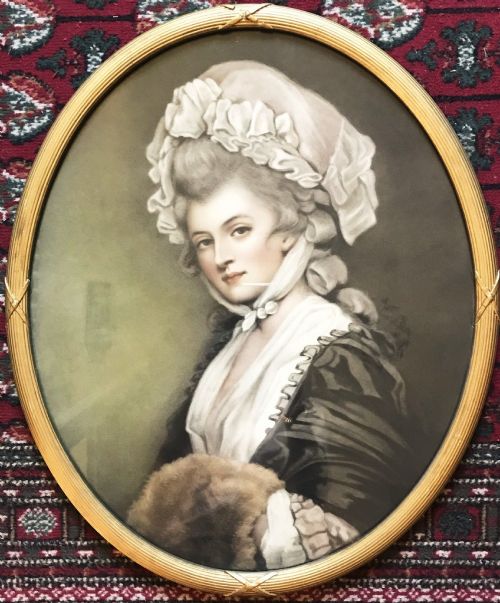
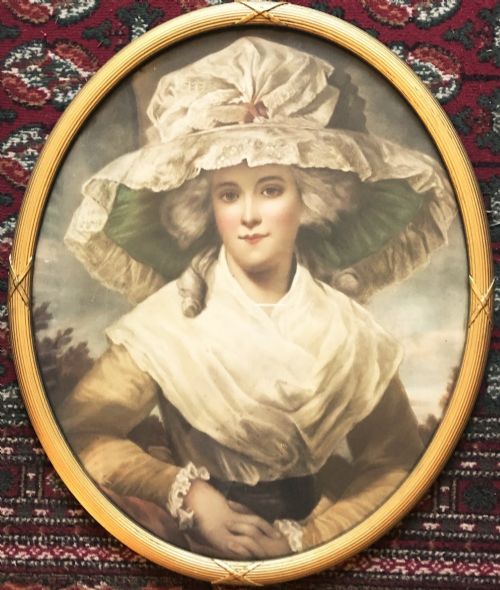
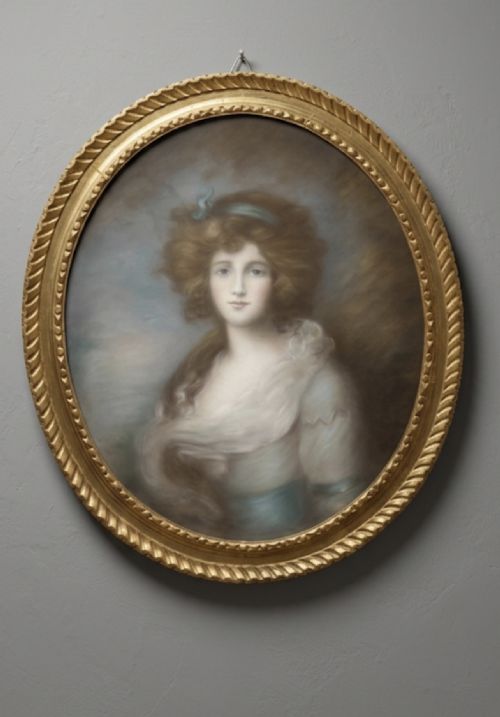
A georgian oval picture frame surrounds delicate works on paper, silk and card. These surrounds house portrait miniatures, silhouettes, pastels and needlework pictures created across the eighteenth and nineteenth centuries.
Most examples found here present rounded or curved perimeters designed to complement portraiture. The format matches the intimate scale of shoulder-length profiles and miniature paintings.
Makers housed various subjects inside these enclosures, from naval officers and nobility to floral studies and religious scenes. The contents often reflect domestic portraiture and commemorative textile art.
Materials and technique
Carpenters constructed the primary structures from wood, applying layers of gesso before finishing the surfaces with gold leaf. This process created shimmering gilded mouldings suited to formal interiors.
Glazing protected the fragile works held within, whilst specialist techniques such as verre églomisé introduced decorated glass borders. Textile pieces relied on silk, wool and felt secured inside the wooden housings.
Variations in quality
Craftsmanship in the carved wooden enrichment sets individual examples apart. Crisp details in the gilding indicate superior handwork by period artisans.
The survival of original glass and backboards contributes to the integrity of the object. Cohesion between the artwork and its period surround determines the overall harmony of the piece.
Sir Godfrey Kneller·Charles Hayter·George Hargreaves·John Miers·Isaac Wane Slater
The Georgian Oval Picture Frame Glossary
- Giltwood
- Wood coated with gold leaf applied over a prepared gesso ground. This finish provides a bright metallic sheen typical of period decorative arts.
- Verre églomisé
- A process involving cold painting and gilding on the reverse side of glass. It frames pictures with decorative borders or black margins.
- Silhouette
- A solid dark profile portrait cut from paper or painted onto card. These depictions gained popularity during the Georgian and Regency eras.
- Stipple engraving
- A printmaking method using dots to create tonal gradations and soft outlines. This technique produced detailed portraits often housed in oval formats.
- Silkwork
- Embroidery created using silk threads on a fabric ground. These textile pictures depicted floral arrangements, figures and landscapes.
Georgian Oval Picture Frame: Frequently Asked Questions
What fits inside a georgian oval picture frame?
These surrounds accommodate small-scale works on paper, fabric and ivory. Portrait miniatures, silhouettes and silk embroideries match the curved inner margins.
Larger variations hold engravings, watercolours and charcoal drawings produced during the eighteenth and nineteenth centuries.
How do I hang an oval frame?
Most examples utilise a secure ring or cord attached to the upper wooden reverse. Professional picture hooks designed for the weight of gilded wood provide stable wall mounting.
Positioning these pieces at eye level allows viewers to appreciate the fine detail of the portraits and miniatures held inside.
Are the frames original to the art?
Many listings pair the artwork with a contemporary period surround from the same century. Surviving combinations maintain historical context between the picture and its enclosure.
Collectors look for original backboards and glass that indicate the components remained together since the Georgian or Regency period.
How should I clean gilded wood?
Dust the gilded surfaces gently using a dry, soft brush to remove particles without disturbing the leaf. Avoid liquid cleaners and chemical agents that damage historic finishes.
Glass panels require mild cleaning solutions applied to a cloth rather than sprayed directly near the wooden moulding.