


Georgian Oak Storage Trunk
A Georgian oak storage trunk anchors a room with solid timber, offering enduring utility through centuries of domestic history.
Georgian Oak Storage Trunk
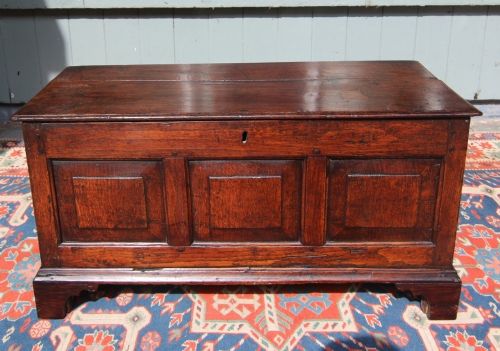
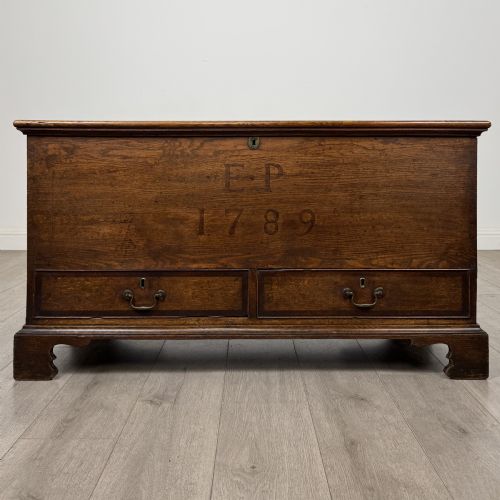
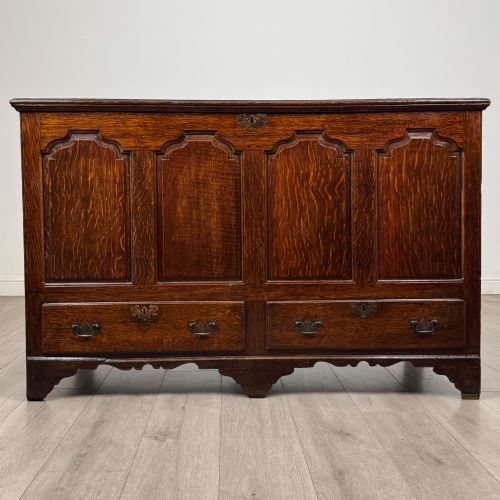
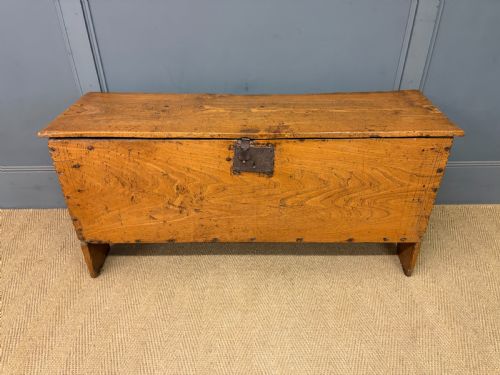
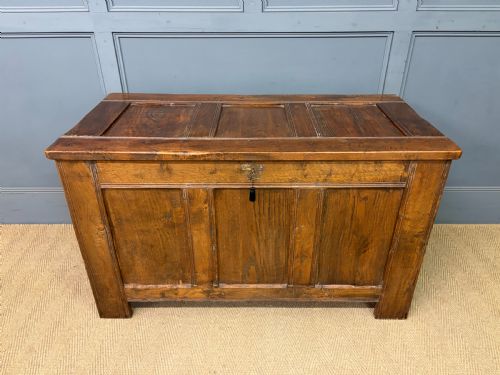
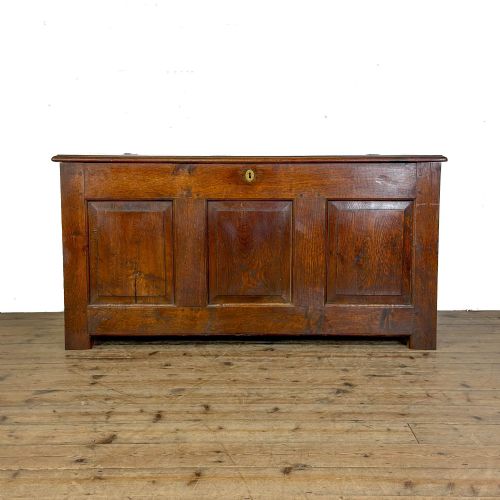
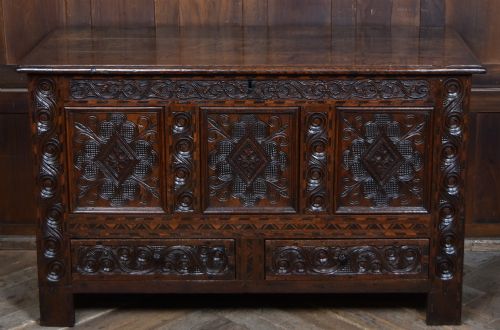
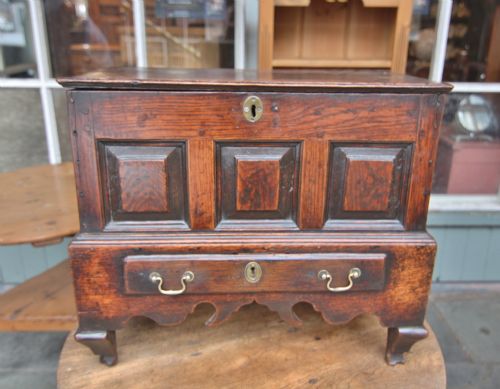
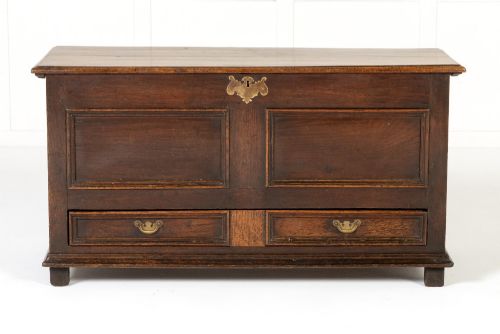
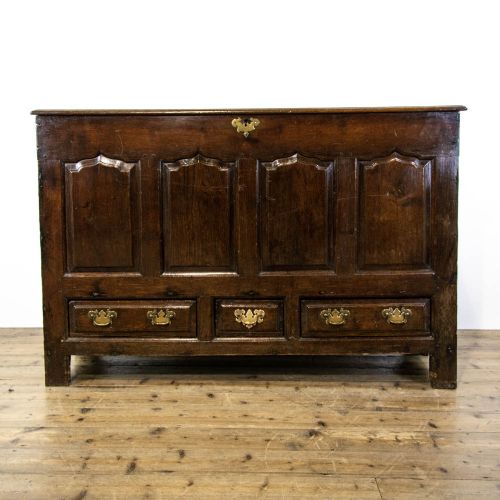
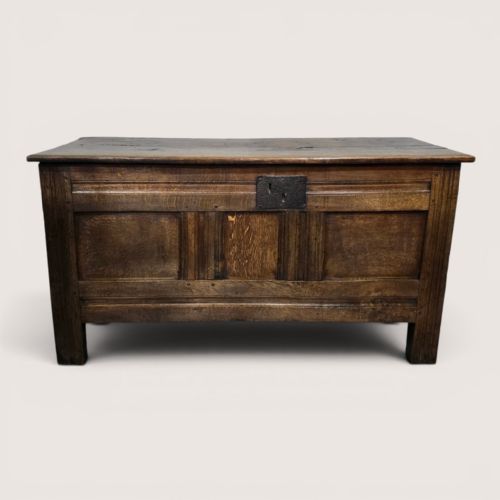
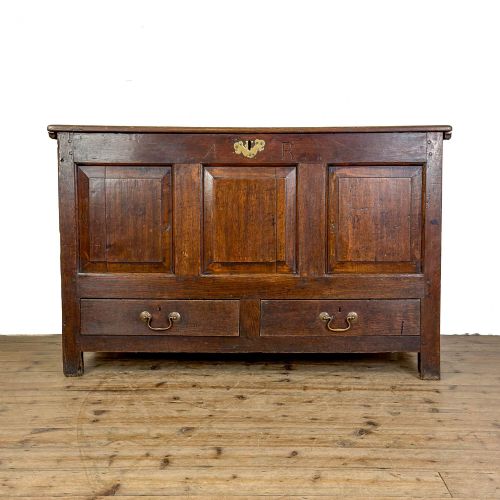
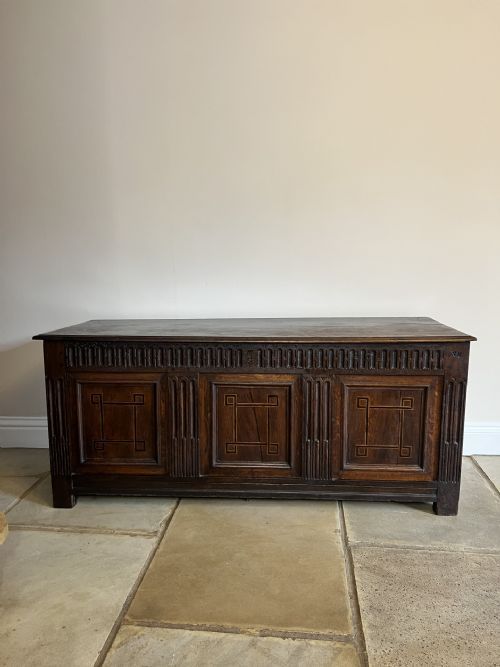
A georgian oak storage trunk encompasses utilitarian coffers, mule chests with lower drawers, and compact coffer bach forms originating primarily from eighteenth-century English and Welsh workshops. These pieces served households for linen, garments, and valuables, adapting standard domestic storage into robust household furniture.
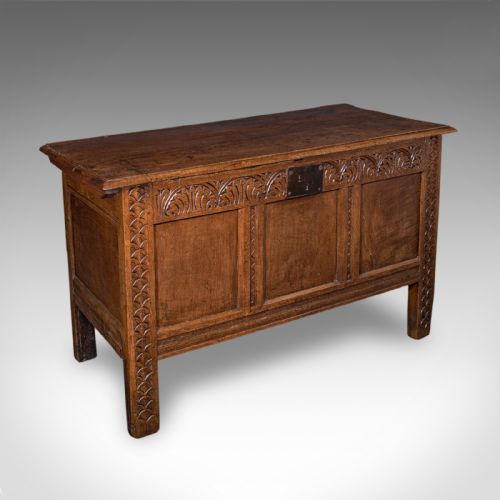
The version most commonly met on this page is the eighteenth-century oak coffer or mule chest, frequently displaying panelled construction and regional vernacular traits. Examples span the seventeenth to the nineteenth century, including George II and George III periods alongside Regency painted coaching trunks.
Specialised variants appear among the listings, such as sword chests, miniature box coffers, and pieces featuring burr elm panels or internal candle boxes. These functional additions demonstrate the versatility demanded of wooden storage by historical makers and owners.
How they were made
Carpenters utilised native hardwoods, predominantly solid oak supplemented by elm and burr elm for decorative panels, building sturdy frames through traditional joinery methods. Boards were joined to accommodate seasonal timber movement without splitting.
Iron and brass hardware, including hinges, lock plates, and carrying handles, reinforced the structural integrity of chests intended for transit or heavy domestic use. Painted finishes also appear on specific coaching trunks from the nineteenth century.
Storage forms on this page include coffers, mule chests, sword chests, and coaching trunks.
What varies in quality
The grade of timber selection and the complexity of regional carving dictate the upper tiers of quality, distinguishing standard utility boxes from finely ornamented pieces. Finer examples integrate figured burr elm panels or meticulous surface carving executed by skilled hands.
Structural completeness, including original internal candle boxes, timber floorboards, and period brass or iron mounts, elevates a piece above heavily altered counterparts. Retained surface patination and honest signs of age reflect the historical integrity prized by collectors.
The Georgian Oak Storage Trunk Glossary
- Coffer
- A large wooden chest traditionally used for storing valuables, textiles, or documents. These heavy boxes formed central storage units in early homes.
- Mule Chest
- A storage chest featuring one or more drawers built beneath the main interior compartment. This hybrid form bridged the gap between basic coffers and chest of drawers.
- Candle Box
- A small internal compartment fixed inside a chest to hold tallow candles away from general storage items. It slides or lifts out independently.
- Vernacular
- Furniture designed by regional craftsmen following local traditions rather than metropolitan academic styles. These pieces emphasise practical utility and local material availability.
Georgian Oak Storage Trunk: Frequently Asked Questions
What is a mule chest?
A mule chest combines a traditional top-opening coffer with one or more functional drawers positioned at the base. This evolution provided easier access to frequently used items without disturbing the main lid.
Craftsmen produced these pieces extensively in oak throughout the eighteenth century for domestic household storage.
Where were coffer bach pieces made?
Coffer bach examples originated primarily in Welsh workshops during the eighteenth century. Local makers scaled down standard chest dimensions to create these distinctive miniature storage items.
Families often utilised them as presentation pieces or special dowry gifts for marriages.
What wood was used?
English and Welsh makers relied heavily on sturdy native oak for the primary framework and panel construction. Elm and burr elm occasionally appear on feature panels to provide decorative grain contrast.
Paint finishes also emerge on specific nineteenth-century transit trunks.