





Georgian Oak Buffet Table
A georgian oak buffet table is a robust domestic serving piece or dresser base built for utility and endurance.
Georgian Oak Buffet Table
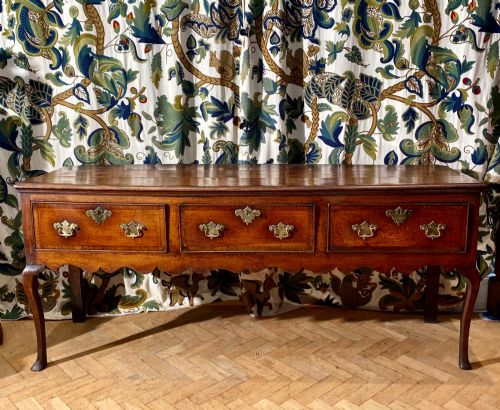
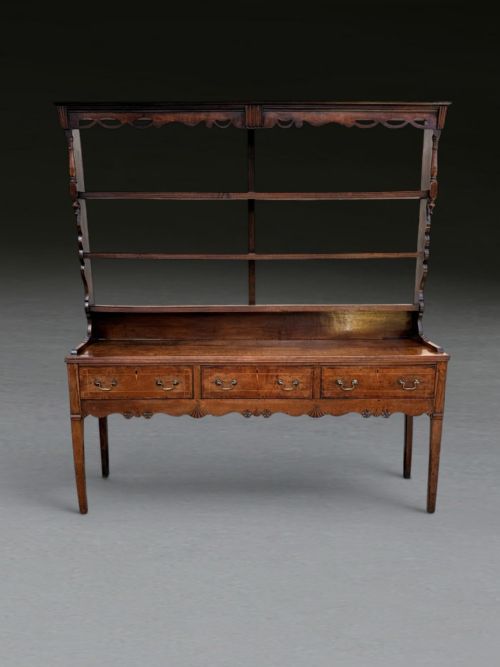
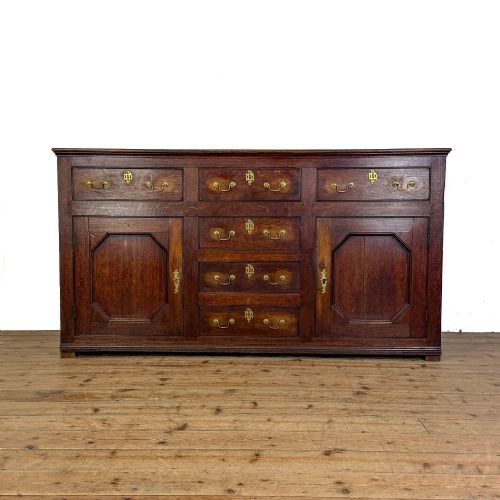
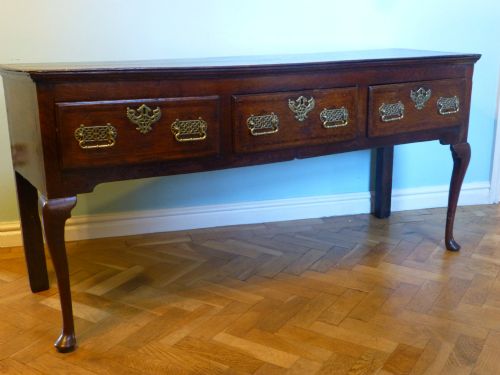
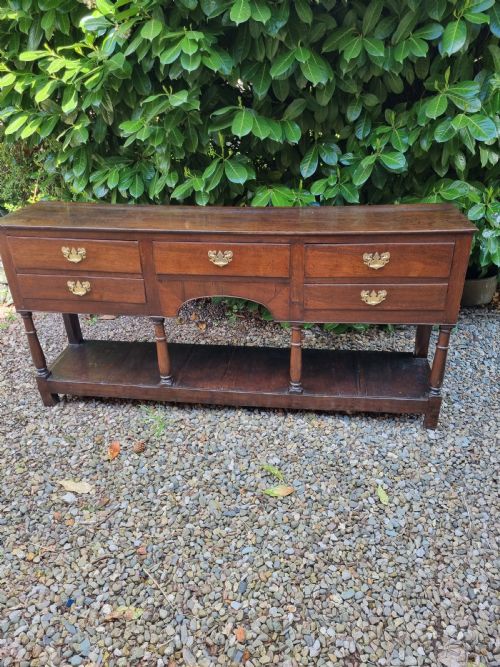
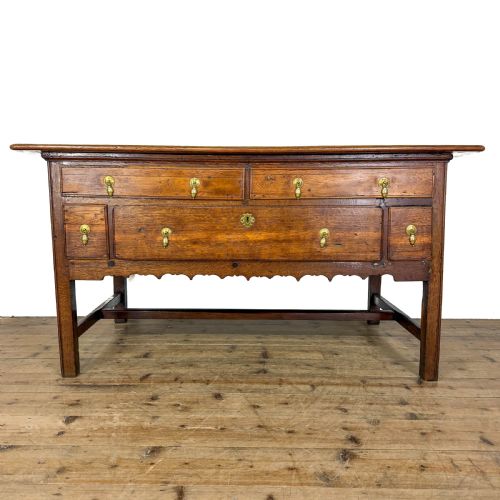
A georgian oak buffet table typically takes the form of a low dresser base, serving table or potboard dresser designed for storage and display in period interiors. These foundational pieces stem primarily from the eighteenth century and the Georgian era, carrying the utilitarian weight of English country houses and Welsh vernacular workshops.
Buyers will encounter various configurations on this page, including open potboard bases, multi-drawer formats, and cabriole leg variants. The structural language ranges from plain English country pieces to regional Welsh forms and occasional Gothic Revival flourishes.
Distinguishing quality
The architectural balance of the legs and the proportion of the drawers dictate the visual success of the piece. Stronger examples display crisp geometric or carved detailing that integrates naturally with the timber grain rather than looking heavy-handed.
Surface patination and the integrity of the structural timber define the upper tier of survivals. Original brass hardware, minimal timber replacement, and a deep wax finish separate superior provincial work from heavily restored alternatives.
Georgian Oak Buffet Table Retail Price Guide 2026
Typical asking prices for georgian oak buffet table among the pieces listed under this phrase on Sellingantiques today, from the lower quarter to the upper quarter. They describe what is for sale here now, not the wider market.
The Georgian Oak Buffet Table Glossary
- Potboard
- An open lower shelf beneath a dresser base traditionally used for storing pots and pans. This lower tier rests just above the floor on sturdy stiles or feet.
- Dresser base
- The lower section of a kitchen or dining room dresser, functioning independently as a sideboard or serving table with drawers and cupboards. It provides a flat top surface for food preparation or service.
- Welsh vernacular
- A regional style of furniture making characterised by practical construction methods and local aesthetic traditions found across Wales. These pieces often feature distinctive drawer arrangements and robust proportions.
- Pollard oak
- Timber taken from trees that have been pollarded, resulting in highly decorative, clustered grain patterns. It is utilised sparingly for veneer or feature panels.
- Cabriole leg
- A furniture leg that curves outward in a convex arc and tapers inward in a concave arc, ending in a pad or foot. This form draws influence from classical design and appears on select Georgian bases.
Georgian Oak Buffet Table: Frequently Asked Questions
How do I use a buffet table today?
These low timber surfaces function effectively as sideboards in dining rooms or as console tables in entrance halls. The drawers provide concealed storage for tableware or household items.
Their robust timber construction allows them to support modern objects like lamps, ceramics, or serving dishes while anchoring a room with period character.
How do I date an oak base?
Dating relies on examining the construction methods, tool marks, and timber selection. Hand-cut dovetails, pegged joints, and the wear patterns on the oak surface provide primary clues to age.
Stylistic markers, such as cabriole legs or geometric panel carvings, help narrow the period down to specific decades within the eighteenth or nineteenth centuries.
Are these pieces strictly English?
While many examples originate from English country workshops, the selection includes regional pieces from Welsh vernacular traditions. Regional variations appear in the drawer counts, leg forms, and overall proportions.
Each piece reflects the local materials and cabinet-making habits of its specific geographic origin.