





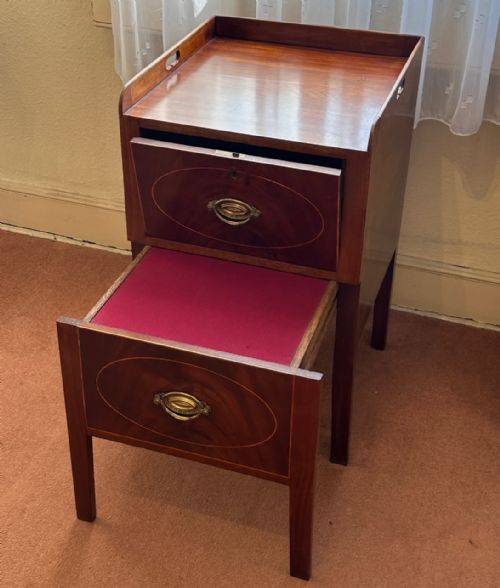


Georgian Night Chest
A georgian night chest is a practical bedroom piece designed to hold chamber apparatus or personal items out of sight.
Georgian Night Chest
A georgian night chest typically takes the form of a bedside cabinet, commode, or cupboard with enclosed storage for nighttime use. These pieces serve as functional bedroom furniture originating from the eighteenth and nineteenth centuries, spanning periods like the Georgian and Regency eras.
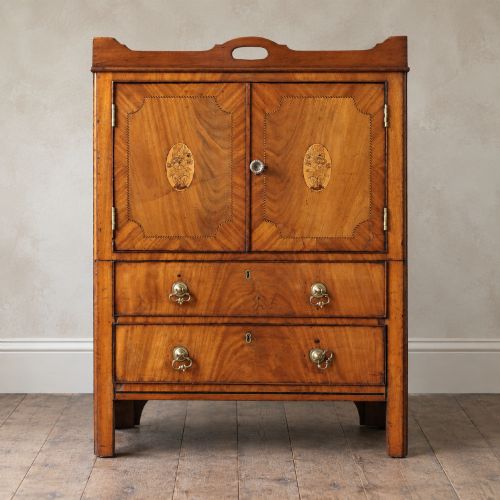
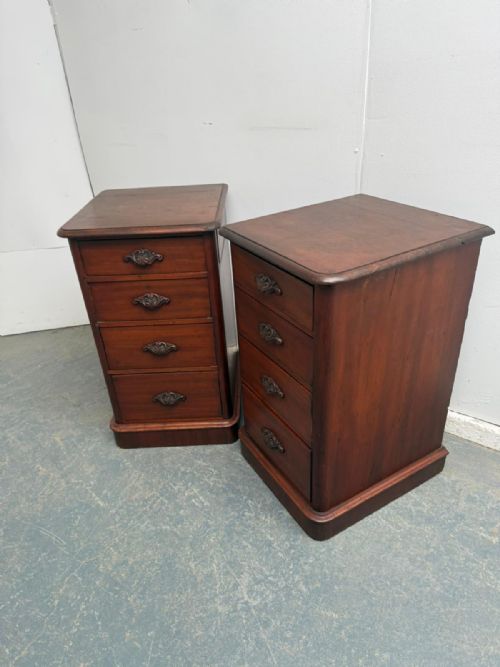
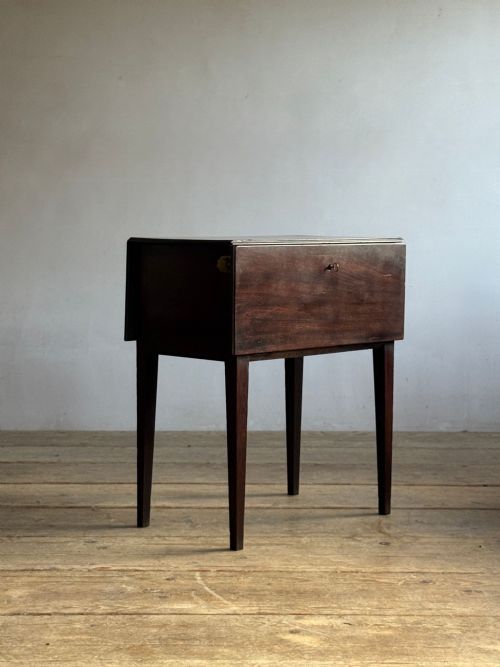
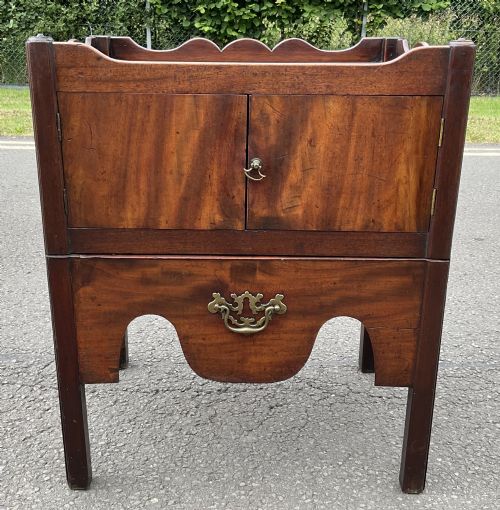
The versions most commonly met on this page include tray top night commodes and bedside cupboards constructed in mahogany or walnut. Many incorporate drawers, pull-out steps, or marquetry details that reflect the cabinet-making standards of their time.
How they were made
Makers utilised solid timbers such as mahogany and oak, often enhancing surfaces with flame mahogany veneer or burr walnut. Wood inlay and brass hardware frequently accent the structural joinery.
Tray tops and pull-out steps demonstrate functional engineering integrated directly into the cabinetry of these bedroom pieces.
Georgian Night Chest Retail Price Guide 2026
Typical asking prices for georgian night chest among the pieces listed under this phrase on Sellingantiques today, from the lower quarter to the upper quarter. They describe what is for sale here now, not the wider market.
Listings feature mahogany, walnut, and oak across the Georgian, Regency, and later nineteenth-century periods.
What varies in quality
The distinction between standard examples and finer pieces lies in the choice of timber figure, such as high-grade flame mahogany veneer or burr walnut. Superior items exhibit restrained, precise wood inlay and well-executed brass fittings that integrate harmoniously into the overall design.
Construction methods also separate the output of different workshops, where clean internal drawer linings and stable carcase joinery indicate higher craftsmanship during the Georgian and Regency periods.
The Georgian Night Chest Glossary
- Commode
- A low cabinet or chest, often fitted with doors or drawers, which historically concealed a chamber pot. In this context, it functions as a bedside storage piece.
- Tray top
- A raised rim surrounding the upper surface of a table or cabinet to prevent items from rolling off. This feature is common on eighteenth-century bedside furniture.
- Marquetry
- Decorative patterns formed by the insertion of different woods, veneers, or other materials into a wood veneer base. It adds pictorial or geometric ornamentation to the surface.
- Burr walnut
- Wood taken from a walnut tree growth featuring swirling, irregular grain patterns. Cabinet-makers prized this material for its highly decorative appearance on small tables and cabinets.
Georgian Night Chest: Frequently Asked Questions
What is a night chest?
A night chest is a small bedroom cabinet designed during the Georgian and Regency periods to hold night-time necessities. They often feature enclosed cupboards or drawers.
Many examples include tray tops or specialised additions like pull-out steps for personal convenience.
How were night chests used?
These pieces sat beside the bed to keep chamber pots, candles, and personal items concealed and close at hand. Their enclosed designs maintained tidy bedroom interiors.
Over time, their practical function shifted, and they now serve primarily as bedside tables or side cabinets.
What woods were used?
Makers relied heavily on mahogany, oak, and walnut for strength and durability. Finer versions often incorporated flame mahogany veneer or burr walnut to create decorative surfaces.
Brass handles, hinges, and occasional wood inlay completed the construction.
How do I date a night chest?
Dating relies on identifying period characteristics such as leg styles, handle fixings, and overall cabinet proportions. Pieces from the eighteenth century show different joinery methods compared to later nineteenth-century revivals.
Examining the secondary woods inside drawers also helps confirm the period of manufacture.