







Georgian Needlework Art
Georgian needlework art brings together silk, wool, and linen threads to form historic pictures, maps, and samplers.
How they were made
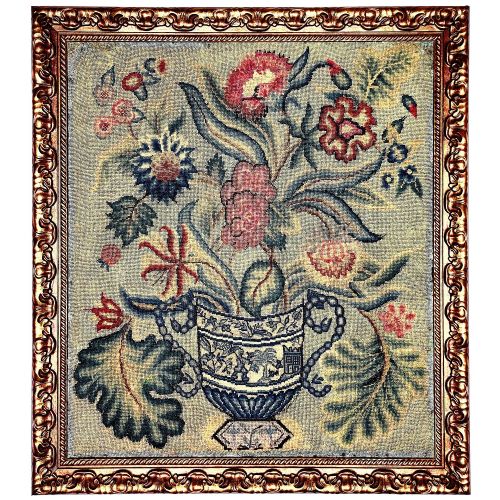
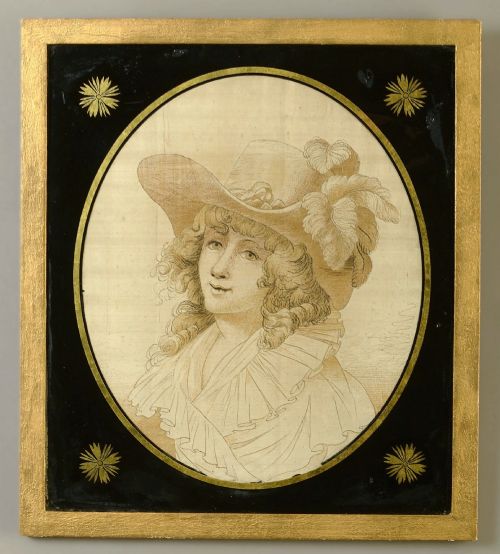
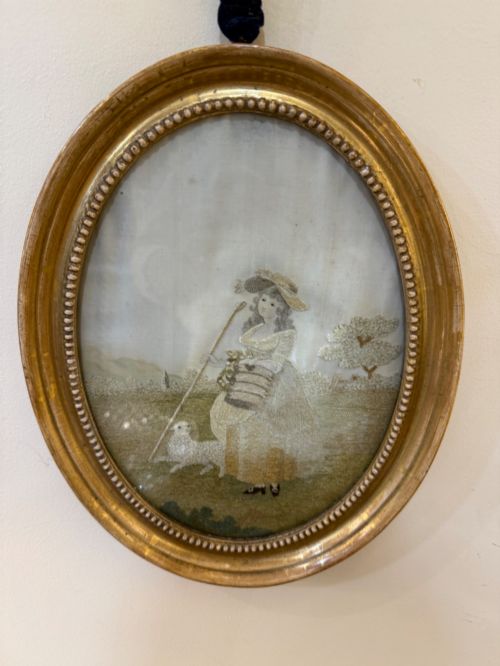
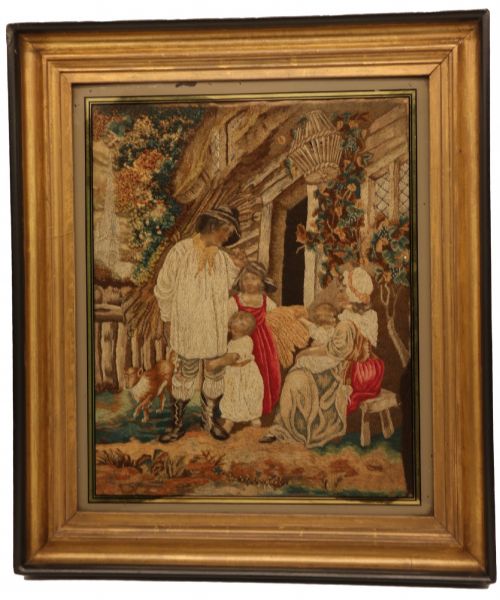
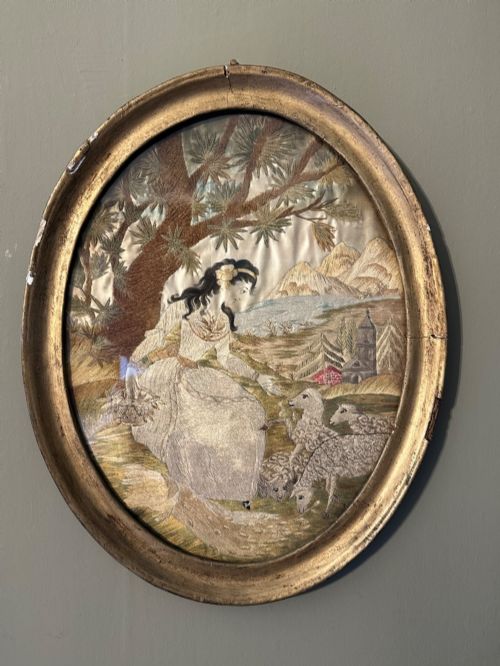
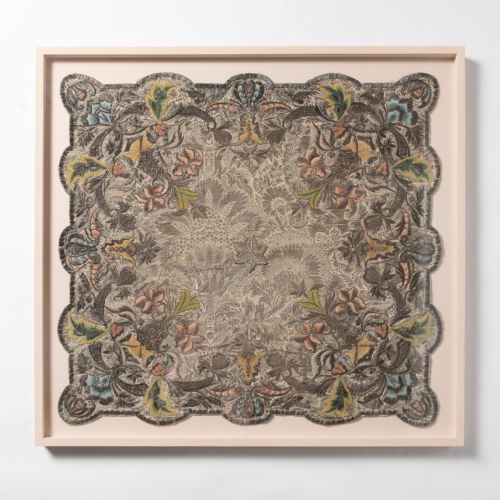
Makers used silk, wool, linen, and silk floss threads worked onto fabric grounds to create pictorial and textual compositions. Hand-painted silk elements frequently combined with embroidery to form detailed portraits and pastoral scenes.
Finished textiles were typically mounted in wood or giltwood frames, occasionally accompanied by Verre Églomisé glass panels. Crewel work, long stitch, and needlepoint techniques formed the durable surface patterns seen across these antique panels.
What varies in quality
The fineness of the stitchwork and the complexity of the design separate standard exercises from masterworks. Pictorial depth in silk-and-wool pastoral scenes requires careful control over contrasting threads.
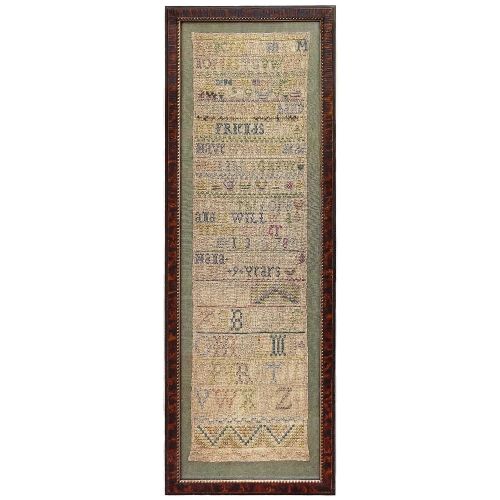
Condition and legibility of maker details, dates, and inscriptions influence the appeal of a sampler. Original frames, such as Verre Églomisé examples, enhance the historical integrity of the textile within.
Georgian Needlework Art Retail Price Guide 2026
Typical asking prices for georgian needlework art among the pieces listed under this phrase on Sellingantiques today, from the lower quarter to the upper quarter. They describe what is for sale here now, not the wider market.
Listings feature eighteenth-century and nineteenth-century periods, incorporating materials such as silk thread, wool, giltwood, and glass.
Mary Banion·Mary Greening·Elizabeth Horn·Sarah Baker·Mary Mason·Ann B Gilies·Martha Hall·Mary Street Didsbury·Louiss Elkins
The Georgian Needlework Art Glossary
- Sampler
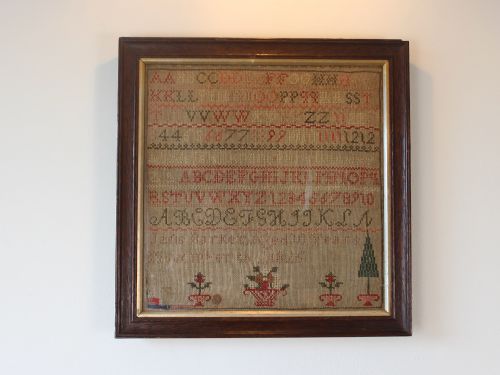
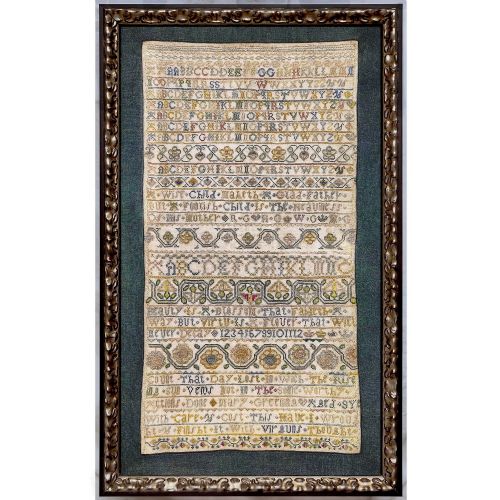
- A piece of needlework produced as a demonstration or test of skill in various stitches, frequently displaying alphabets, numerals, and the maker's name.
- Verre Églomisé
- A process of cold painting and gilding on the reverse side of glass, often used to create decorative borders for framed pictures.
- Crewel work
- Embroidery executed using wool yarn on a linen or cotton ground, known for heavy texture and traditional floral or pastoral motifs.
- Silk floss
- Unspun or loosely twisted silk fibres used in needlework for smooth, lustrous highlights in pictorial embroidery.
- Long stitch
- An embroidery technique where stitches are laid parallel or long across the canvas to form solid areas of colour and shading.
Georgian Needlework Art: Frequently Asked Questions
What is a Georgian needlework map?
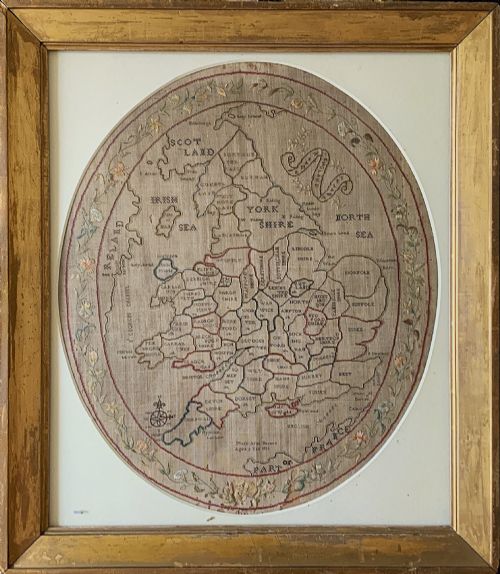
These textile pieces display geographical outlines of regions like England and Wales, meticulously stitched by young learners as part of their education.
They combine cartography with decorative embroidery, often featuring a border and the maker's name and date.
How were these framed textiles displayed?
Period pieces were typically set behind glass within wood, giltwood, or specialised Verre Églomisé frames to protect fragile silk and wool threads from dust and light damage.
Keeping them out of direct sunlight preserves the original vibrancy of the hand-dyed materials.
What is the difference between a sampler and a silkwork picture?
A sampler focuses on alphabets, numbers, and stitch variations, often serving as a record of a maker's proficiency.
Silkwork pictures depict specific scenes, such as pastoral farming, portraits, or literary stories like Jack and the Beanstalk, using pictorial needlework techniques.
How can I tell the age of a needlework piece?
Dates, names, and ages stitched directly into the textile provide the most direct evidence of origin. Stylistic markers, including Regency framing styles and specific eighteenth-century pictorial motifs, also help determine the period.