



Georgian Military Miniature
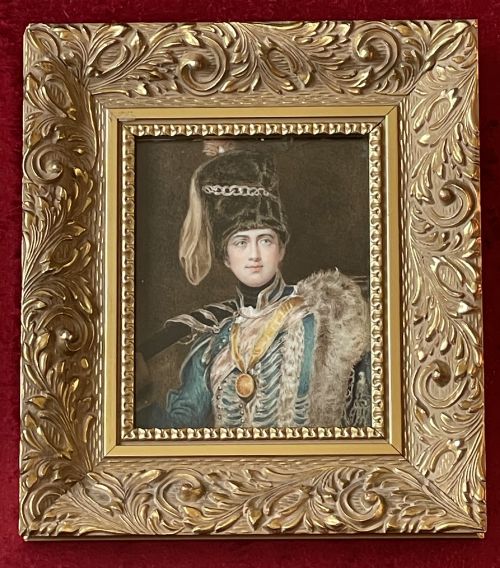
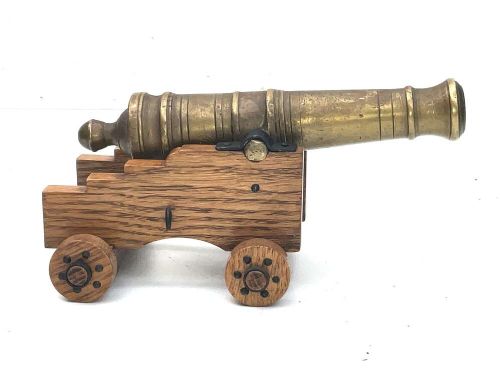
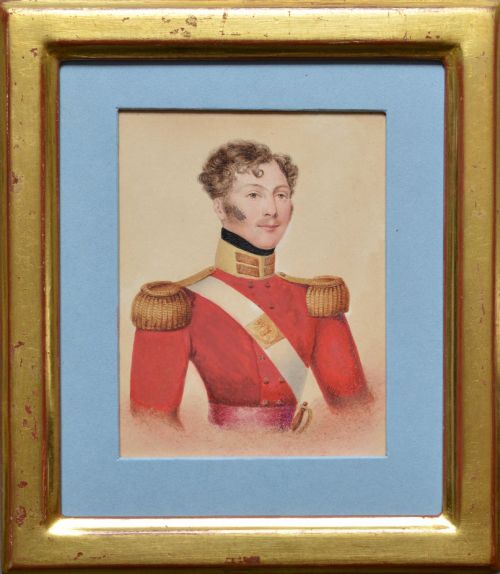
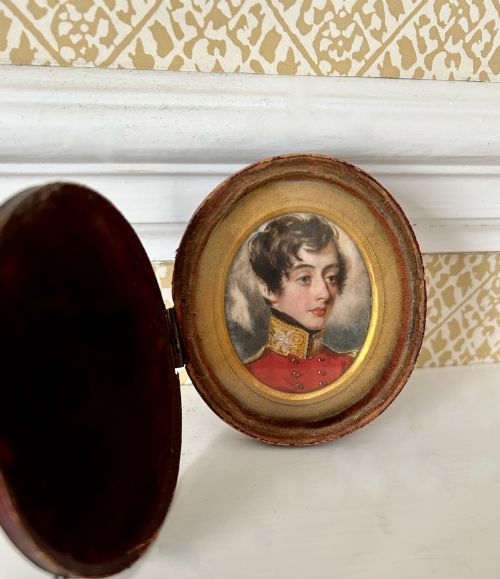
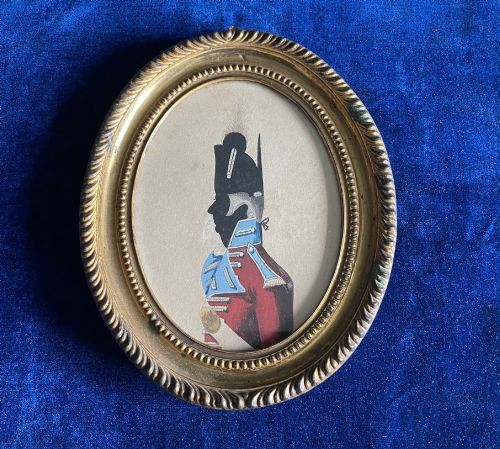
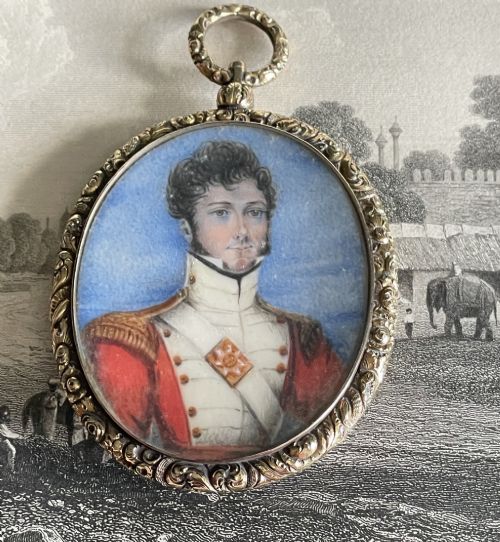
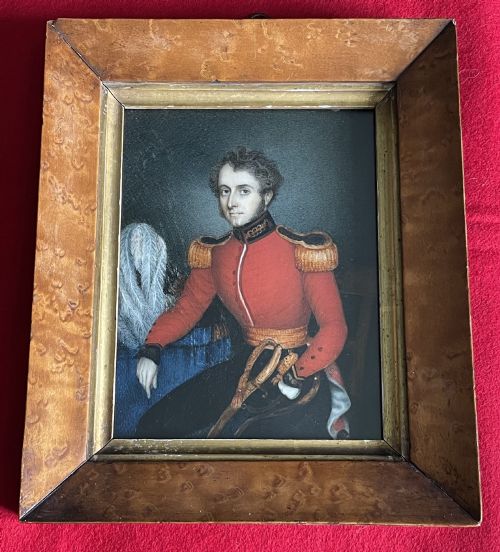
These georgian military miniature pieces capture officers and artillery in watercolour and metal, offering a portable record of British service.
Georgian Military Miniature
A georgian military miniature encompasses painted likenesses of officers alongside scale models of field guns and ships of the line. The material record spans the eighteenth and nineteenth centuries, reaching from the reign of George through the Regency.
Portrait miniatures dominate the selection, portraying named figures such as Captain Richard Hamilton and General Sir James Henry Craig in watercolour or paint upon paper and agate panels. Alongside these sit brass and bronze barrelled scale models of ordnance.
The aesthetic bridges fine art and military history, produced in styles that reflect Georgian and Regency visual conventions. Buyers encounter everything from uniformed Dragoons to naval officers framed in gold or giltwood.
Materials and technique
Watercolour on paper forms the primary medium for painted portraits, while specialised works utilise agate panels and silkwork textiles. Frames frequently incorporate glass, brass, pearl, and gold.
Scale models depend upon metalworking techniques, combining bronze and brass barrels with wooden carriages. Artists achieved fine facial detail in miniature through steady brushwork and prepared grounds.
Georgian Military Miniature Retail Price Guide 2026
Typical asking prices for georgian military miniature among the pieces listed under this phrase on Sellingantiques today, from the lower quarter to the upper quarter. They describe what is for sale here now, not the wider market.
Officers ensured their brass barrelled cannon models looked ready for action right on the study desk.
Judging quality
Quality rests upon the precision of the portraiture and the fidelity of the scale model. Finer works capture the exact regiment, uniform insignia, and individual likeness with distinct brush control.
Materials elevate a piece, distinguishing standard paper or glass assemblies from those mounted in gold frames or set with pearls. The presence of a recorded sitter or a documented artist adds archival weight.
Edward Pugh·Sir William John Newton·Gerrit Schipper
The Georgian Military Miniature Glossary
- Portrait Miniature
- A small-scale painting executed on paper, ivory, or agate, designed to be held or worn. These intimate works preserve likenesses with remarkable detail.
- Agate Panel
- A polished slice of stone used as a stable, smooth painting surface. Artists valued its dense grain for minute portraiture.
- Scale Model
- A physical representation of artillery or naval vessels reduced in proportion. These objects served as desk ornaments or technical displays.
- Silkwork Picture
- A textile artwork embroidered using silk threads. Such pieces often depict theatrical or historical scenes from the period.
- Regency
- The historical period spanning the early nineteenth century defined by specific artistic and decorative styles. Pieces from this era show distinct aesthetic shifts from earlier Georgian work.
Georgian Military Miniature: Frequently Asked Questions
How were these miniature portraits displayed?
Owners typically kept portrait miniatures in pocket cases, desk drawers, or mounted them in frames to hang in private rooms.
Their portable nature allowed officers to carry likenesses of themselves or family members during campaigns.
What subjects appear most often in these items?
The subjects are predominantly British military and naval officers, including named figures like captains and generals.
Scale models of field cannons and ships of the line complement the painted portraits.
How do I distinguish Regency pieces from earlier ones?
Regency items display the stylistic hallmarks of the early nineteenth century, differing from mid-eighteenth-century work.
Uniform details, frame designs, and painting techniques help indicate the specific decade of production.
Are the scale models working artillery pieces?
The metal models are decorative scale representations rather than functioning armaments.
They record contemporary ordnance designs with bronze or brass barrels mounted on wooden carriages.