







Georgian Marquetry Centre Table
These pieces of georgian marquetry centre table offer distinct decorative presence in a room, combining period timber with intricate inlaid surfaces.
Georgian Marquetry Centre Table
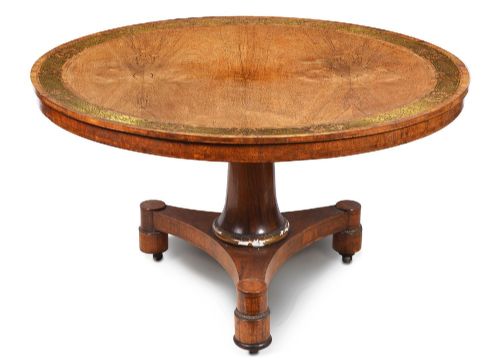
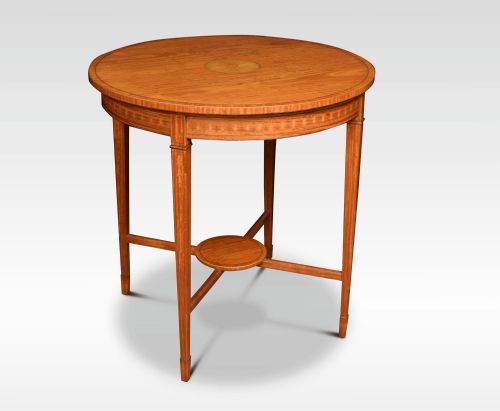
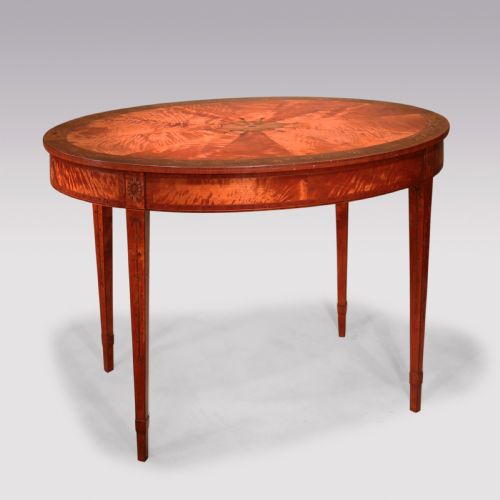
A georgian marquetry centre table serves as a freestanding surface designed to occupy the middle of a room rather than sit against a wall. The examples appearing here span multiple eras, including Regency, Edwardian, and nineteenth-century interpretations of earlier styles.
Forms include round drum tables, octagonal coffee tables, and oval occasional tables. Makers built these pieces using primary timbers such as mahogany, rosewood, and satinwood, enhanced by detailed surface decoration.
The aesthetic draws heavily on George III and Sheraton revival traditions, bringing geometric or pictorial wood inlay into domestic interiors. Buyers encounter both genuine period items and later revival pieces modelled on these historic forms.
Construction and Materials
Cabinetmakers constructed these tables using dense hardwoods like flame mahogany, rosewood, and walnut as a solid foundation for the upper surfaces. Finer examples incorporate contrasting woods such as boxwood and satinwood for pictorial or geometric inlay work.
Brass inlay and mounts appear frequently, providing sharp linear contrast against the dark grains of rosewood and mahogany. Craftsmen utilised specialised cutting techniques to fit different wood veneers together tightly within the main tabletop.
Georgian Marquetry Centre Table Retail Price Guide 2026
Typical asking prices for georgian marquetry centre table among the pieces listed under this phrase on Sellingantiques today, from the lower quarter to the upper quarter. They describe what is for sale here now, not the wider market.
Several tables manage to look entirely serious while secretly storing your keys inside a drum.
Distinguishing Quality
Quality in a georgian marquetry centre table rests upon the precision of the timber matching and the complexity of the veneer work. The crispness of brass detailing and the selection of figured woods, such as burr yew or premium satinwood, elevate certain pieces above standard production.
Proportion and structural integrity define the upper tier of these tables. Superior examples display balanced form across drum and occasional formats, where the complexity of the marquetry complements the underlying architecture of the base and legs.
The Georgian Marquetry Centre Table Glossary
- Marquetry
- The art of applying pieces of veneer to a structure to form decorative patterns or pictures. This technique distinguishes ornamental tabletop surfaces from plain wood finishes.
- Drum table
- A circular library or centre table with a deep top resembling a drum, often fitted with drawers around the circumference. These pieces stand on a central pillar with branching legs.
- Satinwood
- A durable, yellowish timber prized for its lustrous grain, frequently employed in revival and eighteenth-century marquetry furniture. It provides a bright background for darker inlaid motifs.
- Occasional table
- A small, movable table designed for specific, intermittent use within a principal room. These forms supplement larger dining and centre tables in period interiors.
- Brass inlay
- The technique of embedding thin strips or shapes of brass into channels cut within the wood surface. This method adds metallic definition to the borders and panels of Regency tables.
Georgian Marquetry Centre Table: Frequently Asked Questions
How do I spot a revival piece?
Revival pieces often date from the Edwardian era or the late nineteenth century, mimicking earlier George III or Regency designs. Examining the secondary woods, internal construction methods, and the style of the veneer helps clarify the actual period of manufacture.
Makers working during revival periods utilised machine-sawn veneers and distinct hardware fixings that differ from eighteenth-century workshop practices. Comparing the timber ageing to the stated style year provides further context.
What is a drum table used for?
A drum table historically served as a library or writing table, offering a stable circular surface with deep edge proportions. The internal space often accommodated drawers, making the form practical for storing papers and small volumes.
In modern rooms, the height and sturdy central pillar make these tables suitable for central display or general surface use. The enclosed circular shape allows multiple people to access the top easily from any angle.
How do I care for inlaid wood?
Inlaid wood surfaces require stable humidity and protection from direct sunlight to prevent the delicate veneers from lifting or fading. Regular dusting with a soft, dry cloth preserves the finish without introducing moisture into the joints.
Avoiding excessive wax buildup ensures the distinct colours of woods like boxwood, satinwood, and mahogany remain visible. Gentle treatment safeguards the brass and timber components over time.