

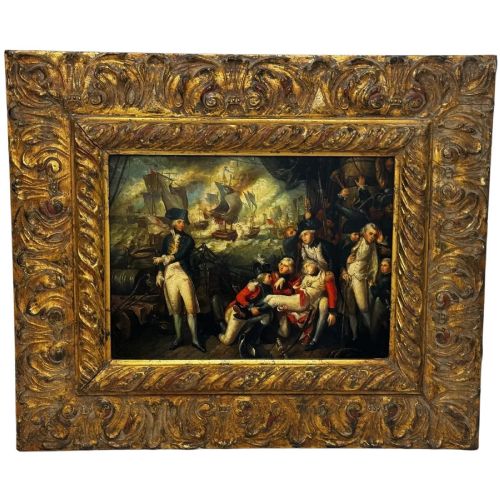


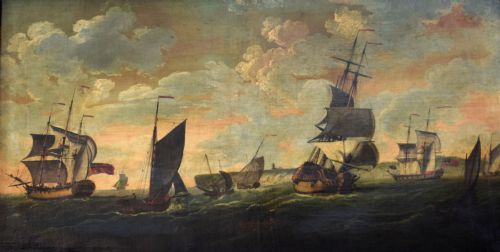


Georgian Marine Artwork
Georgian marine artwork captures the drama of naval combat and coastal shipping on canvas and paper.
Georgian Marine Artwork
When you search for georgian marine artwork, you encounter oil paintings, watercolours, and framed aquatints depicting ships, harbours, and sea battles. These pieces record naval engagements, warships with raised sails, and coastal landscapes featuring local shipping.
The selections on this page span the eighteenth and nineteenth centuries, moving through the Georgian and Regency periods. You will regularly find oil on canvas works alongside paper watercolours and framed antique prints after noted maritime artists.
Materials and techniques
The makers of these works utilised oil paint applied to stretched canvas or watercolour on paper to capture the movement of water and skies. Frames are constructed from wood, frequently finished in giltwood to complement the maritime scenes.
Artists employed careful brushwork to depict rigging, cannon, and architectural details of coastal buildings and harbours. Paper works often took the form of aquatints, reproducing original compositions for wider distribution.
Georgian Marine Artwork Retail Price Guide 2026
Typical asking prices for georgian marine artwork among the pieces listed under this phrase on Sellingantiques today, from the lower quarter to the upper quarter. They describe what is for sale here now, not the wider market.
Subject matter ranges from royal warships in sea battles to quiet fishing boats heading out in brisk winds from domestic harbours.
Understanding quality in marine art
Quality in these maritime works rests upon the fidelity of the vessel depiction and the handling of atmospheric conditions like wind and sea spray. Superior pieces demonstrate a precise understanding of naval architecture, rigging, and maritime signals.
The handling of light on water and the integration of coastal figures differentiate standard topographical records from compelling artistic achievements. The sophistication of the framing, particularly period giltwood surrounds, also indicates the regard in which a piece was held.
Samuel Owen·Francis Holman·W J Huggins
The Georgian Marine Artwork Glossary
- Aquatint
- A intaglio printmaking technique that produces areas of tone resembling watercolour washes. It was frequently utilised for reproducing marine paintings in the nineteenth century.
- Man-of-war
- A armed sailing warship of the Royal Navy from the age of sail. These vessels appear frequently in naval battle scenes and harbour paintings.
- Giltwood
- Wood carved and covered with a thin layer of gold leaf. Frames of this material are commonly found on period oil paintings.
- Seascape
- A work of art depicting the sea, ships, or coastal views. It forms the primary category for marine paintings and watercolours.
Georgian Marine Artwork: Frequently Asked Questions
What periods do these marine artworks cover?
The pieces span the eighteenth and nineteenth centuries, encompassing the Georgian and Regency eras. Many works date specifically from the mid-eighteenth century through to the early nineteenth century.
This timeframe captures the height of sail power in British naval history, recording both historic engagements and routine coastal shipping.
What materials were used to create them?
Artists worked primarily with oil paint on canvas, watercolour on paper, and printed aquatints. Canvases are typically housed in traditional wood frames, often with giltwood finishes.
Paper works are protected behind glass to preserve the delicate watercolours and print inks from environmental damage.
Where were these maritime scenes usually set?
Scenes frequently depict British ports like Portsmouth, coastal landmarks such as Beachey Head, or open sea battles. Harbour entrances and coastal shipping lanes provided artists with busy backdrops of local vessels and working boats.
Foreign waters and South Sea fisheries also appear in contemporary aquatints and travel-related marine art.